
One tradition requires the villagers to murmur invocations during the bone-chilling night to the deified mountains surrounding Rapaz, asking for the clouds to let forth rain. Then they peer into burning llama fat and read how its sparks fly, before sacrificing a guinea pig and nestling it in a hole with flowers and coca.
Pretty fascinating story from the Times about the struggle to decipher khipus, ancient Inca woven knots that some believe may have been that society’s secret to communication without written language.
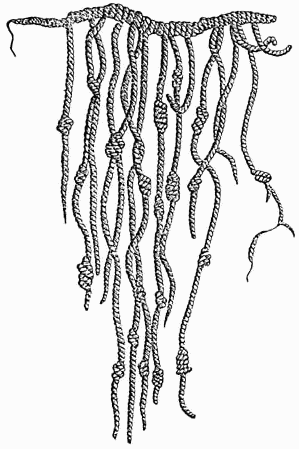 Basically, there are these ropes with a series of intricately woven knots in them. A bunch of ancient towns have a bunch of these ropes, but no one knows how to read them anymore, in part because the Spanish colonials stamped them out. There are some that are used for math, but those are a different thing, apparently.
It’s not mentioned in the article and I’m sure the people working on it are smart enough to figure this out, but I wonder if there’s greater variance in the dialects, so to speak, of the ropes than there would have been in written languages in other ancient societies since the Incas didn’t have the wheel. Doesn’t it seem like that would make everything go a little slower, so the rope-language change a little bit more from town to town? Just a thought.
Also, and I mean no disrespect: Really, Inca civilization? No written language and no wheel? I mean, I totally appreciate what you’ve done with the llama, and I understand Macchu Picchu is about the most beautiful place in the world, but, you know, seriously?
 Tedquarters
You pose excellent questions here. I can’t believe no one commented sooner. The dialect question might in fact be one that no one has asked before.