Exciting times

Pelfrey and Davis, Davis and Pelfrey. Whatever may become of the Mets’ season as summer turns to fall, there is the hope that at least — at least! — this year will be the year when Mike Pelfrey and Ike Davis become bona fide stars. Strasburg struck out 14 for the Nationals on Tuesday, fulfilling the expectations that come with being the No. 1 overall pick in the 2009 MLB First-Year Player Draft. The Mets took Pelfrey at No. 9 in 2005, and it wasn’t until this year that he has shown the sustained success they had envisioned.

Tuesday’s start against San Diego was typical of 2010 for Pelfrey: Nine innings, one run, five hits, no walks, six strikeouts. He ended up taking a no-decision — the Mets wouldn’t win until Davis’ walk-off blast in the 11th (more on that later). Yet Pelfrey’s performance still resonated. He’s allowed a total of three earned runs in his last four starts, dropping his ERA to 2.23, good for ninth in the insanity that is the pitching landscape of this season.

Sam Borden, SNY.tv.

Last night, the Mets started an entirely homegrown infield, all 27 or under, with Pelfrey on the mound. Jose Reyes and Davis hit home runs. David Wright had a pair of hits. Pelfrey was awesome.

Fans always seem to appreciate young, homegrown players, and they’re right to: Young, homegrown players are both exciting and cost-effective.

These are exciting times for Mets fans. Whether by design or by accident, the Mets appear to be moving away from their familiar model of relying on over-the-hill acquisitions and toward a more organic winner.

That may or may not come this year, but those clamoring for the team to to trade a slew of prospects for the right to rent Cliff Lee or overpay Roy Oswalt should consider the Mets’ promising future. This is something I got at this offseason: For the first time in years, the Mets have numbers in the farm system. Not just one or two top-flight prospects and a pile of muck, but a whole group of young players in the high levels who appear likely to contribute to the Major League team.

Not all of them will pan out, but there’s no good way of knowing which ones will and which ones won’t, and no reason to trade away any of them in the name of this single season. The Mets should, as always, strive to compete every single year. And teams need to develop good young players to do that.

Sure, Oswalt and Lee are great pitchers and if either could be had for a steal, you know, cool. But neither guarantees the Mets a playoff berth, and so the team should be leery of jeopardizing its longterm health for a short-term fix.

Oh, and someone please make Jenrry Mejia a starter already. Good lord.
OK, so that was amazing

Nothing I’m going to say here will add anything to the millions of words already spilled over Stephen Strasburg’s debut. It’s just that whole posterity thing again, my desire to make note of events that feel important so I can have them in the archive down the road.

I wrote last week that I was rooting for Strasburg to be a pretty good pitcher but not an exceptional one. I still think that would be funny — especially now — but I changed my mind when he struck out Jason Jaramillo looking on a backdoor curveball to start the third. Holy lord, he’s got some ludicrous stuff. I hope he stays awesome.

I love dominance and spectacle and pitchers who manipulate opposing batters. Strasburg provided all of that in his Major League debut. 14 strikeouts and 0 walks. Fourteen, zero.

And when Strasburg was up against his predetermined pitch count after the first out in the seventh, with Jim Riggleman sitting on the bench clearly wondering how he was expected to pull a pitcher who was effortlessly imposing his will upon the pitiful Pirates, Strasburg was all, “don’t worry, Skip, I got this.” Six straight strikes and the inning was over. Crazy. Crazy crazy crazy.

Bob Costas kept trying to keep things in perspective, then in the next breath would mention Bob Feller, Tom Seaver, Walter Johnson. It’s not fair, of course, to expect a Hall of Fame career out of any 21-year-old. But who’s to say what the hype machine would have churned out if Feller, Seaver or the Big Train made their debuts in 2010? And who knows if it matters? Competitors like those probably couldn’t care less about any expectations besides their own; to get to that level, they’ve got to be awful, awful driven.

Maybe Strasburg’s a Hall of Famer. Heck, maybe he’s the greatest pitcher of all time. Sure, Dwight Gooden had 58 Major League wins with a 2.28 ERA and a 155 ERA+ by the time he was Strasburg’s age, and Kerry Wood struck out 233 batters in his first 166 2/3 innings, and back in 1967 Gary Nolan whiffed five times as many guys as he walked across his first 10 starts when he was only 19 years old.

Who cares about that? Everyone knows pitchers flame out. It happens. But every so often a Roger Clemens comes around, or a Seaver or a Greg Maddux. That happens too. At some point in our lifetimes, we will see more historically great pitchers. And though the odds are long for everyone, it’s hard to bet against the guy who struck out 14 batters without walking any in his Major League debut.

Mets give me good excuse to post Sonny Rollins song

In the 10th round of the MLB draft today, the Mets picked a right-handed pitcher named Akeel Morris out of Charlotte Amalie High School in St. Thomas in the U.S. Virgin Islands.

I don’t know anything about Morris beyond what’s on his BeRecruited.com profile: He’s 6’1″, 170 pounds, threw 44 innings with a 2.65 ERA this season (or in travel ball, or somewhere) and he’s committed to Connors State University.
If Morris signs and eventually reaches the Majors as a pitcher, he will become only the second player from the U.S. Virgin Islands to do so. Al McBean — who went to the same high school as Morris — pitched in 409 games with the Pirates, Dodgers and Padres in the 60s and 70s.

There have been 10 position players in the Majors from the U.S. Virgin Islands, but only three since the turn of the millenium: Midre Cummings, Callix Crabbe and monstrous Quadruple-A masher Calvin Pickering. And all three went to high school in the continental United States.

So here’s rooting for Akeel Morris to help make baseball just a little bit more global. And if it benefits the Mets along the way, you know, good.

With Mets’ front office making reasonable decisions, Taco Bell turns to baffling ones

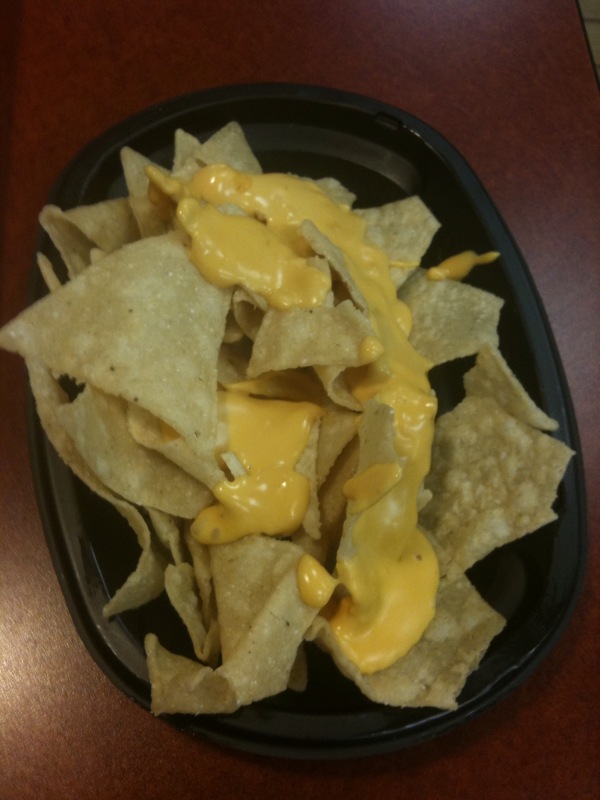
A couple days ago Catsmeat tipped me off to the Cheesy Nachos at Taco Bell. Last night I went to investigate. Here’s what they look like:

Yup, as Catsmeat suggested, they’re just the regular old Taco Bell Nachos dumped out on a plate and with the cheese poured over them. They’re 10 cents cheaper than the old Nachos, so that’s cool, but the obvious downside is that you can’t make any efforts to ration the cheese. Even with the traditional Nachos, Taco Bell has never provided nearly enough nacho cheese per chip, so you end up with a bunch of dry chips that you haphazardly cover in Fire Sauce or something.

That problem has not been alleviated with the new Cheesy Nachos. It appears that there’s precisely the same amount of nacho cheese and chips, but now you can’t carefully dip each chip into the cheese, so to get the most life out of that cheese you’re going to have to pick up a dry chip off one side of the plate and use it to scoop cheese off one of the chips that are swimming in it, an expert-level Nacho-eating technique.

It’s annoying. And to make matters worse, it appears that the regular old Nachos are no longer on the menu at my local Taco Bell, so I’m concerned they’re being phased out and replaced by Cheesy Nachos. I’m willing to pay the extra dime to maintain more control over my nacho cheese, but I’m worried– and I haven’t tried yet — my local Taco Bell won’t let me. Maybe if you live near a good Taco Bell they will. But once something’s off the menu at my Taco Bell, good luck convincing them to hand it to you, even if they’ve got all the components right there.

The strange thing here is trying to figure out Taco Bell’s motivation for the move. The new dish requires one of the little black plates familiar to fans of the Nachos Supreme, but that’s actually a lot more packaging than the traditional form, which were just chips in a bag and a little plastic container of cheese.

This might be an effort to streamline packaging costs, but obviously little bags will be an important part of Taco Bell’s packaging repertoire as long as the delicious Cinnamon Twists are still around, and those aren’t going anywhere. This seems like a big push just to eventually get rid of the little plastic container that holds the nacho cheese, especially since those are nearly identical to the ones given out just about everywhere for ketchup transportation.

Former roommate Ted suggests it could have something to do with the Doritos that are now distributed at Taco Bell as part of the $2 Meal Deals, but I have a little more faith in Taco Bell consumers to distinguish between Nachos and Nacho Cheese Doritos even if they’re both served in little bags.

So this is a head-scratcher. Taco Bell probably has a good reason for the decision and I know I should never doubt Taco Bell. But it would be comforting to know I can at least get the O.G. Nachos when I want them and not have to worry about the pathetic inefficiencies of the new Cheesy Nachos.

Depressing article contains worst analogy for rodeo

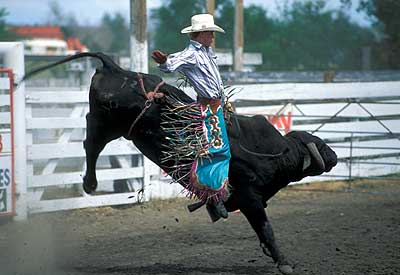
Bull riding has long been mythologized for its danger. A rider climbs onto a lurching 2,000-pound bull, grasps the end of a rope that is wrapped around the animal’s midsection and must stay aboard for eight seconds to score points.

“It’s like a violent game of chess,” said Ty Murray, a nine-time world champion rodeo cowboy.

Dan Frosch, New York Times.

Hmm… a dude clinging to stay atop a bucking, 2,000-pound beast for eight seconds? Yeah, that does sort of sound like a chess match.

Oh wait a minute, no. That’s nothing like chess. In fact, rodeo might be as unlike chess as any sport there is. Who is the opponent, in this analogy? The angry bull? Death? Sorry, cowboy, I’m just not sure there’s anyone working to calmly outthink you as you’re tossed around by that tortured monster.

The Times story is otherwise tragic and very well-penned, and I don’t aim to make light of Bryan Guthrie’s awful fate, but it makes for a reasonable excuse to weigh in on bull riding. I went to the Professional Bull Riders tour when it came to the Madison Square Garden last summer, mostly so I could say, “this ain’t my first rodeo” the next time I end up at a rodeo.

But now that I’ve seen one, I’m not sure I’ll ever make it out to a second rodeo. I appreciate that it’s certainly terrifying to ride a bull but since they actually stop the clock once you reach eight seconds and judge you on style, it’s not really very exciting at all. Just a succession of dudes riding bulls. Sometimes they hang on for eight seconds and sometimes they don’t. You end up tempted to root for horrifying mishaps, as I imagine you would at a NASCAR event.

And at no point during the event did I ever consider that it was anything like a chess match, or even a violent chess match. A violent chess match would probably be a lot more entertaining.

Actually, I think a good idea for a sport would be to pit two chess masters against each other in the middle of a rodeo ring. Then, at some undisclosed point in their match, release an angry bull and see what happens. Now you’ve got to think on your feet, bro.

Yeah, you could take his queen with your rook right now and put yourself in pretty good position to lock up checkmate in a few moves, but there’s a pretty solid chance you’ll be gored by then, and the whole chessboard bucked into the mud. So how do you play that? You tell me, buddy; you’re the so-called “master.”

Mark Teixeira schools the Daily News

“I’ve been through plenty of ups and downs in my career and the back of my baseball card says it all,” said Teixeira….

“I don’t know how many times I have to tell you guys, I had a great May,” Teixeira said in an exasperated, defensive tone. “You have a couple bad games, you don’t worry about it. You put it aside and you go play today. If I had struck out six times (Sunday), you probably could have written an article saying, ‘Man, there’s something wrong with Tex.’ But I swung the bat really well. I didn’t get any hits, but results are going to show up if I keep swinging the bat.”…

Asked about the stark dropoff over the past three weeks, Teixeira quickly dismissed the significance of those numbers.

“You guys can do that all year long – and go ahead,” he told reporters after Sunday’s game. “It’s fun to do, because stats are what’s fun about this game. But as a player that plays 162 games a year, you don’t live and die with every good game or every bad game.

Mark Feinsand, N.Y. Daily News.

This is a fascinating article. The early edition of the News actually had a front-page inset that boasted special coverage of Teixeira’s slump (which has since been bumped for the Fashion Oscars) and Mike Lupica chimed in with a column of his own.

Here’s the funny thing: The “exasperated, defensive” first baseman is absolutely right. Teixeira’s rate stats are almost all in keeping with his career lines. He is hitting the same amount of line drives as he did last year. The principle difference in his production comes from a .229 batting average in balls in play that’s a full 75 points below his career .304 line.
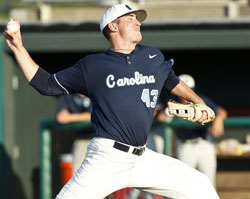
Mark Teixeira is suffering through a prolonged run of terrible luck. He happened to strike out six times in a game on Saturday, and that’s bad, and the type of thing that prompts multi-page special features about his slump. But his strikeout rate is, again, perfectly in keeping with his career total.

The numbers will normalize. Hits will fall. Mark Teixeira understands this. It’s almost as if that guy knows a thing or two about baseball.

Mets draft some guy

Somehow I never realized how much of a crapshoot the actual game of craps is until this weekend, when I stood near a table in Atlantic City and learned the rules of craps. It’s really just betting on dice rolls. Total crapshoot. It’s not just a clever name.

So it’s not really fair to call the MLB draft a crapshoot, because it’s not like the Mets could choose just anyone with that seventh overall pick and expect equal odds of a reasonable return. Matt Harvey has a much better chance of turning into a legitimate Major Leaguer than I do because I don’t throw a fastball in the high 90s. So it’s a good thing the Mets didn’t draft me.

But since baseball players are drafted from all sorts of different levels and leagues, there’s no easy way to compare skill levels and obviously no perfect way to project how good a player will become. So yeah, once scouts have poured over thousands of amateur players and identified the ones worth drafting in the first couple of rounds, it does a bit random as to which ones pan out.

Teams and general managers who draft players that become good Major Leaguers are generally credited as good drafters, and there are very likely some scouts with a better sense of projectable Major League talent than others. But such a slim percentage of drafted players become Major Leaguers and even fewer become Major League stars, so it’s damn near impossible to say for certain that any team consistently drafts well. We can point to teams with good draft histories and we can identify the teams that seem to employ the best strategies. That’s really it, though.

For a point of reference, check out the first basemen drafted in the first round in 2008. The Mets selected Ike Davis that year, a pick some fans (predictably) grumbled about but one that seems to be working out.

Davis was one of six first basemen taken in the first round. The first, Eric Hosmer, was out of high school and appears pretty talented, though he’s still a ways off. The second, much-hyped University of Miami product Yonder Alonso, has a .715 OPS across Double- and Triple-A this season.

The third, University of South Carolina’s Justin Smoak, raked in Triple-A earlier this season and is currently starting at first for the Rangers, though without as much success as Davis to date. David Cooper, drafted one pick before Davis out of Cal, has a .675 OPS in Double-A.

Four picks after Davis, the Padres took Allan Dykstra, who is sporting a .698 OPS in High A.

In other words, they’re all over the map. As of now, Hosmer, Smoak and Davis appear to have been good picks and Alonso, Cooper and Dykstra bad ones. So we can credit the Royals, Rangers and Mets for their talent scouting, or we can guess they just got lucky. And really, we still don’t know: All these guys are still young; any of the former three could collapse and any of the latter three could explode.

That’s a long and silly way of saying it’s sort of pointless to get too excited one way or the other about Matt Harvey. I understand that drafting college pitchers is a good strategy, though I don’t know that I’d point to Harvey’s history of 150+ pitch outings as a good sign (as many have). You can’t teach a 98-mph fastball, though, so that’s good.

What I know for certain is that he had an awesome mustache, so, you know, suck on that Chris Sale. Also, I will hold out some slim hope that he breaks with tradition and chooses Weird Al Yankovic’s deep track “Harvey the Wonder Hamster” as his warmup music. And it’d be cool if he’s good, too.