
I’ve already said my piece about Daniel Murphy this offseason, but I did that — I think — before his list of most similar batters through Age 24 on baseball-reference came out. So I figured I’d take a look at those and consider Murph’s future once more.
 With some of these guys, it’s hard to tell exactly why baseball-reference deemed them reasonable comps — especially 1880s stud Harry Stovey. But I am not here to doubt baseball-reference.
Lee May — the top comp — had a season pretty similar to Murphy’s as a 24-year-old in 1967, then busted out to hit 162 home runs and post a 130 OPS+ over the next five seasons. Never did walk much, but I imagine Mets fans would sign up pretty quickly for that type of production from Murphy.
Bob Chance tallied 106 more at-bats in his career. Adam Lind broke out with 35 home runs for the Blue Jays as a 25-year-old last year. Stovey retired as the all-time leader in homers and stolen bases in 1893. Jeffrey Hammonds had a couple of nice seasons, but could never stay healthy for a full one. Norm Siebern took a step back at age 25 then earned three All-Star nods in the early 1960s.
Conor Jackson followed his decent but unspectacular Age-24 season with similar ones at 25 and 26 before falling victim to valley fever in 2009. Jack Fournier spent the rest of his career mashing in one league or another. Reid Nichols most decidedly did not.
What do these men have in common other than presence on Murph’s most similar list? Not much. Through roughly 600-700 plate appearances through age 24, they had all managed to not embarrass themselves as Major Leaguers, and that’s really it. Stovey, Fournier, and to a lesser extent Siebern and Ross had distinguished themselves by that age, and so probably are not the best comps for Murphy.
As for the rest? Well, no one could tell what the future held for them when they were only 24. And so it is for Murphy. Sure, May and Lind had better histories of Minor League production, but Murphy’s got that businesslike persona and disciplined approach everyone seems to like so much.
Based on the baseball-reference comps alone, eliminating the four guys that don’t seem right, I’d say there’s a 33 percent chance Murphy becomes a legitimate slugger, a 33 percent chance he really contributes anything, a 16.67 percent chance he becomes a decent but injury prone player, and a 16.67 percent chance he has two more decent seasons then succumbs to valley fever.
Of course, it doesn’t really work like that. The point is that, while it might seem easy to judge a player on his first 707 plate appearances, it’s just not.
I’m not certain Murphy is the answer moving forward for the Mets at first base, but since he’s young, inexpensive, and appears able with the glove, he should be given the chance to play himself out of the position in 2010. A right-handed hitting complement like Ryan Garko would be a nice acquisition, but Murph is too young to be given up on entirely.
 I was going to put the list itself sixth or seventh, because I’m meta like that. But I ran out of steam about two deep, because I got really bored scouring the Internet for dumb decade-in-review lists, plus I don’t really begrudge people the right to wax nostalgic at the times when it is deemed socially appropriate.
 Conventional wisdom says that Nelson Figueroa should not be allowed to pitch more than a certain limited number of innings in any given Major League stint before he’s exposed and big-league hitters figure out his stuff, but I’ve never been much one for conventional wisdom.
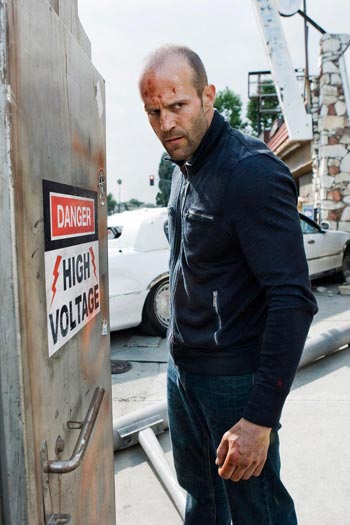 Jason Statham is awesome. He perpetually looks like he’s about to kick someone’s ass, even in scenes when he’s tenderly romancing his wife in the kitchen and such.
 If you read this site or my columns with any regularity, you know that I’m the first to criticize Minaya when he deserves it. In fact, I actually touched on a lot of the same themes Passan did in
  Tedquarters