How is this not terrifying?

OK, this will take a while, but go read this article in the New York Times. I’d tell you to read the cover story from this month’s Popular Science about a “Terminator Scenario,” too, but the link on the website is broken.

I try to reserve my paranoia for comedic purposes. I don’t actually wear a tinfoil hat with any regularity. But I find it difficult not to be at least a little bit legitimately, unironically frightened by the content of the Times article — detailing, among other things, the various advances in computer surveillance techniques — especially in conjunction with the PopSci piece, about recent advances in unmanned military technology and the current lack of any international agreement regulating its use.

Though I like to joke about robot uprisings, a Terminator Scenario (or a The Matrix Scenario) doesn’t really concern me. Some of our most advanced computers glitch out trying to solve Jeopardy! clues; I don’t think they’re going to develop the necessary intelligence and awareness to organize amongst themselves — and against us — anytime soon.

But people are less predictable and more often awful than machines. Though with age I’ve come to realize the pinpoint accuracy of Hanlon’s Razor — never attribute to malice that which is adequately explained by stupidity — it seems eminently possible that the wrong person or people could wind up at the controls of the advanced surveillance and high-tech killing machines. And then it’s easy to see the clear path to dystopian future.

Just sayin’s all.

On regional motorists

New Jersey people can’t drive.

Justin Tuck.

I think about this a lot. I’ve taken my shots at Jersey drivers in the past, and it’s true that the large majority of motorists on New Jersey thoroughfares cannot, in fact, drive. But the same is the case on Long Island, where I grew up, and in Westchester, where I currently reside.

The principal hallmarks of the bad suburban New York driver are aggressiveness and inability to signal turns. There are subtle distinctions between locales but they’re nebulous — Jersey drivers seem most likely to tailgate, Long Island drivers most likely to cut you off, Westchester drivers most apt to speed in parking garages.

But outside of a driver’s ed classmate who would thrice fail her road test (and once, due to no real fault of her own but to my great early-morning entertainment, hit a seagull mid-flight), all of the worst drivers I’ve ever encountered have been in Georgia, some 800 miles removed from Gotham.

Venerable former roommate Ted Burke and I traversed the 260-mile jaunt from Savannah to Atlanta (via Milledgeville, of course) reasonably early on a Saturday morning in May. It should have been a smooth and calm ride: It was a sunny day and there were few other cars on the interstate.

Problem was, every single car we happened upon was either driving too slow in front of us, too fast behind us, or maintaining a steady pace in our blind spot. Drivers cut us off only to immediately slow their pace. Others sped up when we tried to pass them. It was maddening. All around us we could see open road, but the entire trip was harrowing. I would have been covinced it was some sort of aggressive behavior toward yankees if our car weren’t a rental with Georgia plates.

So I wonder if perhaps most people can’t drive, and longtime New Yorkers like me just associate bad driving with Jersey the way every European country attributes syphilis to a neighboring state.

After all, D.C. drivers, with their wholesale obliviousness, are at least as bad as New Yorkers. And Boston drivers, who combine aggressiveness with a bizarre and uniquely Bostonian chip on the shoulder, might be the worst of all.

Why are there clear regional distinctions in styles of bad driving? Outside of, “well there are lots of old people in Florida,” I can’t think of any reasonable explanation. Are any area’s drivers actually worse than the rest? I don’t know. Your feedback is welcome.

No. 2 Top Thing of 2010: F**k You

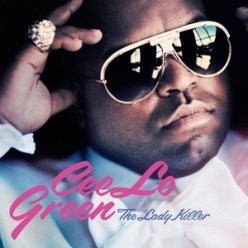
Anyone who says any song that came out in 2010 is better than Cee-Lo Green’s “F**k You” is flat-out wrong. And I recognize music is a subjective thing and all that. But this song is objectively amazing. It’s so good that the fact that it’s a Grammy-nominated single with an expletive in its title (and chorus) is not even the most notable thing about the song.

First, there’s the transcendent vocal performance. Cee-Lo, late of the Goodie Mob and Gnarls Barkley, wails out a pitch-perfect breakup song, mixing funny lyrics and believable emotion. The end of the bridge, when he belts, “I still love you!” then segues back into the chorus, that’s… I don’t really have a point to make about that except to say it’s awesome.

The production is sweet, too. The tune is catchy as anything, a modern take on a classic upbeat, summery Motown feel. Nothing fancy, just funky gleeful soul.

It’s so enjoyable and so perfectly poppy that I have to imagine even the parental-advising Tipper Gores of the world would be hard-pressed to react to it any way but tapping their feet and whistling along, ignoring Cee-Lo’s frequent use of the titular four-letter word. Then when it ended, Tipper and her cronies would probably listen to it again, because it’s just that catchy.

And then, the song’s success is in itself a testament to new means of distribution, via downloads and Internet and satellite radio. F**k You could never have become popular on broadcast radio alone because its censored version — “Forget You” — sucks in comparison. Why, if the song is so good and the performance is the same should one little word make such a difference? Because people don’t say, “aww, forget you,” after a bitter breakup. The explicit version feels more authentic, and the juxtaposition between the angry lyrics and the poppy tune is lost when the former are softened.

The song is a monument of awesome weirdness, and its success represents the rare instance when some truly amazing music catches hold in the mainstream. It is nominated for the Grammy for Record of the Year and Song of the Year. Normally, I could hardly care less about the Grammys, but if F**k You wins I’ll gain a lot of respect for the awards.

Oh, and it’s got a sweet video.

No. 5 Top Thing of 2010: I meet Shaq

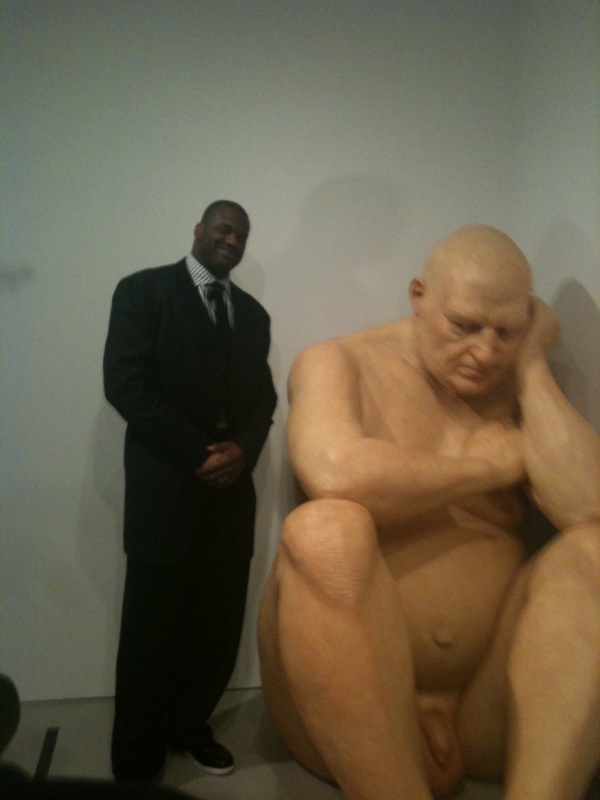
I mentioned here that I was meeting Shaq, but I’m not sure I actually confirmed that I met Shaq. I did. It was awesome.

After I reviewed Shaq’s debut as an art curator, an exhibition at the FLAG Art Foundation in Chelsea, someone from FLAG called me and asked if I would come to a walk-thru of the exhibition hosted by Shaq. Duh. Of course I would. They told me the only condition was that I not ask about Shaq’s injured wrist, since he was there to talk about art.

Wait, I thought: Who the hell would ask Shaq about his injured wrist when he’s guiding a tour of his first gallery exhibition? I want to know what Shaq thinks about art!

Turns out the Big Aristotle is something of a post-modernist, and just sort of kept repeating, “Everything is art.” Because — not sure if you’ve noticed — Shaq is extremely tall and speaks in a very low voice, he is extraordinarily difficult to record on a hand-held voice recorder, so I don’t have many more direct quotes. I asked him if he had thought of an art-themed nickname for himself and he said, “Shaqasso.”

Of course, a reasonably prominent ESPN reporter did ultimately ask Shaq about his wrist injury. Though I realize the guy was just doing his job, it annoyed the crap out of me. Here’s one of the sporting world’s most interesting personalities discussing perhaps his most interesting pursuit yet, and you’re asking him a question you can be almost certain he won’t answer in anything more than vagaries. And I recognize that Shaq’s only famous for basketball and if he were just some massive dude curating an art exhibit who hadn’t been one of the top NBA players of the last 20 years I likely wouldn’t have gone. But c’mon, guy. Shaq’s talking about art. Just, c’mon.

All that said, the moment that deserves merit in the TedQuarters Top 10 Things of 2010 is not that reporter’s question, or mine, or even the walk-thru of the gallery. The No. 5 Top Thing of 2010 is stepping off the elevator into the gallery and having one of the FLAG folks say, “Shaq, this is Ted Berg,” and having Shaq shake my hand with his massive left and subwoof, “Hi, Ted, nice to meet you.”

One of the sad things about the combination of getting older and having this job, I think, is that I’ve become a bit jaded about meeting professional athletes. They’re just dudes and all, even if they’re dudes that are really awesome at sports. But because he has been an NBA star since I was 11, because he is that guy that raps and acts and actually works as a sheriff’s deputy and summons people on Twitter and conducts the Boston Pops, and because he is physically so much bigger than me, Shaq made me feel like a giddy grade-schooler. F@#!ing Shaq, bro. It was sweet.

No. 8 Top Thing of 2010: Jimmy McMillan

Fun fact: I hate politics. The whole thing. I sometimes pay attention to it because there are a few current political issues I actually care about and it seems responsible to keep up on them. But if I spend too much time thinking about politics or watching pundits on TV, I grow disgusted. It seems almost certain to me that the large majority of politicians are spineless dirtbags, that our political system is structured to reward spineless dirtbags, and that it is enormously difficult to succeed in politics if you are anything but a spineless dirtbag.

You can say plenty about New York gubernatorial candidate and founder of the Rent is 2 Damn High party Jimmy McMillan, but he’s definitely not spineless and he might very well not be a dirtbag. He’s a guy who believes — accurately — that the rent is too damn high, and who set out to change that. That’s admirable, I think.

But that’s not what places him among the Top 10 Things of 2010. There will be no other well-meaning but ultimately doomed political candidates on the list, and lord knows there are plenty of them to choose from.

Jimmy McMillan is honored here for the gusto he brought to his obviously ill-fated candidacy. First and foremost, the amazing Civil War-era facial hair. The rhyming. Referring to himself as a karate expert. The black gloves. The too-good-to-be-true web site.

McMillan provided us the slim hope that politics might be anything but impossibly boring, bureaucratic and soul-crushing. He somehow made a gubernatorial debate one of the most entertaining televised events of the year.

And, perhaps more than that, he gave us hope. Not hope that someone like him could ever get elected governor, because that’s patently absurd. No, Jimmy McMillan gave us hope that someone like me or you or the craziest person you know might somehow get enough signatures to get our own place on stage at a New York state gubernatorial election, where we can proudly wear ridiculous facial hair and broadcast our karate expertise to the world.

Full disclosure: I voted for Jimmy McMillan. I did it partly because I vote for third-party candidates whenever I can justify it, but mostly because I knew if he got enough votes, the Rent is 2 Damn High Party would be guaranteed a place on New York state ballots for the next four years. And I would like to someday run for president on the Rent is 2 Damn High ticket.

Sadly, McMillan fell short of the 50,000-vote threshold. Doesn’t make him any less awesome, though. And he’ll bounce back. He is, after all, a karate expert.

No. 10 Top Thing of 2010: The Walking Dead

After The Walking Dead on AMC blew up the Nielsen ratings (relatively), there was a ton of predictable backlash. Critics pointed out that the dialogue was wooden, a lot of the acting was bad, and many of the plotlines were more or less cliched in the zombie genre. Guy wakes up from a coma in the aftermath of the zombie apocalypse? That’s 28 Days Later. Saw it. Pretty good.

All that stuff is true, but the show is still ridiculously awesome, and well deserving of the esteemed ranking of 10th best thing of 2010.

First of all, zombie drama. Just when you thought great meta-zombie movies like Shaun of the Dead and Zombieland might spell the logical conclusion to convincing and unironic zombie horror, here comes The Walking Dead to breathe new life into the genre. By stretching out many of the typical zombie plot elements into a serial drama, the show can add an emotional timbre rarely felt in the inevitable now-you-have-to-shoot-your-zombie-family scenes.

Second, zombie killing. Damn. I have no idea what the makeup and effects budget for the show must be like or how they’re pulling it off, but The Walking Dead presents some downright grisly and most awesome zombie destruction. I’ve never read the comic book upon which the show is based so I’m not if this is from the original story or just an adaptation for the TV show, but making it so the zombies are attracted to loud noises is an amazing twist. If human characters are reluctant to use guns, they have to find all sorts of more creative ways to kill zombies, like baseball bats and crossbows and shovels.

The Walking Dead also nails the appropriate level of zombie competence. The zombies are still idiots and incapable of organizing or anything like that, but their numbers are great enough and they are hungry enough to figure out a way to come get you if you give them enough time. That’s important, keeping you on the edge of your seat and everything.

And mostly, despite some issues in characterization and dialogue, the plots are good enough to force you to put yourself in the same situation, like the best episodes of Lost often did. I’ve always held that one of life’s most important moral and ethical questions is when to shoot your loved one once you know he or she has been infected by zombies. Do you do it right away, because you don’t want your girlfriend to suffer the pain of becoming a zombie and because you yourself couldn’t handle seeing her like that? Or do you wait until your father becomes a zombie, risking further zombie contact but avoiding the burden of having to shoot your dad while he’s still a breathing, functional human?

Oh, the other important element it shares with Lost is the forced group dynamic. The only thing the characters on The Walking Dead have in common is that they’re not yet zombies. But they’re forced to work together, with leaders emerging and roles in the group developing, because it’s their best way to survive.

Just about every time I get on the subway, I size up everyone else in the car and imagine my role in the group if we somehow got teleported somewhere and separated from society. Could I be the leader-guy? Who would stand in my way? Who would be my love interest? I’m pretty sure I’m not the only person who does that, so I suspect the show taps into something about the way we self-identify.

Also important: Your life before the zombie apocalypse has little bearing on your position in the group, other than the ways in which it prepared you to defend yourself from zombies. You might be a crazy backwoods white-supremacist redneck, but if you know how to operate a crossbow and cook squirrel meat then you’re a pretty valuable dude to have around. The best character on the show is Glenn, a pizza-delivery boy turned dope zombie-killing strategist. Glenn’s apparently really awesome at figuring out the best routes to get places, which is probably related to skills you’d develop delivering pizzas.

And since the show has no set end date, you know eventually if it continues long enough, Glenn’s gonna turn into a zombie. That’s going to be so messed up! Will Rick shoot Glenn? Can he shoot Glenn, after all the respect he has earned saving lives and destroying zombies?

People sometimes say that the quality of television programming is declining. That’s a blog post for another day, but it’s the furthest thing from the truth. More channels means more options means more specialized programming and more competition, which means more righteous zombie kills on Sunday nights. The end.