
From the Wikipedia: Dave Thomas, founder of Wendy’s

I feel like the man I’m referring to should always be called, “Dave Thomas, founder of Wendy’s.” For one, it distinguishes him — or disambiguates him, in this case — from other Dave Thomases, like the NFL tight end and the guy from Strange Brew. Also, “founder of Wendy’s” just feels like it’s the type of thing that should be inextricably tagged onto the end of your name, assuming you founded Wendy’s. Only you didn’t found Wendy’s. Dave Thomas, founder of Wendy’s did.

From the Wikipedia: Dave Thomas, founder of Wendy’s.

Never mind that the actual headline of Thomas’ Wikipedia page reads, “Dave Thomas (American businessman).” I make the rules here.

Thomas was born in Atlantic City to a young, unmarried mother he never knew. He was adopted at six weeks old, lost his mother at age 5, and spent much of his formative years moving around the midwest as his father sought work.

Thomas first entered the restaurant industry at 12 years old, but lost his job after a dispute with the owner, presumably because Thomas already knew way more about making delicious bacon in massive quantities than anyone else and wasn’t willing to compromise. By age 15, he was working in a Fort Wayne, Ind. restaurant called the Hobby House. Thomas eventually dropped out of high school to work at the Hobby House full time.

When the Korean War broke out, Thomas volunteered for the Army so he could have a say in his assignment (as opposed to waiting for the draft). Because of his food service experience, he asked to be sent to the Cook’s and Baker’s School at Fort Benning, Ga. He was ultimately dispatched to a base in Germany, where he cooked for 2000 soldiers until his discharge in 1953.

OK, here comes the big reveal:

After returning from Germany, Thomas went back to work at the Hobby House, where he soon met none other than Col. Harland Sanders. Yeah, that Colonel Sanders.

Sanders was in Indiana looking for franchisees for his new chain, successfully pitching his business to the owners of the Hobby House. They opened several Kentucky Fried Chickens around the midwest and introduced Sanders to their enterprising young head chef, Thomas.

It was Thomas who suggested that Sanders trim the menu and focus on the chicken, that KFC sell chicken in red-striped buckets, and that Sanders himself become the spokesperson and face of the chain. So basically, all the main things about KFC were Dave Thomas, founder of Wendy’s’ idea.

In the mid-60s, the Clauss family — the Hobby House owners and KFC franchisees — charged Thomas with reviving sales at four struggling locations in Columbus, Ohio. He did so with such aplomb that he was able to sell his shares in those stores to Col. Sanders for $1.5 million.

With that cash, Thomas was able to start Wendy’s, which he named for his daughter even though she’s not actually named Wendy. The rest you know: Wendy’s made really good burgers by fast-food standards and Thomas starred in over 800 commercials for the chain between 1989 and 2002, which is, according to the Wikipedia, some kind of record.

At some point along the way, Thomas was named an honorary Kentucky colonel, just like The Colonel. He also worked to earn his GED because he was concerned that high-school students might point to his success as justification for dropping out. He became an advocate for education and founded the Dave Thomas Education Center in Florida to help prepare young adults for the GED test. Shortly after his death from liver cancer in 2002, he was awarded the Presidential Medal of Freedom.

This is not on his Wikipedia page, but one time me and my friends stole a life-sized standup of Dave Thomas dressed as a hockey goalie from our area Wendy’s. Let the record show that we didn’t do it out of disrespect, only because we wanted to better celebrate a great fast-food hero. Also because we thought life-sized cardboard standups were hilarious. It may still be in my friend’s parents’ basement today.

Also, this is completely subjective, but I feel like Wendy’s restaurants tend to be better-run than the other major fast-food chains, and I like to credit that to Thomas’ work ethic. I can name probably a dozen particularly bad Taco Bells, McDonald’s and Burger Kings, but I can only think of one or two notably bad Wendy’s. Plus the Wendy’s near my house is fantastic, as was the one near where my old band used to practice.

And furthermore, as discussed, Wendy’s is really the only major fast-food chain that makes decent bacon. I assume that secret comes from Dave Thomas, founder of Wendy’s.

Finally, does anyone remember the Superbar? Shame that didn’t catch on.

From the Wikipedia: Lucy the Elephant

Outcome of a Wikipedia digression.

From the Wikipedia: Lucy the Elephant.

Lucy the Elephant is a six-story high building shaped like an Asian elephant, built in 1882 by novelty architect James V. Lafferty. Unlike many examples of novelty architecture which are really just whimsical sculptures, Lucy the Elephant is an actual functional building that has, at times, served as a restaurant, business office, cottage and tavern.

Lafferty designed and built Lucy in a misguided attempt to sell real estate in the area. Though the Wikipedia mentions nothing about the structure’s effectiveness in luring home-buyers, I confidently write “misguided” because I can’t imagine anyone in 1882 or today being particularly eager to move in next door to a completely terrifying 65-foot high wood-and-tin elephant.

Still, no one before Lafferty had thought to erect a zoomorphic building. He was awarded a patent for Lucy’s design, earning him the exclusive right to make and sell animal-shaped buildings for the next 17 years, undoubtedly a prized distinction.

Though the patent, per the Wikipedia, extended to all animals, Lafferty specialized in elephants. Just five years after completely Lucy, he built an elephant-shaped hotel in Coney Island called Elephantine Collosus, which I believe is the name of the Decemberists’ next album. The hotel burned down in 1896.

Lucy the Elephant was scheduled for demolition in the 1960s, but a group of concerned citizens canvassed the community and saved the structure, moving and refurbishing it and eventually getting it onto the National Register of Historic Places Shaped Like Elephants.

Lucy the Elephant still stands proudly in Margate today, though the tips of its tusks were blackened by a 2006 lightning strike.

Also, the Wikipedia article refers to Lucy the Elephant as “she” throughout, even though a) It has tusks, which only male Asian elephants can boast and b) it is a building and does not actually have a gender.

From the Wikipedia: Nachos

It’s International Nacho Day. Why? Well, I’ll have to consult the Wikipedia.

From the Wikipedia: Nachos.

The Wikipedia defines Nachos as “a popular corn based food of Mexican origin associated with Tex-Mex cuisine,” which really understates it, but whatever. The Wikipedia probably assumes everyone coming to Nachos’ Wikipedia page knows what Nachos are.
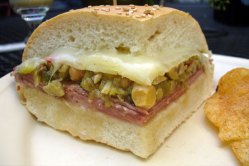
Nachos got their name from their inventor, Ignacio “Nacho” Anaya, the maitre d’ at a restaurant in a town on the Mexican side of the Texas-Mexico border called Piedras Negras. So when the Wikipedia says “associated with Tex-Mex cuisine” it means, literally, that Nachos are like the most Tex-Mexican thing imaginable.

Like so many great snack foods — the Buffalo wing and ice-cream cone come to mind — Nachos were born of necessity. A group of 10-12 wives of U.S. soldiers came into Anaya’s restaurant, hungry after a long day of shopping.

The restaurant was closed for the day and nearly out of food, but the enterprising Anaya made the women a snack from what he had left in the kitchen. He cut tortillas into triangles, shredded cheddar cheese over them, broiled them for a while to melt the cheese and brown the chips, then added sliced jalapenos.

He called the dish “Nacho’s especiales” — Nacho’s specials — and presumably the women were overwhelmed, because, you know, no one had ever eaten nachos before.

Nacho Anaya soon took his recipe to a different restaurant, then later opened a restaurant of his own. Word of nachos’ awesomeness spread swiftly through Texas, and they started showing up in cookbooks before the decade was out.

By the late 70s, nachos were well enough established in the Lone Star State that Texas stadiums began serving ballpark-style nachos, with the processed dipping cheese and everything. They gained exposure on the national stage thanks to Howard Cosell, who took to mentioning nachos on Monday Night Football broadcasts.

Nachos are now served with many toppings, way more than just cheese and jalapenos, and the Wikipedia page includes a list of the more popular ones. Nachos are now served all around the world and are delicious in most places. It sucks when nachos come with a disproportionate amount of toppings to chips or vice versa, but that’s not stated on the Wikipedia page.

Nacho Anaya died in 1975. There is a bronze plaque in Piedras Negras in his honor, presumably a worthy mecca for nacho lovers. After his death, the town declared October 21 — this day — the International Day of the Nacho. No word on why October 21, but I guess now seems like as good a time to be eating nachos as any.

The O.G. Earl of Sandwich

Starch grains found on 30,000-year-old grinding stones suggest that prehistoric man may have dined on an early form of flat bread, contrary to his popular image as primarily a meat-eater.

The findings, published in the Proceedings of the National Academy of Sciences (PNAS) journal on Monday, indicate that Palaeolithic Europeans ground down plant roots similar to potatoes to make flour, which was later whisked into dough.

Reuters.

Of course he did. Of course he did. C’mon. And though it’s not stated in the article, I can personally guarantee you that, with enough digging, archaeologists will uncover evidence that prehistoric man wrapped his meat in that prehistoric bread.

You think prehistoric man, our forefather, was smart enough to hunt and gather and reproduce successfully — spawning our whole society here — and didn’t recognize the importance and deliciousness of the prehistoric sandwich? Not a chance.

I’ve made this point before: Survey humanity. Just about every culture wraps some sort of protein in some sort of starch. We call it a sandwich and credit it to John Montagu, the Fourth Earl of Sandwich, but that’s a cultural and semantic distinction, and one that vaguely discredits the fine work done by visionaries like Hillel the Elder.

The desire to package meat in bread is baked — pardon the pun — into our very constitution. When scientists eventually sequence the entire human genome, perhaps they’ll discover the section that makes us enjoy sandwiches so thoroughly.

I surmise that prehistoric man probably bit into some meat one day and said, “Damn, this meat is delicious, but I really wish there were some sort of crusty, flaky, milder-tasting starch-based food product to accompany and surround it, creating a synergistic relationship in terms of both flavor and convenience,” then went out and created bread.

Except he probably didn’t say it exactly like that. Did prehistoric man have language? Who has got time to look up a thing like that at a moment like this? The important thing is bully to that guy for obviously desiring something that didn’t even exist yet, though I imagine bread and bread-like products would have been invented one way or the other, because, like I said, desiring burritos is clearly an invariable aspect of the human condition.

From the Wikipedia: James Gordon Bennett, Sr.

From the Wikipedia: James Gordon Bennett, Sr.

James Gordon Bennett Sr. was an enterprising businessman, a pioneering newspaperman, a groundbreaking journalist and something of an asshat. That last part is not stated explicitly on his Wikipedia page.
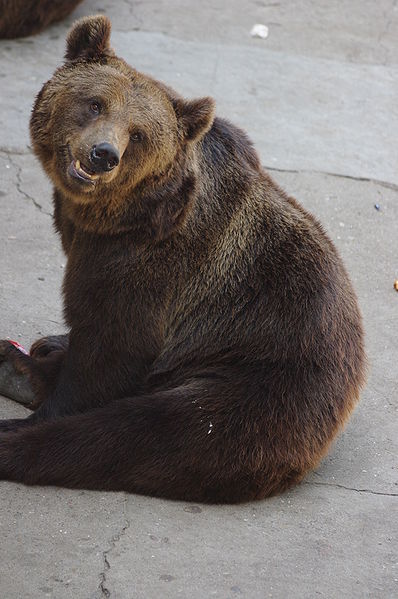
Bennett was born to a prosperous Catholic family in Scotland in 1795 and entered the seminary, but dropped out to read a bunch, flit about and do nothing particularly interesting for about 15 years.

In 1835, after a recent drop in newspaper production costs, Bennett began editing the New York Herald, one of several new penny papers aimed at broader audiences than earlier five-cent papers. Not much of this is in the Wikipedia, incidentally.

Bennett, desperate to distinguish his paper from the rest, introduced illustrations and established the first foreign correspondents in newspapers.

He also essentially invented the gossip column — the first “society pages” — and began, as early as the 1830s, the sensationalism we still associate with the struggle to sell papers in competitive markets. Bennett exploited every angle of the high-profile murder cases of Helen Jewett and Mary Rogers, even doubling back on his stories and contradicting his reporting, to keep headlines astonishing. And he sold a whole lot of papers.

The New York Herald, under Bennett’s watch, was essentially the O.G. New York Post.

Needless to say, he pissed some people off in the process. Namely just about every other newspaper editor in the city, none of whom had quite yet figured how to spin the news as wildly as Bennett could.

Oh, but since all the papers were new and basically all the brainchildren of single editors, they all fought in print (and sometimes in the streets). Here’s how the editor of the New York Aurora, young Walt Whitman — that Walt Whitman, the Leaves of Grass guy — described Bennett:

A reptile marking his path with slime wherever he goes, and breathing mildew at everything fresh or fragrant; a midnight ghoul, preying on rottenness and repulsive filth; a creature, hated by his nearest intimates, and bearing the consciousness thereof upon his distorted features, and upon his despicable soul; one whom good men avoid as a blot to his nature — whom all despise, and whom no one blesses — all this is James Gordon Bennett.

Anyway, obviously a lot of this isn’t from the Wikipedia. Feel free to add it if you’d like — cite the excellent book The Sun and the Moon by Matthew Goodman. I bring it up only because it seems like when people mention newspapers blowing things out of proportion to sell papers — or blogs doing it to draw clicks, for that matter — they act as if it’s something new.

But it’s as old as newspapers themselves. It’s part of the business. Obviously if the headlines get too absurd, the paper will become a joke and not as many people will buy it. There’s got to be a balance. But it’s been like that forever.

Apparently in Great Britain, “Gordon Bennett” is an expression of incredulity, and one I plan on using from here on out on this blog because it is amazing. That has nothing to do with James Gordon Bennett, Sr., but rather his son, who used the paper’s profits to go to Europe and behave flamboyantly. The younger Bennett also had an excellent mustache. Gordon Bennett! Look at that thing.

From the Wikipedia: Sankebetsu brown bear incident

Humans and bears have reached a tenuous detente. Most of our kind is now educated enough to know better than to mess with bears, and bears, in turn, probably see humans as too big to bother destroying. I mean, granted, one-on-one a bear could almost always take a dude, but the dude is big enough to be a pain in the bear’s ass to kill, and why would the bear bother when there are so many delicious fish available for so much less effort.

Plus humans have access to guns, and guns can kill bears, so if bears started overstepping their bounds people would probably clamp down on them pretty quick. This arrangement should hold until bears develop guns, at which point we’re pretty much f***ed.
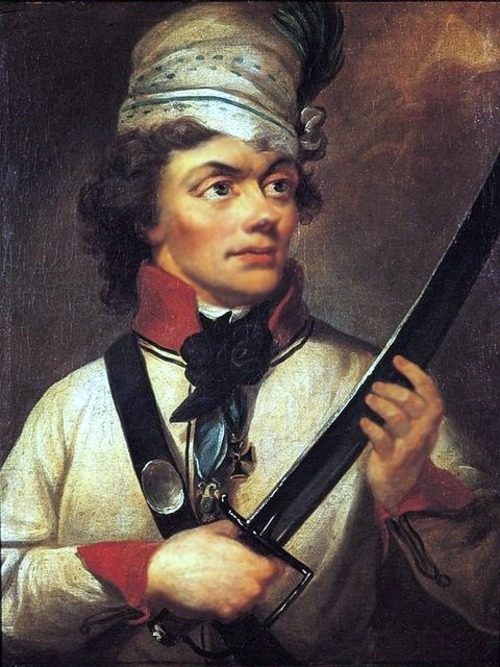
Anyway, there was a time in the not-too-distant past, when our race was still manifesting its destiny and forging new frontiers and all that stuff, when our ancestors still had to live in fear of bear attacks.

And in our history, no series of bear attacks I know of has been as bloody, calculated and downright terrifying as the those that occurred in the small pioneer village of Sankebetsu in Hokkaido, Japan in the snowy December of 1915.

From the Wikipedia: Sankebetsu brown bear incident.

The Wikipedia page is a bit — pardon the pun — grisly for TedQuarters, so in lieu of a comprehensive summary I tried to just provide a timeline here. But then midway through I realized that even just a timeline was a bit more disturbing than I’d like to be on this site. Read the article only if you’ve got the stomach for horror.

The moral of the story: Bears are terrifying. This particular bear weighed 836 pounds, menaced a village for nearly a month and killed seven people — eight if you count the attack victim who died of complications three years later. It also outsmarted multiple teams of hunters. When they went so far as to bait it with a dead body, it appeared to recognize the trap and ran away.

Also, they had to talk an old, drunken bear hunter out of retirement to finally kill the thing. And the hunter maintained that he knew the bear, and that it had previously killed three women.

Over the course of the incident, the bear was shot six times, and finally died only when the old, drunk bear hunter found it sleeping and shot it twice.

Do not mess with bears.

From the Wikipedia: Tadeusz Kosciuszko

I started this yesterday for Memorial Day but ended up spending most of the day in car dealerships trying to take advantage of some Memorial Day sales. From the Wikipedia: Tadeusz Kosciuszko.

In English, he is Thaddeus Kosciusko. In Lithuanian, he is called Tadas Kosciuška. In Belarusian, his name is Tadevush Kasciushka. On TedQuarters, he is known as a complete badass.

Kosciuszko was born to parents of modest nobility in the mid-18th century near the now-abandoned village of Mereczowszczyzna in the Grand Duchy of Lithuania. He was educated in Warsaw, and when civil war broke out in his homeland, he left for Paris to continue his studies. He returned to the Polish-Lithuanian Commonwealth in 1774 and took a position as a tutor for the family of a provincial governor. Kosciuszko fell in love with the governor’s daughter, Ludwika, but got jumped by her father’s goons when they tried to elope.

Jilted by forbidden love, Kosciuszko emigrated to the British colonies in North America to join the struggle for independence. He read the Declaration of Independence shortly after his arrival and was so impressed with the document that he went to discuss philosophy with Thomas Jefferson in Virginia, because apparently Thomas Jefferson was a pretty accessible dude.

Congress appointed Kosciuszko an engineer in the Continental Army, and he went about employing all sorts of battle and defense tactics that the Wikipedia explains in great detail. Kosciuszko was a smart guy, and was credited with choosing the Americans’ position at Saratoga and setting up an impregnable defense that helped the young nation win the battle widely considered the turning point of the war.

Kosciuszko continued to serve the Continental Army until the war’s end, and supposedly set off a fireworks display in Charleston to celebrate the signing of the Treaty of Paris, because Tadeusz Kosciuszko appreciated some good pyrotechnics. He was promoted to brigadier general and granted American citizenship shortly after the war, and given a tract of land in Ohio for his efforts in the revolution.

Kosciuszko didn’t remain in his new homeland for long, though. He soon returned to Europe to advocate for serfs’ rights and fight against the Russian occupation of his homeland. He emigrated again to the United States before the turn of the century, but once more returned to Europe to work for Polish independence.

Jefferson called Kosciuszko “as pure a son of liberty as I have ever known,” and indeed, Kosciuszko was apparently more dedicated to the ideals set forth in the Declaration of Independence than even Jefferson himself. Kosciuszko named Jefferson the executor of his will and left his American property to be used to buy the freedom of Jefferson’s slaves and pay for their education. For some reason not stated on the Wikipedia, Jefferson claimed he was unable to act as the executor, and none of the commodities that Kosciuszko earmarked for freeing and educating slaves were ever used for either purpose.

Kosciuszko’s name is familiar to Brooklyn-Queens Expressway riders because of the bridge in his honor linking, well, Brooklyn and Queens. I have long held that a roadway — especially in this area — is a terrible way to pay tribute to a hero of Kosciuszko’s stature, since the name will inevitably be cursed far more often then it is praised. No one ever says, “oh, what a touching tribute to Major Deegan.” And indeed, though the Kosciuszko Bridge offers perhaps the area’s most spectacular view of the Manhattan skyline, it is more often linked with perpetual traffic.

That’s unfortunate, because Tadeusz Kosciuszko was a great war hero and champion of social reform, an immigrant who made enormous contributions to the foundation of the United States, and a man who appropriately appreciated the awesomeness of fireworks.

From the Wikipedia: Bacon

I don’t believe this requires an introduction during Awesomestock. I apologize in advance to all those who avoid pork for religious reasons. From the Wikipedia: Bacon.

The Wikipedia defines bacon as “a cured meat prepared from a pig.” The USDA defines bacon as “the cured belly of swine carcass.” I define bacon as completely and ineffably amazing.
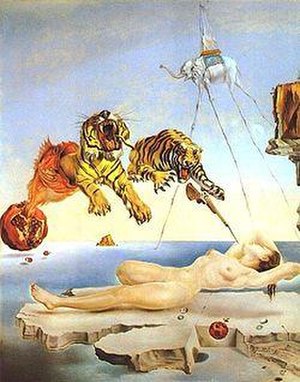
The Wikipedia insists that there are many meat products that can be legitimately deemed bacon, because the Wikipedia has its head up its ass, presumably because it’s delirious from so much pork. Bacon should be made from the belly or in rare instances the jowl of the hog. Anything else masquerading as bacon — looking at you, turkey bacon — is b.s. It might still be good but it’s not bacon. On this I am resolute.

Elsewhere, the bacon we’re familiar with here in the States is called “fatty bacon” or “American-style bacon.” Damn straight. U! S! A!

The word “bacon” comes from the Old High German word “bacho,” meaning buttock, likely because eating a lot of bacon will give you a large one. Worth it.

Bacon is often prepared with saltpeter, which I’m guessing helps give it explosive flavor. Saltpeter is also found in fireworks, meaning it is an important element of two of humanity’s greatest products. Clearly potassium nitrate is the world’s most important and best chemical compound. When the time comes, I may name my first born Saltpeter. Saltpeter Berg. That kid is delicious dynamite.

In the early days of the United States, curing bacon was one of the few cooking processes known to be gender-neutral, because bacon is for everyone. I never watched enough Little House on the Prairie to find out, but I assume Michael Landon and Laura Ingalls Wilder forged their tight familial bond over the sweet smell of hickory-smoking pork.

Did you know that Canadians don’t just call Canadian bacon “bacon” as I always surmised? Apparently they call it “back bacon” and call regular bacon “bacon.” Good work, Canada. For so long I thought you were trying to pass off something that is clearly ham as bacon, but it turns out that’s just something we blame you for, like curling and Celine Dion.

Bacon has been an important part of American food culture since Colonial days. A 1708 poem by Ebenezer Cooke complains about too many things being bacon-flavored, a massive and embarrassing lapse in judgment that likely explains why no one has ever heard of Ebenezer Cooke.

Guess what, Ebenezer Cooke: The only thing I know you’ve written I staunchly disagree with. Your entire legacy is foolishness. Never, ever doubt bacon. There’s no such thing as too much bacon, only too many weenie 18th-century poets who can’t handle awesome meat. It’s a damn shame Nat Bacon died of dysentery before he could whip some sense into you. If the two of you co-existed for more time, maybe Nat Bacon would have set his sights on more noble pursuits instead of just being a tremendous jackass. Mmm, Nat Bacon.

More recently, this nation has been swept by something the Wikipedia calls “Bacon Mania,” a fervent drive toward reason in an often irrational world and a trend so widespread and excellent that it earned its very own Wikipedia page. Bacon Mania is alternate attributed to both patriotism and rebellion.

“Loving bacon is like shoving a middle finger in the face of all that is healthy and holy while an unfiltered cigarette smolders between your lips,” writes Sarah Hepola. She’s wrong, though. Loving bacon is just loving bacon, which needs no rationale. And don’t smoke before you eat bacon, as it will just dull the delicious bacon flavor.

Thanks in part to Bacon Mania, there are now tons of available consumer products centered on bacon, like bacon hot sauce, bacon peanut brittle and bacon vodka.This makes sense because just about everything is better with bacon. For a long time I thought peanut butter and bacon sandwiches wouldn’t be good even though I love peanut butter, bacon and sandwiches. They’re delicious though. I never should have doubted you, bacon.

One time one of my friends tried to one-up me at dinner by ordering cake with a side of bacon for dessert, then draping the cake with bacon before he ate it. The joke was on him though because it turned out Cake n’ Bacon is amazing, and he let me eat a bunch of it.

Sometimes fads are stupid, sometimes they’re meaningless, sometimes they’re f@#$ing unbelievable. Maybe Bacon Mania is a passing fancy, but I will surf this wave until it crashes, then keep loving bacon after all its fairweather fans have moved on. Consider me a Bacon Maniac for life.

From the Wikipedia: Dreams

From the Wikipedia: Dreams.

The Wikipedia defines a dream as “a succession of thoughts, images, sounds or emotions which the mind experiences during sleep.”

No one is entirely sure why we dream. People theorize that we dream when we convert short-term memories to long-term ones, or maybe when we eliminate useless memories from our subconscious. Some say dreams are our way of sorting out the emotions we repress, others say dreams are a method of understanding or elucidating the emotions that are difficult to express rationally. Some maintain that dreams help us connect conscious thoughts, others claim they help us dissociate our irrational selves from reality.

We know for sure that we do dream, and we even know at what point in our sleep it happens — every night during R.E.M. sleep, even if we don’t remember it at all. No one is certain what part or parts of the brain initiate dreams. A couple of people had decent theories, but all they wound up with when they tried to test them were a bunch of dead monkeys.

The Wikipedia, and, I suppose, humanity, knows frighteningly little about dreams, considering how often they happen. They can be silly or sexual, stressful or happy. Some think dreams should be analyzed psychologically to root out their meanings, others argue they are themselves a method of internal, personal psychoanalysis.

When you think about it, though, dreams are incredible. Somehow, in sleep, we create a series of images, conversations, actions and decisions that can seem so damn real they’re almost cinematic. That’s nuts. It’s mind-boggling that we even have that capacity, especially since it serves no obvious evolutionary purpose.

I suppose I should say that I create those things. I can’t speak for you. Part of the problem with studying dreams is that we can never experience another person’s dream, so we can’t be sure what a dream is like for anyone else, kind of like colors and pain. I’ve recapped some of my stranger or more interesting dreams to people and had them tell me I was lying, and that nobody has dreams so silly or so weird or whatever.

Well I did, bub. Sorry if your dreams are lame.

A couple of months ago, for the first time in my life, I had a dream so funny I actually laughed myself awake. The details are so odd that I won’t explain them all here, but it culminated in some sort of goat-buffalo hybrid headbutting a pain-in-the-ass teenager down a mountain, and the comedic timing was impeccable. The next day I wished I could consciously come up with and film a situation so hilarious, since it would certainly make me a Hollywood legend.

I have some pretty mundane dreams, too, of course. A week ago I dreamed the Mets traded for Kevin Millwood.

My dog — the late, great T. Captain Dog — used to dream all the time. He’d enjoy what seemed to be happy dreams, based on the various thrilling dog noises he’d make throughout, but also what seemed like anxiety dreams, which were both pathetic and hilarious at the same time. What could be stressing you out, Captain? You just lay about all day, living the easiest life conceivable. Did you imagine that one day the food bowl just wasn’t there? That the local squirrels finally ganged up and started chasing you back?

I bring up dreams today because I’m still thinking about last night’s Lost finale. That show always struck me as dreamlike: Hey, we’re lost on an island, and there’s some black smoke that keeps killing people, oh and also there are other people here living in a quaint little village, and they won’t let us leave the island, and also almost everyone here is really hot.

And just like most dreams, the show failed to come to a satisfying, definitive conclusion. But I guess — as with dreams — the various plot holes, unexplained mysteries and unclear connections in the show don’t necessarily make the insights gained or emotions explored any less real.

From the Wikipedia: Stone Mountain

I seen it! From the Wikipedia: Stone Mountain.

Stone Mountain is a quartz monzonite dome monadnock in Georgia. If you care to learn what any of that means, geologically, I recommend the Wikipedia. If you need to be reminded that the word “monadnock” is funny, here’s that: Monadnock.

I’m pretty sure “quartz monzonite dome monadnock” means, roughly, “big, big rock.” Thing stands 1,686 feet high, and since it’s on reasonably flat ground, it looms pretty huge over the outskirts of Atlanta.

The rare fairy shrimp may breed on the mountain’s summit, but it may not if it is extinct, as many scientists now believe. In either case, “fairy shrimp” is a terrible name to call any of the mountain’s many school-aged tourists.

The chiefly notable thing about Stone Mountain, beyond its huge rock qualities and the debatable presence of fairy shrimp, is that it features the largest bas-relief sculpture in the world.

The subjects? Why, Confederate heroes Jefferson Davis, Stonewall Jackson and Robert E. Lee.

As a total yankee, my first reaction to seeing something like that falls somewhere between abject terror and sarcastic, holier-than-thou bemusement, especially when I read about how the Ku Klux Klan was revived at the base of Stone Mountain — before the bas-relief even started — in 1915.

Then I think about it more and try to write the whole thing off as history. The Civil War happened a long time ago now, and the sculpture was commissioned a long time ago too, even if it wasn’t finished until 1972 (!). While the men memorialized on the side of that rock fought on behalf of despicable things, I couldn’t exactly ask the people of Georgia to blow the whole thing up and erase it. Besides, as long as Andrew Jackson’s on the 20-dollar bill no one should pretend the U.S. is above commemorating guys who did atrocious things.

Then I go see the laser light and fireworks show projected on Stone Mountain on Saturday night and I just get really confused. The spectacle, mostly a tribute to Georgian music, includes a segment on the Civil War that glorifies Lee, Jackson and Davis and concludes with the trio apparently deciding its foolish to continue fighting and that unification is in the nation’s best interest. It’s a bit weird, especially since, you know, that’s not how it happened.

A few of my buddies were pretty freaked out by the whole affair, and I’ll grant that there’s something unsettling about flagrantly rewriting history in 100-foot tall laser beams.

But judging by the crowd, no one was there for a history lesson anyway, and the “Devil Went Down to Georgia” segment drew a way more enthusiastic reaction than the Civil War nonsense. Plus the whole thing ended, predictably, with a politically correct and syrupy-sweet laser-light tribute to patriotism and, of course, explosives.

And fighter pilots. A whole lot of fighter pilots.

It was a good show, really. They played Ray Charles and James Brown and OutKast. Like I said, it was a tribute to Georgian music. It just so happened to be projected on a monument to three leaders of the Confederacy. It sure didn’t seem like anyone in the crowd was there to foster hatred or forward revisionist history. They wanted to witness an awesome onslaught of lights and fireworks, and this huge rock provided a really striking natural amphitheater.

Things like Stone Mountain used to get me so upset. I don’t really know why they did, and I don’t really know why that stopped happening. Maybe I’m losing my edge.

Or maybe I’m coming to grips with the knowledge that inexplicably awful things are near-universal in history, ignoring them is dangerous, all the information anyone needs to inform an opinion on them is pretty readily available, and failing any better ideas, we might as well use their monuments for laser light spectaculars.