R.A. Dickey so freaking cool

This, like a million times over. When I was a vendor at Shea, they used to make us show up like four hours before game time to get our assignments and everything. Vendors brought balls, cards and books to pass the time before fans started showing up. I remember once getting involved in a knuckleball catch with a few other guys, and everybody involved joking and fantasizing about what a great Hollywood story it would make if the Mets discovered one of their vendors throwing knuckleballs in the parking lot. Though technically, I should note, that was an orange-collar job.

Carl Crawford stuff

Carl Crawford is a very nice baseball player. He gets on base at a solid rate, hits a few home runs, steals bases at an excellent clip, and plays fantastic defense in left field. Due to his all-around contributions, Crawford probably ranks among the top 20 position players in baseball.

When he signed a seven-year, $142 million deal with the Red Sox last night, Crawford became the seventh-highest paid player in baseball. It should be noted that of the six players ahead of him — Alex Rodriguez, Ryan Howard, Joe Mauer, C.C. Sabathia, Johan Santana and Mark Teixeira — at least half of their contracts already appear to be overpays and potential long-term albatrosses.

Based on Fangraphs’ WAR — which heavily values Crawford’s defense — the newest Red Sox has been worth between $25 and $28 million the last two seasons, meaning he’ll likely be worth his contract for at least the next couple of years. But since much of Crawford’s game is based on his legs, it’s no sure thing he’ll be providing ample return on his contract in its waning years, when he’ll be in his mid-30s.

The Red Sox’ position is defensible. They managed 89 wins in baseball’s toughest division despite a rash of injuries in 2010, and they traded for Adrian Gonzalez earlier this offseason. Boston must capitalize on the years it has with one of baseball’s most valuable assets — a duo of excellent young pitchers in Jon Lester and Clay Buchholz. The additions of Crawford and Gonzalez make the team obvious favorites for postseason play in the next few years, and flags fly forever and all that.

Matt Cerrone suggested recently — in a post I can’t currently dig up — that top free agents this offseason could be getting such huge contracts because of teams’ recent trend toward locking up young players to long-term deals. That creates more competition for the few top-flight players that do hit the market, so contracts become more expensive. Supply and demand and whatnot.

So by that rationale, Crawford and Jayson Werth are not wild overpays, teams just know that the new price of free agents is high, and teams have more flexibility to sign free agents to fill holes because they’ve got many of their homegrown players locked down to reasonably team-friendly deals. The Sox, for example, have Lester, Kevin Youkilis and Dustin Pedroia under contract for several years at below-market rates.

Anyway, if that’s true, it would stand to reason that at some point the market should start turning back around. If Mike Stanton or Jason Heyward sees the type of money that Werth and Crawford are getting on the open market, he could opt to wait out free agency instead of letting his team buy out his arbitration years and the few seasons beyond. That means less money in the near-term and significantly more risk to the player, of course — one injury could jeopardize a life’s worth of money — but as the reward grows greater, it’s hard to imagine more players not taking that risk.

And then eventually, I guess, the cycle repeats itself.

In the here and now, I wonder how Crawford’s contract affects Jose Reyes’ status with the Mets. From 2006-2008, Reyes was a very comparable player to Crawford, only playing a premium position. He always says he loves New York and he wants to be a Met, but if he returns to form in 2011, he will likely stand to make a ton of money on the open market.

The team should probably work to lock up Reyes to an extension as soon as it determines he’s healthy and productive and apt to be the shortstop in Flushing for the long-term. If he’s playing well, Reyes will likely become more expensive as he approaches free agency and as he and his agent begin to consider the offseason payoffs to players like Crawford and Werth.

Mets sign John Paul Bonser

Make no mistake: The most notable thing about Boof Bonser is that his name is “Boof Bonser.” Technically his name is John Paul Bonser, but that name sucks compared to Boof Bonser and so we will never refer to him as such again.

The second most notable thing about Boof Bonser is that he was once traded with Joe Nathan and Francisco Liriano for A.J. Pierzynski.
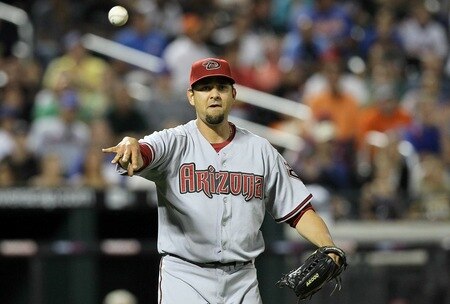
The Boof was a pretty solid prospect for the Twins as recently as a few years ago, and enjoyed an unspectacular season and a half in Minnesota’s rotation in 2007 and the first half of 2008.

He was demoted to the bullpen for the second half of 2008, then spent all but one inning of the 2009 campaign recovering from labrum and rotator cuff surgery.

Bonser returned in 2010 and was pretty terrible both in Triple-A and in 25 spotty innings of relief work in the Majors.

The upside to Bonser’s 2010 season is that his fastball velocity was not far off where it was before his surgery, providing at least some hope he could bounce back. Of course, Bonser has never really been all that good in the pros, and reclaiming his 2007 form would not necessarily make him any better than Dillon Gee.

Still, since Bonser was once a prospect, showed promise early in his career and appears to be healthy at least for the time being, he’s a solid no-risk pickup on a Minor League deal for the Mets. At 29, he’s young enough that it’s still not too late to hope for some moderate resurgence, either out of the rotation or bullpen.

Also, he will be easy to root for, since his name is Boof. And as an added bonus, if he’s an optimist he might be able to convince himself he’s being vocally carried through his rough times whenever he’s booed mercilessly by the Citi crowd.

I was saying boo-oof.

Anyway, good topic of conversation came up in the office: Which baseball player has the best combination of awesome name and actual baseball skill? Oil Can Boyd is a more awesome name than Catfish Hunter, but Hunter was the better pitcher. How do you weight skill versus awesomeness of name when selecting baseball’s all-time best name guy. Should Bonser, Boyd and Hunter be docked points for using nicknames as compared to, say, our own Burleigh Grimes or Van Lingle Mungo?

Ronny Paulino stuff

I feel like Ronny Paulino has been “close” to signing with the Mets like 15 times before. Paulino has a rep as a solid defensive catcher and fared well in Beyond the Boxscore’s catcher-defense rankings. He is not a great hitter, though his career .273/.328/.383 line is pretty similar to the 2010 National League average for catchers — .253/.326/.388.

Perhaps most importantly, the righty-hitting Paulino has, for his career, a marked platoon split. He’s got a measly .635 OPS against righties but an .881 mark against lefties, essentially the Matt Diaz of catchers. Assuming he doesn’t cost multiple years or numerous millions, he would be a great choice to spell Josh Thole against tough southpaws, or even in a straight platoon — since catchers need time off anyway. Combined, they’d give the Mets excellent offense from behind the plate.

Me, here, yesterday.

It turns out Paulino cost $1.3 million for one season, which seems a reasonable investment. Based on a quick survey of Cot’s, that seems around the going rate for free-agent backup catchers — Brian Schneider got about $2.8 million over two seasons last winter from the Phils, Miguel Olivo signed with the Rockies for $2 million for one season to back up Chris Iannetta (which didn’t end up happening).

Paulino gives the Mets essentially exactly what I hoped they’d find: a right-handed hitting backup and contingency plan for Josh Thole who is young and healthy enough to hold up for the long haul. There are questions about his work ethic and he’ll start the season on the last eight games of a 50-game suspension for PED use, but if it weren’t for all that he’d probably cost more.

Assuming he’s enjoying a happy, healthy and drug-free campaign in New York, Paulino will provide the Mets a good righty bat for tough lefties and a defensively solid backup catcher. And considering that Rod Barajas somehow got $3.25 million and Paulino is younger and probably better, it seems like a good deal for the Mets.

Mets sign D.J. Carrasco

Two things stand out on the positive side of the ledger for Carrasco. The first is his tendency to keep the ball on the ground and, by extension, in the ballpark. Merely decent strikeout and walk rates coupled with an above average home run rate can add up to a pretty solid reliever. Ground ball pitchers limit not only home runs in particular but also extra-base hits in general–grounders are less likely to find gaps than their airborne brethren. Too, more ground balls usually mean more double plays, so that’s another bonus.

The second point in Carrasco’s favor, albeit an ethereal one, is that he was pretty effective against lefties in 2010, which is exceedingly rare for right-handed pitchers. Unfortunately, Carrasco hasn’t historically been very good against left-handed hitters, and was awful against them in 2009 (.317/.392/.463). He did throw far more curveballs last season than ever before, but it’s not clear how that would have served him well against lefties.

Eric Simon, Amazin’ Avenue.

I was down on the idea of signing Carrasco just yesterday, but I figured he’d cost more than the two years and $2.5 million he reportedly received.

At that rate, he hardly seems like an awful signing (consider that it took over a million to lock down Kelvim Escobar for 2010). As Simon points out, he yields a decent amount of ground balls and is decently, if not spectacularly, effective.

I wouldn’t get too excited over his ability to retire lefties — across his career he hasn’t been great, and I suspect his success in 2010 might be a small-sample size hiccup.

Also, one thing Simon doesn’t point out: Carrasco has demonstrated the ability to throw a good number of innings in relief in the past two seasons, chalking up 89 frames in 2009 and 78 1/3 in 2010. The Mets haven’t had a reliever throw that many innings since Aaron Heilman totaled 86 in 2007, though I imagine that has as much to do with Jerry Manuel’s quick-trigger bullpen management as anything else.

Hmm

Look, I don’t have any understanding about what the payroll will be or can’t be going forward. Let’s say arguably we have $50 million or $60 million coming off next year. Do I think it would even be prudent to invest that full $50 million or $60 million again in a situation which binds us going forward so that we’re only in the market every three years when this lump sum comes off our books? No.

Sandy Alderson.

This is interesting, and something I hadn’t really considered.

If the Mets don’t throw all of the $50-60 million that comes off the books after this season back into the team’s payroll in the offseason, of course, fans will revolt. They’ll accuse small-market Sandy of being cheap, and argue that a big-market team should never cut payroll from season to season.

But if you think about it, what Alderson’s saying here is smart. Ideally, a team should always have financial flexibility in the offseason — enough to fill any pressing needs via free agency or take on big contracts via trade.

So, looking down the road, it would behoove the Mets to either maintain a little flexibility next offseason or to stagger contract lengths to ensure that a certain amount of is freed up after every season.

That way, whenever you hit the point when it seems like you really are just one player away from a certain playoff bid — a spot where overpaying for free agents is excusable — you know you will always have the requisite payroll to lock him down.