The New York Post is reporting that “there is ‘zero’ chance the beleaguered [Jason Bay] will be released this winter or asked to compete for a job in spring training.”
Just curious
Reply

The New York Post is reporting that “there is ‘zero’ chance the beleaguered [Jason Bay] will be released this winter or asked to compete for a job in spring training.”
The Long Island youth-baseball manager arrested for allegedly stalking an opposing coach shelled out more than $50,000 to personally finance a revenge team that fell flat on its face, The Post has learned.
Angered after his own son failed to flourish on the Long Island Infernos traveling baseball team for 10- and 11-year-olds, Robert Sanfilippo used his own money to create and fund the Long Island Vengeance to even the score against his boy’s former squad, a law-enforcement source said….
While other Long Island teams had modest equipment, Sanfilippo spent like a Suffolk County Steinbrenner. The Vengeance sported top of the line helmets with airbrushed skull and crossbones insignias that cost upwards of $300 each for a team of roughly 20 kids. The squad also provided each player with two uniforms and baseball bags worth hundreds of dollars.
Oh man, Robert Sanfilippo hates subtlety. The Long Island Vengeance! Sounds like a wrestling move and/or a drink special at a Park Ave. bar in Rockville Centre.
Also, outside of the whole playing for an alleged stalker thing, it doesn’t sound like such a bad deal for the other members of the Long Island Vengeance. They get awesome gear and a chance to play in this league, and all they have to do is help Sanfilippo enact his bizarre Little League retribution.
I wonder what he would have done if they beat the Infernos, anyway. Would Sanfilippo just drop it? Would that be the end of the Vengeance? “OK, boys, our work here is done. Pack up those bags. Oh, and I’m going to need those bats back.”
Probably it wouldn’t shake out like that because it almost never does with (alleged) psychotic vendettas.
The skull and crossbones logos, it turns out, are awesome. Not in any way appropriate for 10- and 11-year-olds, but awesome. From the Vengeance’s website:

Badass, right?
Via James K.
So this was pretty awesome. If you’re wondering why I didn’t ask certain questions, it’s that Kevin Burkhardt did a long segment with Tim Wakefield, Phil Niekro and R.A. Dickey immediately before we filmed that will air on SNY at some later date. I didn’t want to sit down immediately after and ask them the exact same questions, but Kevin came prepared and covered a ton. Dickey had to leave for a Mets function, so then I told Tim Wakefield he was crazy and impressed Phil Niekro with my knowledge of knuckleballer history. Nice guys both.
https://twitter.com/MHealeySports/status/245869417412579329
Since Mark’s tweet on Sept. 12, Carlos Beltran has hit .433/.528/.633.
That’s based on a tiny sample, yeah, but so is any assertion that Beltran was providing the Cardinals absolutely nothing. <3 the Beltran.
First, an email from Evan:
I put together a comparison of the Phillies’ and Mets’ records in the first and second halves from ’07 up to this year. It’s crazy. The Phillies have collectively been 14 over for the first half and 55 over for the 2nd half. The Mets have been only a half game worse than the Phils in that time over the first half of the year but an incredible 79 games worse than them in the second half. How is it possible that one team can so consistently turn it on in the second half while another team consistently sputters out? Earlier in the season, I had hoped that even if the Mets weren’t going to contend this year, at least they’d finish 3rd above the Marlins and Phillies, maybe flirt with a wild card. But just like they have done for the last 5 years, and even though they traded some players away and their old stars are even older and coming off of injuries, the Phillies still made that push and now are in the mix for a wild card while the Mets have once again been left behind. I have noticed you often chalk things up that are difficult to explain otherwise to the randomness of the game, but can results like this be considered random? The Phillies performed significantly better in the second half each of the last 6 years and the Mets performed significantly worse every year except for ’08. Maybe I’m just like a lot of fans and tired of Septembers that feel like this and watching a Phillies team that I thought was buried a couple months ago come in and do what they just did makes me frustrated enough to stay up until 2 a.m. doing dumb stuff like this. Ugh.
It’s a great question. I have to go with randomness because I’ve got nothing better, and because randomness has a powerful way of looking like all sorts of other things. David Wright is the only active player on the current Mets who was around for the second half of 2007. They’ve got a whole new coaching staff and a new front office. So unless Wright’s presence is so poisonous that it dooms the team in the second half (but notably not the first half) every single year, I can’t think of what it could be about the Mets as an organization that makes the team play worse after the All-Star Break. The Wilpons are a constant across that time period too, someone will certainly mention. But could a team’s ownership possibly have to do with its first half/second half splits?
Not for nothing, but there are some arbitrary endpoints in play: The 2005 and 2006 Mets were a bit better in the second half than they were in the first half. But the 2004 Mets also fell apart after the break, and the Phillies have been better in the second half in every season since 2003. I just want to hear a compelling explanation for it before I believe it’s a real thing. Something in the water? The toll of NYC nightlife over the course of a season? The way they train? After a game like last night’s I’m shattered enough to believe something, but not just anything.
https://twitter.com/Devon2012/status/249139828283805696
This came up in the comments-section yesterday: If Mets prospects lists still include Harvey this offseason, I imagine you’ll see at least a few that still put Wheeler ahead of Harvey. And that seems silly to me. I know Harvey’s Major League success has come across only 59 1/3 innings, but they were about as convincing as 59 1/3 innings could reasonably be. I remember reading on a generally reasonable baseball message board during the 2005 season a discussion over whether David Wright — with about a full year of All-Star caliber play on his Major League resume — had surpassed Andy Marte as a prospect. So, yeah. That. We already know Matt Harvey can be good in the Majors. We don’t know that he will be forever, but we’ve seen that he can be. Wheeler still needs to prove himself at Triple-A.
At this point, I don’t think it’s reasonable to hope Wheeler looks better than Harvey did in his first turn around the big leagues. I think the best you could hope is that Wheeler is as good as Harvey was, which would be awesome.
https://twitter.com/BlueChill1123/status/249139923813277697
Not even Dickey and Wright, I’d say. I’d prefer the Mets sign Wright to an extension because I doubt the type of players they’d return in a deal for Wright would turn out as good as him, but obviously they should always listen.
https://twitter.com/jenconnic/status/249140067870846976
I’m with you. It’s tough to defend them while they’re playing like they have been, and especially after soul-shaking loss like last night’s. But where’s the indication that the process is wrong? They’re losing. Many of the players aren’t very good and now many of them aren’t playing well. That is not surprising. Many of them are young, somewhat promising and under team control for a while. They’ve got depth and some youth in their starting rotation — probably, all told, the toughest commodity to maintain in baseball — for the first time in a long time.
They need more good players, no doubt. They need more payroll flexibility with which to acquire more good players, too. The team on the field, as currently constructed, is not a good one. Don’t get me wrong about that. But I don’t think there’s much to indicate that the front office’s plan is a flawed one and that things will be getting worse. We’ll see what happens this offseason. I imagine we all feel a bit sunnier about their prospects come March, as we always do.
https://twitter.com/tpgMets/status/249159078352400385
Man, I got a body for business and a head for sin. Abstract concepts I can handle but when it comes to execution or practice of business stuff, either my head hurts, I get angry, or I just giggle and yell out, “TAXI!” like in this Kids in the Hall sketch.
So I don’t really know why, when no one’s paying to be at the stadium, they don’t just open up the doors and say alright, fill it up, go buy Shake Shack and hot dogs and make the players feel good about themselves. But I suspect there’s good math behind it. I guess it would anger the season-ticket holders, but then, you know, really? Say you paid for a flight to New Orleans and there was an empty seat next to you on the plane, and the flight attendant came over and said, “Hey, this old woman who wrote us a letter absolutely loves po’ boys but she can’t afford a flight to Louisiana; we’re going to let her fly for free if you’re willing to give up part of that armrest and some legroom.” Would you not let her sit there just because you paid for the ticket?
Oof.
If you’re still watching these woeful Mets — and heaven help us, we’re still watching these woeful Mets — then yesterday you saw Matt Harvey finish his first season with a flourish, striking out Ryan Howard and Carlos Ruiz to end the seventh and close out a one-run, one-hit, seven-strikeout effort on the night the Mets determined would be his last outing of the year. Then, to add awesomeness to excellence, in an interview immediately afterward he said he felt great and not at all tired, and basically suggested he’d pitch tomorrow if the Mets asked him and that he would spend the offseason getting super jacked because he believes six-inning starts are unacceptable. So that was cool.
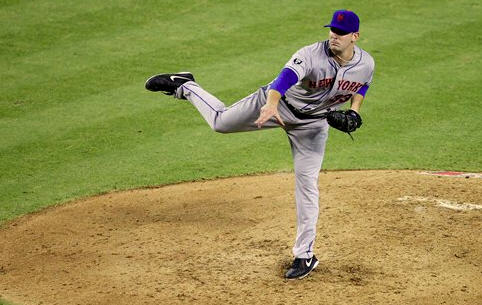
Despite some rather unfortunate pre-callup comps, Harvey’s first turn around the big leagues went about as well as anyone could have hoped. In 59 1/3 innings across 10 starts, he struck out 70 batters and yielded a strong 2.73 ERA. The only part of his stat line that’s at all troubling is his relatively high walk total for the year, but he mitigated that by limiting hits and in so doing maintained a strong 1.146 WHIP.
But you were watching, so you don’t need stats to tell you this: The guy is great. His fastball’s a bullet. His slider makes you chuckle and his curveball makes you weep. In a once-promising Mets season that fell apart so thoroughly and so triumphantly, he was the One Awesome Thing of the Second Half.
Still, pitchers are pitchers, and young pitchers even more so. Does Matt Harvey’s success over his first 10 starts tell us anything about what we can expect from him moving forward beyond the obvious, surface-level stuff we’ve all seen? Has he set the expectations unreasonably high for himself? I took to baseball-reference‘s awesome play index to find out.
What follows is a lot of lousy math. Since I’m starting at Harvey and working backward, I’m tailoring every search to what Harvey did this year. Every endpoint is pretty arbitrary. I just set out to find if there were good examples from history, based on statistics alone, to compare to Harvey. And Harvey’s 59 1/3-inning sample is tiny. If he threw 40 more innings and they weren’t as good, all the rate stats I used below would change. So he benefits here from how long he stayed in the Minors in 2012.
First, using park- and league-adjusted ERA+, I looked up every rookie starter under 25 years old who threw at least 50 innings and managed at least a 135 mark in that stat since 1951. Fifty pitchers have done that, and not surprisingly they represent a broad range of Major League success — from Wayne Simpson to Mike Mussina. They include great pitchers like Dennis Eckersley and Tim Hudson, the forever-linked Doc Gooden and Mel Stottlemyre, and sad stories like Herb Score and Mark Fidrych.
All told, by my count the 49 pitchers on the list besides Harvey averaged about 18.6 WAR over their careers — roughly as good as one of the group’s most durable innings-eaters, Aaron Sele. Of course, that average includes early flame-outs like Jason Jacome (remember Jason Jacome!) and a slew of guys who are still active, so it’s not really a good indicator of much at all.
Interestingly enough — or maybe not interestingly at all, I don’t know — the group seems to be trending upward, perhaps due to improved knowledge about how to keep pitchers healthier longer, the type we saw in action last night when Harvey was shut down. If you take the same qualifiers but look only at the players who have entered the Majors since 2000, the search returns a group that includes three of the best pitchers going today: Jered Weaver, Felix Hernandez and Stephen Strasburg.
There are crappy guys on there too, but if you exclude Harvey and fellow rookie A.J. Griffin, the ten under-25 rookie starters who have come up to the Majors since 2000 and thrown at least 50 innings with a 135 ERA+ have compiled 206 WAR over parts of 74 seasons, or 2.8 WAR a season — a hair better than Jon Niese has been this year, as a point of comparison. That’s good news. The list of ten includes six All-Stars (those three, Brandon Webb, Roy Oswalt and Barry Zito), three Cy Young Award winners and one potential first-cousin of a Grammy-nominated pop trio. So that bodes well for Harvey, or at least his cousins’ pop outfit.
And just isolating ERA+ ignores the other aspect of Harvey’s dominance: His strikeouts. So I did the same thing, only searching instead for 25-and-under rookie pitchers who averaged at least a strikeout an inning over at least 50 innings. Most of the guys on this list are active or recent, as pitchers strike out more batters now than they did in the past. The group includes Tim Lincecum, Cole Hamels, Mark Prior and, terrifyingly, Oliver Perez. Because so many of them are active this number is meaningless but I’ll give it to you anyway: They’ve averaged 14.6 WAR for their careers.
Finally, what about rookies who strike out tons of batters and suppress runs at the rate Harvey did? There just haven’t been many of them. In fact, before Harvey there have been all of four rookie pitchers under 25 who threw at least 50 innings with an ERA+ over 135 while striking out a batter an inning: Gooden, Score, Oswalt and Strasburg.
Again, it’s bad math because the endpoints are tailored to Harvey. And all those guys pitched more innings than Harvey did in their rookie seasons, and all but Oswalt were younger. But it’s a pretty great group regardless. Gooden, for all his fortunes are rightfully lamented, still had several good years. Score, sadly, was off to a stunning start before he was hit in the face with a line drive that ultimately doomed his career. Oswalt was great. Things seem to be going pretty well for Strasburg so far, surgeries and ill-considered shutdowns notwithstanding.
I’ve been clicking around the play index for a while trying to find a good way to temper people’s expectations about Harvey. The best I can come up with is Jose DeLeon, whom some of you might remember. DeLeon busted into the league with an excellent part season that looks a hell of a lot like Harvey’s at age 22, then went on to an only OK 13-season Major League career. But an OK 13-season Major League career is nothing to sneeze at.
In shorthand, it looks like Harvey could very well be great. He could get hurt or go crazy, both of which sometimes happen to pitchers — the former way more likely than the latter. He could also be just OK. It seems exceptionally unlikely that he’ll flat-out suck. But then you knew that from watching last night, and Harvey’s his own unique snowflake, as we all are.
With Toby and Patrick, as usual:
On iTunes here.
I needed a day today. I’ll be back with stuff tomorrow.
Word spread this morning that the Mets could consider trading Ike Davis, which prompted me to Tweet this:
https://twitter.com/OGTedBerg/status/248051067835777024
This isn’t about what I tweeted so much as the responses to that Tweet, which included multiple Mets fans decrying the joke idea of trading Davis for awesome awesome McAwesomestein superhuman home-run thing Giancarlo Stanton (which the Marlins would never do, obviously) because it would leave the Mets without a first baseman.
OK.
The Mets don’t have outfielders, and you’re going to have to give something to get something. Also, to all those who’re reading to anoint Ike Davis the first baseman of the future and trade Lucas Duda, remember how you felt in, I don’t know, June. Davis is a better defender than Duda, is a year younger and has a larger sample to suggest he’s a capable Major Leaguer. He also has a better prospect pedigree, for whatever that’s worth (i.e. very little). But to date, Davis and Duda have been almost identical hitters in their careers. Davis has a 115 OPS+, Duda has a 114 OPS+.
Since Duda is indeed a year older, it’s more reasonable to expect improvement from Davis than Duda, whose career line looks a lot like that of average 2012 National League first basemen. But is that extra year of development from Davis, plus whatever value he has on defense at first base over Duda, worth more than the difference between Giancarlo Motherf–
Wait, why am I even indulging this?
Depends on the deal, depends on the deal, depends on the deal.
 Tedquarters