TedQuarters singularity: Achieved

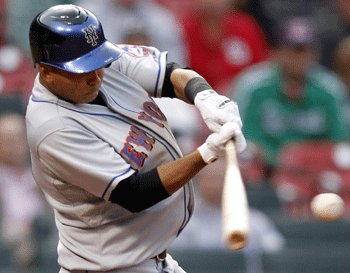
In the bottom of the seventh inning in the first game of the double-header between the Mets and Phillies on Saturday, Valentino Pascucci crushed a game-tying pinch-hit homer off Cole Hamels.

Look at it. It’s beautiful.

I was listening to the game in my car when it happened because I was on my way into Manhattan to pick up about 15 pounds of pork. I had to pull over to watch the highlight on my phone.

Our man Catsmeat grabbed the obligatory Cole Hamels reaction shot, which has been added to the archive so we never forget it.

Why baseball is awesome, part ten billion

Yesterday evening, in the ninth inning of a long game delayed over two hours by rain, nearly six hours after the Mets and Cardinals were set to start playing, with the long-since mathematically eliminated Mets losing by two runs, Ruben Tejada worked the count full after falling into an 0-2 hole to Fernando Salas with the bases loaded and one out.

Tejada smacked Salas’ next pitch, a fastball, into left field and just beyond the reach of Shane Robinson. Two Mets scored, tying the game. On the Metro-North train, I involuntarily and very audibly whooped.

Around this time of year — seemingly every year now — people ask me why I keep tuning in to every Mets game. The team is essentially done, “folded up” even by its own manager’s account. Several of the club’s most entertaining and promising young players are injured. There are more important games being played elsewhere.

Am I watching in hopes of seeing the club’s first no-hitter? Jose Reyes’ pursuit of the batting title? At-bats for Val Pascucci? Home runs by Lucas Duda?

No. Wait, actually: Yes, but only insomuch as all those things represent aspects of baseball. Awesome, awesome baseball.

I laugh and tell people I can’t pull myself away, but it’s not quite that. I could easily have entertained myself last night watching the season premieres of NBC’s excellent Thursday night sitcoms instead of a few innings each of the Blue Jays and Angels’ marathon and the Rays’ shellacking of Yankee pitching.

I didn’t because I know my TiVo will keep those shows for a drowsier time. By next week there’ll be much less baseball and no Mets baseball whatsoever. In a little over a month, Major League Baseball will crown its champion and then there’ll be no sniff of on-field action until March.

So I keep tuning in, because sometimes the Mets come back from four runs down in the ninth inning to beat an actual playoff contender. And though wins for the Mets don’t really mean a damn thing at this point, they can apparently still be exciting enough to make me yell out in a crowded train car.

It’s not something I need to justify. Baseball rules.

The bargain-bin closer

At Amazin’ Avenue, Chris McShane takes a look at some pending free-agent closers likely to be inexpensive due to recent injury troubles. I especially like this idea:

Jonathan Broxton: The Dodgers, specifically Don Mattingly, may not want Broxton back next year after he spent the grand majority of 2011 on the disabled list with bone spurs in his elbow. He’s had surgery to get rid of the bone spurs, and if his recovery goes as well as other pitchers who had the same procedure, he could be ready for spring training.

Prior to the injury, Broxton was dominant, striking out over eleven batters per nine innings in his career. He’s still only 27-years-old and will turn 28 in June. There was some concern about Broxton’s drop in average fastball velocity in 2010, a 2.5 mph drop, but he still managed a pretty good year out of the Dodgers’ bullpen. If the best Broxton can get this winter is a one-year, incentive-laden deal, he seems like a no-brainer for the Mets.

I mentioned Broxton as a potential fit for the Mets on the Baseball Show a week ago, and the odd comments from Mattingly make it seem less likely Broxton will return to the Dodgers. As McShane notes, Broxton was dominant in the Dodgers’ bullpen as recently as 2009 and still pretty damn good (by peripherals, at least) in 2010.

Broxton also holds the distinction of being the single largest human I’ve seen in a Major League clubhouse. He is listed at 6’4″ and 300 pounds, and in person he appears to be at least that. Maybe his presence in New York would let Lucas Duda feel a little more comfortable in his own frame or give the Jets another option to investigate should they suffer any more injuries on their offensive line.

Jose Molina awesome at catching

In case you haven’t seen it yet, go check out Mike Fast’s analysis of catchers’ abilities to get borderline strike calls, expanding on work done at Beyond the Boxscore. There’s margin for error, but Fast suggests that the best catchers could earn their teams as many as 15-20 runs a season with the opposite true for the Jorge Posada end of the spectrum. Also: Jose Molina is awesome at it.

Because you’re wondering: By Fast’s data, both Josh Thole and Ronny Paulino have been slightly above average at getting borderline strike calls. I wonder, though, how knuckleballs — a significant portion of the pitches Thole has caught in the last two seasons — affect the outcome.

Mr. Alderson to tear down that wall?

We’re not looking for an advantage with respect to home runs versus visitors’ home runs. At the same time, I think there is some sense that the park is a little more overwhelming to a team that spends half its time there as opposed to a team that comes in for three games and doesn’t really have to alter an approach or think about it too much and leaves.

Sandy Alderson.

Alderson spoke about making changes to the outfield wall at Citi Field during last night’s game and then again after it. He said any changes were “not likely to be subtle,” and that the team has “tried to do as much analysis as [it] possibly can.”
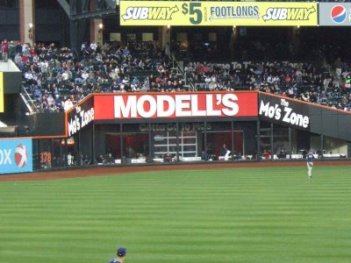
Is it reading too much into Alderson’s comments to consider how a change in the size of the park would affect the Mets’ offseason plans? If Alderson believes that Citi Field can be “overwhelming” to a team that has to play half its games there, it would seem silly to make changes to the roster based on assessments of overwhelmed players.

In other words, here’s yet another reason the Mets should not and likely will not move David Wright. If Wright is affected by Citi Field’s dimensions — physically, psychologically, however — then trading him immediately after changing those dimensions would be positively nuts. The Mets can use 2012 to assess the way players perform in a better hitting environment instead of selling them off at the nadir of their value.

The same goes, to some extent, for Jason Bay. If the park has actually gone to Bay’s head and the Mets think unsubtle changes will help him out of the two-season power drought he has endured since joining the club, the team will likely be wary of eating too much of his contract to pawn him off.

Since Bay plays a replaceable position I imagine the team would still move him if the terms were at all reasonable. But if they think he’ll legitimately improve in the reconfigured ballpark, they’d be wise to hold on to him for a few months to see if he becomes more tempting to trade partners. They might wind up with a couple million dollars’ worth of salary relief by shipping him off on a Gary Matthews-type deal in the offseason, but much more if he starts off the year hitting like he used to.

Of course, there remains a strong possibility certain Mets’ offensive struggles have nothing to do with their home park’s dimensions, so adjustments to the park fail to improve their park-adjusted performances. Bay remains the utterly average hitter he has been, and Wright carries on in his prime years as a very good player short of the greatness he showed in his youth. And if that happens, the Mets lose the ol’ fence argument at the negotiating table, for whatever that’s worth.

At the very least, we can hope the unsubtle changes render the wall itself more subtle. The incessant, unnecessary nook-and-crannying bothers me more than the dimensions themselves, even if I — like the hitters — would like to see a few more home runs.

Oh and as for Jose Reyes and his triples: When Reyes is going well he’s going to hit triples pretty much anywhere. For his career, Reyes has 51 triples at home and 48 on the road. Plus, you can bet Reyes likes hitting home runs, too. In his last three years at Shea Stadium, Reyes averaged a home run roughly every 43 at-bats. In three injury-riddled years at Citi Field, he has averaged a home run every 68 at-bats.

Plan A?

Conventional wisdom suggests that Ruben Tejada is quickly maturing into the perfect Plan B at shortstop if the Mets lose Jose Reyes in free agency this offseason.

But Sandy Alderson, along with the rest of the team’s decision-makers, are concentrating on Plan A, which involves pairing Tejada with Reyes deep into the next decade….

Not only have the two developed a mentor-pupil type of relationship, they share the same agent, Peter Greenberg, and already have made plans to work out together this offseason at the Long Island facility Reyes uses.

David Lennon, Newsday.

As recently as a few weeks ago, I figured that if the Mets re-signed Reyes they’d be best served sending Tejada back to Triple-A to play everyday and using some combination of Daniel Murphy and Justin Turner at second. The way I had it, Tejada’s superior defense at second wouldn’t be enough to make up for the difference in offense.

But Tejada keeps hitting — slap-hitting, but hitting nonetheless — enough so that it’s no longer clear that Turner is even a better offensive player. The two share an identical .314 wOBA, with Tejada’s driven by a higher on-base percentage and Turner’s by more power. Turner has much more production on his Minor League resume, but Tejada has been extremely young for every level — including the Majors now.

Murphy will outhit both of them and by a great enough margin that if the Mets believe he can capably and regularly play second without again getting injured, he should see most of the playing time there. But since Murph can also play first and third, and might yet get another go of it in left field, the Mets shouldn’t have too much trouble finding semi-regular opportunities for his left-handed bat.

Perhaps the best solution would be using a combination of Tejada and Murphy at the keystone, with Tejada starting behind the heaviest ground-ball guys — Jon Niese and R.A. Dickey — and Murphy also seeing time in left field against tough righties and at third or first whenever David Wright or Ike Davis need a day.

An infield of Davis, Tejada, Reyes and Wright should represent a strong defensive upgrade over most combinations the Mets have used in 2011, and Terry Collins should have little trouble finding chances for a viable, versatile left-handed hitter like Murphy (consider that the less viable [but more versatile] Willie Harris has 243 plate appearances in 2011).

That would leave Turner either coming off the bench as a better, less expensive fit for the Alex Cora role or spun for pitching in the offseason. Both could help the club.

Of course, all of that is predicated on the Mets re-signing Reyes — far from a safe bet right now.