The home run is monstrous, the call is outstanding:
Your browser does not support iframes.
The Bisons hit a bunch of ’em yesterday.

The home run is monstrous, the call is outstanding:
Your browser does not support iframes.
The Bisons hit a bunch of ’em yesterday.
The fellow leaping over Larry Jones in the photograph below is named Marwin Gonzalez and he is supposedly a member of the Houston Astros, who wore some awesome, awesome throwbacks last night:

Hat tip to Scott, who knows that the Colt .45s cap Gonzalez is wearing is also the one I most frequently wear.
Box Frites is no longer just frites in boxes. They’ve got hot dogs now. They’re also in boxes. (Also: Fried pies.)
One such dog is the Buffalo Dog, an innovation so stunning I’m shocking neither I nor Perkins came up with it first. It’s what it sounds like, unless it sounds to you like either a hot dog made from buffalo meat or a buffalo-dog hybrid, because it’s not those things. It’s a hot dog covered in Buffalo-wing sauce and sides:
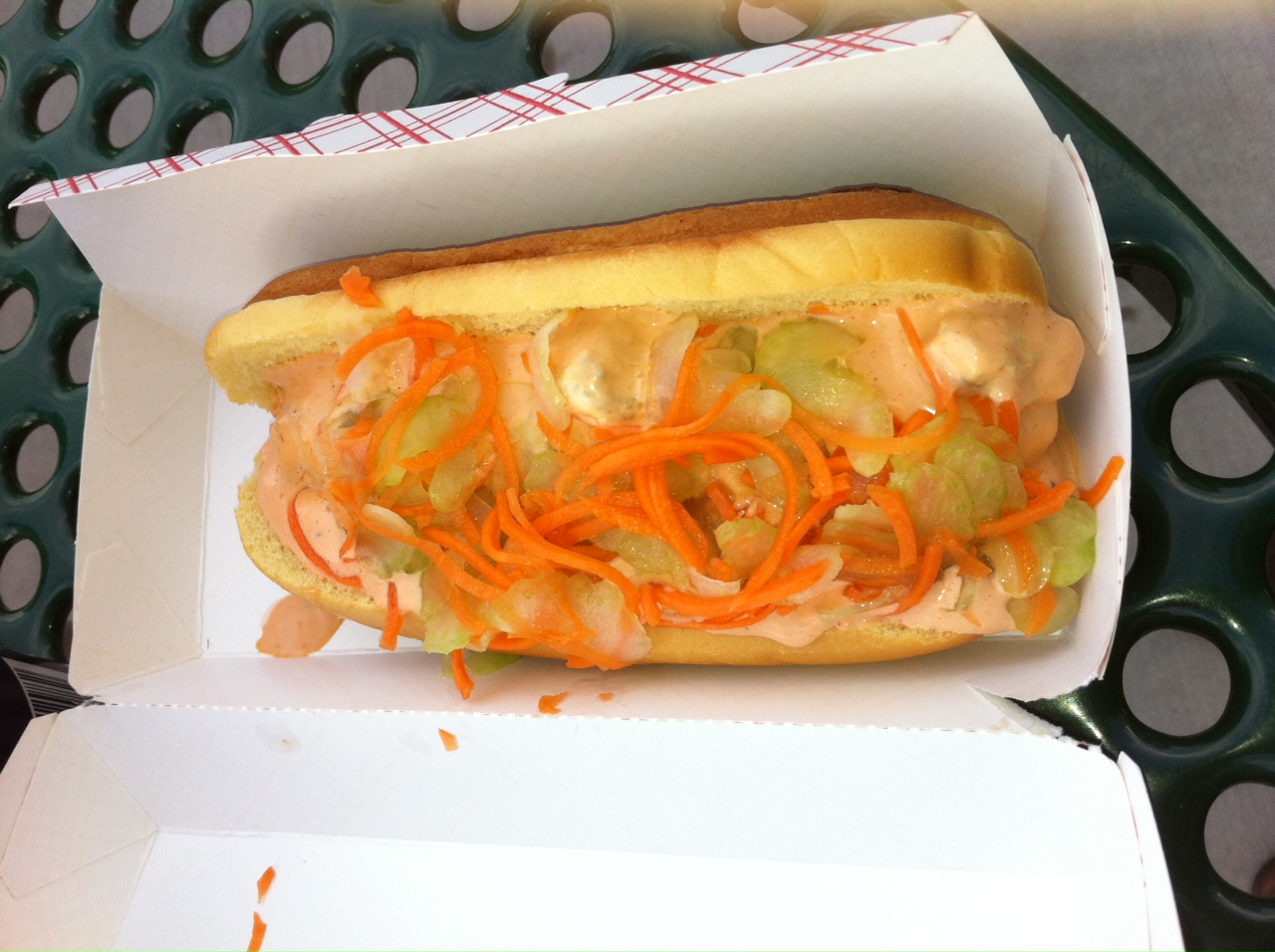
The sauce is a mix of wing sauce and blue-cheese dressing, so it’s pink instead of bright red. The carrots and celery on top are pickled.
I really can’t say enough about the concept here: It’s football flavor on a ballpark-friendly (and baseball-appropriate) delivery method. And it’s delicious. The sauce is spicy and flavorful enough that you never forget you’re eating something Buffalo-flavored, but it doesn’t overpower the hot dog itself. And the bun — a potato bun — is sweet, and the pickled vegetables have a nice acidity to them, plus crunch. All the stuff you need.
I should say though that the above-photographed Buffalo dog was the third I’ve had and also the third-best. It was purchased about an hour before game time, so perhaps it wasn’t as fresh as those produced in the high-turnover middle innings, or maybe the Box Frites staff weren’t fully warmed up yet. It had a little too much sauce, for one thing, which got messy — though not enough to trivialize the concept. And it just didn’t taste as awesome as the first two. Maybe the novelty’s wearing off?
Until I had tonight’s Buffalo dog I was ready to call this my new Citi Field go-to, given its strong length-of-line:price:tastiness ratio. Now, after this evening’s lackluster performance, I’m not prepared to say that. Instead I’ll say it’s a worthy regular that could perhaps bloom into a superstar.
Your browser does not support iframes.
Which do you guys think is more likely for Adam Dunn in 2012: He repeats his awful 2011 and forces the White Sox to bench him or cut bait on him, or he posts about a .250/.380/.530 line with around 40 home runs, 105 walks and 170 strikeouts?
I’ll take the latter, no doubt.
Remember when Justin Verlander told Conan about his pregame ritual? He wasn’t kidding:
 It turns out Justin Verlander rules.
Via Matt, via Big League Stew.
In today’s podcast, we talk a bit about specific pitcher-batter matchups and dominance therein. I’ve mentioned this before: Though I’m not sure stats in such inherently small samples could ever be taken as reliable indicators of which pitcher owns which batter and vice versa, it’s plainly obvious to me that such ownership does sometimes exist.
Like I said on the podcast, maybe a guy faces a pitcher 10 times and feels great against him but lines out 10 straight times. And maybe the same pitcher has some other hitter’s number, but that guy lucks his way into five bloops and bleeders (and a .500 batting average) over the same tiny sample. Tons of randomness in play, as always.
Anyway, I’ve been poking around the baseball-reference play index this afternoon for some fun ones:
Adam Dunn is 7-for-11 with three home runs and two doubles against Clayton Kershaw.
Alfonso Soriano had a .135/.151/.192 line with 21 strikeouts in 52 at-bats against Pedro Martinez.
Mike Piazza was 10-for-26 with six home runs in his career off Pedro. Two of them came in Piazza’s second game back at Shea in 2006, which I attended and which made me tear up a little.
Carlos Delgado was 14-for-28 with seven home runs against Jorge Sosa.
David Wright has struck out 11 times in 17 at-bats against Tim Lincecum.
Ryan Howard has eight home runs in 26 at-bats against Chris Volstad.
I mentioned this in the podcast but it’s my favorite one: Credible Major League hitter Johnny Peralta has struck out 22 times in 30 at-bats against Johan Santana.
Like plenty of hitters around baseball, Ike Davis took an ofer today, striking out twice, flying out and grounding into a double play in the Mets’ 1-0 win over the Braves. I noticed it seemed like Atlanta was feeding him a steady diet of offspeed stuff, so I went to MLB.com’s gameday for closer inspection.
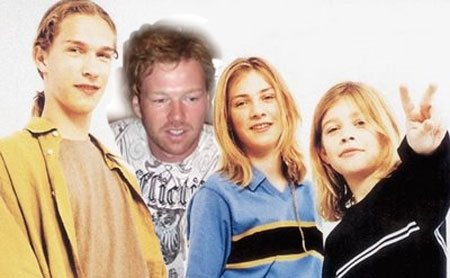
 Davis saw 11 pitches from starter Tommy Hanson. Hanson, who might be related to the band Hanson, threw the Mets’ first baseman one fastball, two sliders, and eight curveballs.
Right-handed reliever Kris Medlen threw Davis a changeup and two curveballs. Lefty Jonny Venters threw Davis two sinkers and three sliders.
After the game, I asked Davis if he knew how many fastballs he saw.
“One,” he said. “Except from the lefty.”
I asked if that was typical.
“That’s the Braves,” he said. “Well, that’s Hanson.”
Davis said he has never hit Hanson well and suggested I look up his career numbers against him. It’s obviously a tiny sample, but Davis is now 2-for-12 with two walks and six strikeouts in his career against Hanson. And the two hits are described as “Pop Fly to Short LF-CF” and “Ground Ball thru 2B-1B” on the baseball-reference play index.
“Most guys don’t have curveballs as sharp as Tommy’s,” Davis said, adding that if he saw as many lesser curveballs, “I’ll hit ’em.”
So, you know, crisis averted.
And to Davis’ credit, Fangraphs’ pitch-type values (and watching the games) confirm that Tommy Hanson throws a very effective curveball and that Davis doesn’t consistently have trouble with curveballs. Plus, it’s probably worth noting that Davis sees about as few fastballs as anyone in the league, so a day full of offspeed offerings is probably nothing new to him.
The Daily News presents a slideshow of the 15 craziest stadium foods, and most of the ones that aren’t testicles look pretty delicious. I’m especially intrigued by this one from Progressive Field in Cleveland, a chicken and waffles sandwich:

Baseball!
More on that to follow, but I had some subway issues on the way here and the Mets clubhouse is about to open so I have to get going. For now, please enjoy this friendly reminder and photographic evidence that Tulsa-born Braves starter Tommy Hanson may be first cousins with the band Hanson:
The relief pitchers in April: Frank Francisco, Ramon Ramirez, Jon Rauch, Bobby Parnell, Tim Byrdak, Manny Acosta, Miguel Batista.
 Overview: Before I started this I was looking over the bullpen previews from this year and 2010 and I came upon this bit:
And then there’s the Jenrry Mejia thing. I’ve said my thing on that thing. I refer you to this, this, this, this, and this. I’m kind of sick of shrouding the kid in negativity because he’s a homegrown prospect and I root for homegrown prospects, and now I’ll be rooting like hell for him to dominate in his bullpen role.
The funny thing is, so many people act — and I’m certainly guilty of this myself — as if it’s sort of written in stone that he will. There’s no arguing that he looked great in the Grapefruit League, but 17 innings of Spring Training ball and a rousing endorsement from Jerry Manuel do not necessarily portend Major League success. Big-league hitters — not to mention big-league scouts — are really, really good, recall, and I wonder if Mejia might start looking more like the guy who posted a 4.47 ERA in Double-A last year after the league has seen him a few times.
And then I wonder, of course, if that could ultimately be a ticket back to Binghamton for Mejia, and so a blessing in disguise. And that sucks. This has got to be one of the weirdest fanbase/management divides of all time. I don’t think I’ve ever heard of any team’s fans putting up a more or less unified front urging patience and restraint against a front-office that seems to want no part of it. That’s why you never want your GM making decisions from the hot seat, I guess.
Remember that?
I’ve been thinking about the Mets’ offseason bullpen acquisitions the last few days and trying to decide if I’m justifying them because I have it in my head that Sandy Alderson and the SABRos know what they’re doing. I’ve always held that teams shouldn’t spend offseason assets on relievers and that good bullpens could be cobbled together on the cheap, but the Mets’ front office went out and signed Jon Rauch and Frank Francisco and traded for Ramon Ramirez.
I’ve argued — publicly and privately — that there’s obviously some plan in mind, like maybe the Mets hope to spin a couple of the relievers for young players at the trade deadline (when relievers are often overvalued), or they determined that the easiest way to add wins inexpensively is via bullpen arms. And both of those things could be the case. But I could just as easily be rationalizing.
I’ll say these things: It doesn’t seem like there’s an obvious place the Mets could have allocated the resources they spent on Francisco, Rauch and Ramirez that would have likely added more wins without impeding the progress of a young, team-controlled player, and bringing in two free-agent relief arms and trading for another is a much, much, much, much, much, much, much, much, much better way to go about building your bullpen than making your 20-year-old top prospect your 8th-inning guy. Much.
So there’s that. Plus, it’s not like the Mets spent a lot on the guys they brought in or overpaid for nebulous Kevin Gregg closer labels. Francisco and Ramirez have always been good, and Rauch has more often been good than not good. Manny Acosta, quietly, has a career 119 ERA+ in five partial seasons of work. Byrdak will get lefties out, and Bautista — peripherals be damned — always winds up with pretty solid results and should be a good fit for the long man/spot starter role.
Parnell’s sort of a wild card. He drew raves in Spring Training with his enhanced repertoire and 12 1/3 scoreless innings, but that’s sort of textbook Spring Training trap stuff. Thing is, there’s always been plenty to like about Parnell. Most notably: He throws really hard, he yields a lot of groundballs, and over the last two years his strikeout to walk ratio is just shy of 3:1.
If and when Parnell ascends into a higher-leverage role, you’ll read all about his past failures in similar situations. Believe what you want, but I’d be skeptical. There’s plenty of pressure in the sixth inning of a Major League game, for one thing. For another — and I’ve made this case before — every time Parnell has been promoted, it has come on the heels of a long stretch of effectiveness by the righty. So generally, he has been pitching those high-leverage innings only after periods of heavy use.
On paper it’s a fine enough looking bullpen. Many of them are around this time of year. Once they start actually pitching, we see how the dice turn up.
The relief pitchers in September: C’mon now. Ahh, Francisco, Parnell and five other guys, some of whom are listed above.
Overview: The Braves’ bullpen was awesome last year. The Phillies and Marlins added big-name free-agent closers and the Nationals brought on Brad Lidge and returned the awesome Tyler Clippard. But obviously there’s a ton of randomness in play, enough that I can again safely guess the Mets’ crew will fall somewhere near the middle and hope this year is the one I’m right.
 Tedquarters