We’re not looking for an advantage with respect to home runs versus visitors’ home runs. At the same time, I think there is some sense that the park is a little more overwhelming to a team that spends half its time there as opposed to a team that comes in for three games and doesn’t really have to alter an approach or think about it too much and leaves.
– Sandy Alderson.
Alderson spoke about making changes to the outfield wall at Citi Field during last night’s game and then again after it. He said any changes were “not likely to be subtle,” and that the team has “tried to do as much analysis as [it] possibly can.”
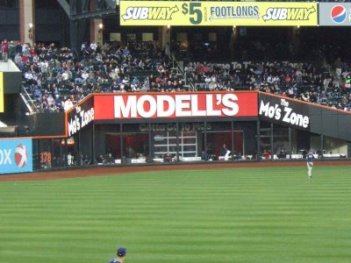 Is it reading too much into Alderson’s comments to consider how a change in the size of the park would affect the Mets’ offseason plans? If Alderson believes that Citi Field can be “overwhelming” to a team that has to play half its games there, it would seem silly to make changes to the roster based on assessments of overwhelmed players.
In other words, here’s yet another reason the Mets should not and likely will not move David Wright. If Wright is affected by Citi Field’s dimensions — physically, psychologically, however — then trading him immediately after changing those dimensions would be positively nuts. The Mets can use 2012 to assess the way players perform in a better hitting environment instead of selling them off at the nadir of their value.
The same goes, to some extent, for Jason Bay. If the park has actually gone to Bay’s head and the Mets think unsubtle changes will help him out of the two-season power drought he has endured since joining the club, the team will likely be wary of eating too much of his contract to pawn him off.
Since Bay plays a replaceable position I imagine the team would still move him if the terms were at all reasonable. But if they think he’ll legitimately improve in the reconfigured ballpark, they’d be wise to hold on to him for a few months to see if he becomes more tempting to trade partners. They might wind up with a couple million dollars’ worth of salary relief by shipping him off on a Gary Matthews-type deal in the offseason, but much more if he starts off the year hitting like he used to.
Of course, there remains a strong possibility certain Mets’ offensive struggles have nothing to do with their home park’s dimensions, so adjustments to the park fail to improve their park-adjusted performances. Bay remains the utterly average hitter he has been, and Wright carries on in his prime years as a very good player short of the greatness he showed in his youth. And if that happens, the Mets lose the ol’ fence argument at the negotiating table, for whatever that’s worth.
At the very least, we can hope the unsubtle changes render the wall itself more subtle. The incessant, unnecessary nook-and-crannying bothers me more than the dimensions themselves, even if I — like the hitters — would like to see a few more home runs.
Oh and as for Jose Reyes and his triples: When Reyes is going well he’s going to hit triples pretty much anywhere. For his career, Reyes has 51 triples at home and 48 on the road. Plus, you can bet Reyes likes hitting home runs, too. In his last three years at Shea Stadium, Reyes averaged a home run roughly every 43 at-bats. In three injury-riddled years at Citi Field, he has averaged a home run every 68 at-bats.

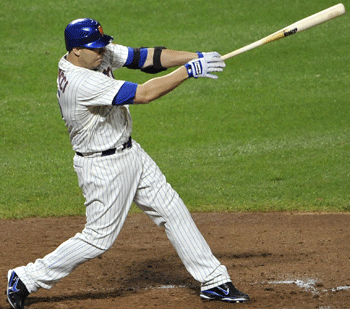 It’s a weird wrinkle, unlike any other I know of in professional sports. Managers spend the first five months of a season with 25 players to work with, then the last month with up to 40. It can lead to seemingly interminable games like Tuesday’s 13-pitcher affair between the Mets and Nationals, but it provides some relief for tired players down the stretch and gives teams and fans an opportunity to preview of some of the prospects that might soon contribute to the big-league club more regularly.
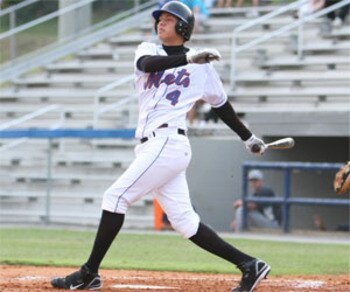 And I figured it’s worth noting that though two of the Mets’ most well-regarded prospects coming into the season endured rough seasons in the Florida State League, their numbers appear worse than they actually are.
 Tedquarters