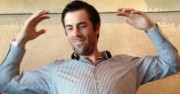
From the Wikipedia: Dave Thomas, founder of Wendy’s

I feel like the man I’m referring to should always be called, “Dave Thomas, founder of Wendy’s.” For one, it distinguishes him — or disambiguates him, in this case — from other Dave Thomases, like the NFL tight end and the guy from Strange Brew. Also, “founder of Wendy’s” just feels like it’s the type of thing that should be inextricably tagged onto the end of your name, assuming you founded Wendy’s. Only you didn’t found Wendy’s. Dave Thomas, founder of Wendy’s did.

From the Wikipedia: Dave Thomas, founder of Wendy’s.

Never mind that the actual headline of Thomas’ Wikipedia page reads, “Dave Thomas (American businessman).” I make the rules here.

Thomas was born in Atlantic City to a young, unmarried mother he never knew. He was adopted at six weeks old, lost his mother at age 5, and spent much of his formative years moving around the midwest as his father sought work.

Thomas first entered the restaurant industry at 12 years old, but lost his job after a dispute with the owner, presumably because Thomas already knew way more about making delicious bacon in massive quantities than anyone else and wasn’t willing to compromise. By age 15, he was working in a Fort Wayne, Ind. restaurant called the Hobby House. Thomas eventually dropped out of high school to work at the Hobby House full time.

When the Korean War broke out, Thomas volunteered for the Army so he could have a say in his assignment (as opposed to waiting for the draft). Because of his food service experience, he asked to be sent to the Cook’s and Baker’s School at Fort Benning, Ga. He was ultimately dispatched to a base in Germany, where he cooked for 2000 soldiers until his discharge in 1953.

OK, here comes the big reveal:

After returning from Germany, Thomas went back to work at the Hobby House, where he soon met none other than Col. Harland Sanders. Yeah, that Colonel Sanders.

Sanders was in Indiana looking for franchisees for his new chain, successfully pitching his business to the owners of the Hobby House. They opened several Kentucky Fried Chickens around the midwest and introduced Sanders to their enterprising young head chef, Thomas.

It was Thomas who suggested that Sanders trim the menu and focus on the chicken, that KFC sell chicken in red-striped buckets, and that Sanders himself become the spokesperson and face of the chain. So basically, all the main things about KFC were Dave Thomas, founder of Wendy’s’ idea.

In the mid-60s, the Clauss family — the Hobby House owners and KFC franchisees — charged Thomas with reviving sales at four struggling locations in Columbus, Ohio. He did so with such aplomb that he was able to sell his shares in those stores to Col. Sanders for $1.5 million.

With that cash, Thomas was able to start Wendy’s, which he named for his daughter even though she’s not actually named Wendy. The rest you know: Wendy’s made really good burgers by fast-food standards and Thomas starred in over 800 commercials for the chain between 1989 and 2002, which is, according to the Wikipedia, some kind of record.

At some point along the way, Thomas was named an honorary Kentucky colonel, just like The Colonel. He also worked to earn his GED because he was concerned that high-school students might point to his success as justification for dropping out. He became an advocate for education and founded the Dave Thomas Education Center in Florida to help prepare young adults for the GED test. Shortly after his death from liver cancer in 2002, he was awarded the Presidential Medal of Freedom.

This is not on his Wikipedia page, but one time me and my friends stole a life-sized standup of Dave Thomas dressed as a hockey goalie from our area Wendy’s. Let the record show that we didn’t do it out of disrespect, only because we wanted to better celebrate a great fast-food hero. Also because we thought life-sized cardboard standups were hilarious. It may still be in my friend’s parents’ basement today.

Also, this is completely subjective, but I feel like Wendy’s restaurants tend to be better-run than the other major fast-food chains, and I like to credit that to Thomas’ work ethic. I can name probably a dozen particularly bad Taco Bells, McDonald’s and Burger Kings, but I can only think of one or two notably bad Wendy’s. Plus the Wendy’s near my house is fantastic, as was the one near where my old band used to practice.

And furthermore, as discussed, Wendy’s is really the only major fast-food chain that makes decent bacon. I assume that secret comes from Dave Thomas, founder of Wendy’s.

Finally, does anyone remember the Superbar? Shame that didn’t catch on.

Takahashis more notable than Ken, pt. 2

Arn Tellem, the new agent for Hisanori Takahashi, indicated Thursday that the looming deadline the Mets face for completing negotiations with the Japanese left-hander may be extended.

When Takahashi signed in March, the Mets agreed to make him a free agent on Oct. 31 if an extension had not been worked out. However, if Takahashi were to be cut loose on Sunday per that agreement, he could not re-sign and appear in the majors for the Mets until May 15 — essentially meaning he would have to sign elsewhere.

Adam Rubin, ESPN New York.

Good. Given the Mets’ obvious need for pitching, it’s probably best they bring Takahashi back. Though I’m almost certain that versatility is an overrated quality in pitchers, the reputation for versatility is valuable — if the guy can actually pitch, not Jorge Sosa-style versatility. Takahashi would give the Mets a viable option for the back of the rotation or pretty much any assignment in the bullpen.

Obviously it comes down to the price tag, as always. But there don’t appear to many great free-agent options to eat up innings in 2011.

What we know about John Ricco

Lots of discussion about Mets’ assistant GM John Ricco in the comments section here and elsewhere.

Here’s what we know about John Ricco:

  • He worked in the commissioner’s office for 12 years before joining the Mets in 2004. He spent his last eight years there as the Director of Contract and Salary Administration.
  • He graduated from Villanova University in 1990 with a Bachelor of Arts in communications and a minor in business (thanks, Mets media guide!).
  • He has worked in the Mets’ front office since April 15, 2004.
  • He was credited for suggesting the Mets trade for Jeff Francoeur. We don’t know if he proposed the actual terms of the deal, or if he suggested it ironically.
  • He conducted the conference call to explain Carlos Beltran’s messy surgery situation this Winter, purportedly because Omar Minaya was on a plane.
  • He scheduled the first round of interviews for the Mets’ vacant GM position and was in the room for the interviews. He was not present for the second round of interviews.
  • His name is pronounced like “rick-oh,” not “reek-oh,” as had been previously assumed.

And that’s really it. Right?

Some people are convinced he is a lackey for ownership, kept on board to serve as a mole in the front office. Others think he is a worthwhile GM-in-waiting, fit to be groomed to succeed Sandy Alderson.

I don’t know. Seems like he might be ascending into the bugaboo position vacated by Tony Bernazard, the man most likely to be blamed for everything that goes wrong with the Mets.

But I’m certain that judging someone based on the decisions of his superiors is silly, and that we probably don’t know enough about Ricco to say with any confidence whether his role in the next front office will be beneficial or detrimental to the Mets’ on-field success.

If you know more about John Ricco, feel free to share.

How I came to be rooting for the Giants

When the Giants and Rangers won their respective league championship series, I was mostly just happy they beat the Phillies and Yankees and decided I would root for good baseball in the World Series (so far off to a bad start).

Generally I pull for the well-run teams when all else is equal, and Jon Daniels and the Rangers appear to employ a better process than Brian Sabean and the Giants. But I much prefer National League baseball, of course, and I think Tim Lincecum is awesome, and I find the Rangers’ series of team-spirit hand gestures strangely off-putting.

But I determined last night that I’m rooting for Giants, not for any better reason than that I think it would be completely hilarious if they win. Sabean has compiled — and somehow derived solid performances from — such a random collection of journeymen that I feel like it’ll make for great conversation about 20 years from now. Maybe you don’t have conversations like this:

“Hey, remember Juan Uribe?”

“Juan Uribe… yeah! Kinda chubby guy, had a big year for the White Sox when they won it.”

“Nah (looking it up on future information device), he kinda sucked that year. But yeah, that’s the guy. Didn’t he sh–”

“Oh! Wasn’t he on that Giants team that randomly won in 2010!?”

“Yeah he totally was! Hit a big home run for them in Game 1. Hilarious, bro!”

And then someone will be like, “Who else was on that team?” And we will remember Aubrey Huff, Freddy Sanchez, Edgar Renteria, Pat Burrell, Cody Ross, a whole slew of deserving but unspectacular Major Leagues we do not normally associate with the Giants. And we will have a good chuckle.

I’m a simple man, so that’s really all I need to sway me.

Mets manager stuff

A few people have asked me my choice for Mets’ manager. I’m tempted to resist picking any candidate, citing again my general lack of relevant information about the various candidates — personalities, philosophies, contract demands, etc.

But that would be a second-straight copout, and I recently went two straight Sandwich of the Weeks without giving definitive ratings and I’m not looking to go down that road again, so here goes:

Tim Bogar.

Seems like a longshot, sure, since I haven’t seen his name come up anywhere but here. But Bogar interviewed for the Blue Jays’ job, so he’s certainly considered a Major League managerial candidate by some.

Plus he has experience working for the Red Sox and Rays, a pair of well-run, top-down organizations of the type I hope the Mets become. Every team Bogar managed in the Minors won and won often, he earned manager-of-the-year honors in multiple leagues, and he was named Baseball America’s top managerial prospect from the Eastern League in 2006.

And he obviously has the Mets ties, which should endear him to ownership, according to the rumors. (Incidentally, Brendon Desrochers points out that Mets ties are available at the MLB.com shop.)

So if for some reason you care who I think should be the Mets’ next manager, there you have it: Tim Bogar. Done.

Could Tim Bogar take over and call for bunts constantly, or destroy every arm in his bullpen, or ceaselessly turn to Guillermo Mota in tight spots? Certainly. Like I said, I really don’t know much about any of these guys besides Bobby Valentine, and he seems destined for Milwaukee. For all I know, Tim Bogar is a hatchet murderer with a personal vendetta against David Wright. Here’s hoping Sandy Alderson does the due diligence to determine whether any potential manager is also a homicidal maniac.

As for managerial lightning rod Wally Backman? Color me ambivalent — which I believe amounts to taking an original position, since everyone on the Internet seems certain he will either lead the Mets to perpetual glory or drag them to sub-Torborgian lows.

My understanding is that Backman loves bunting in many situations, something of a turn-off. But he does have a very strong reputation among his players and ex-players, and he does seem to win most places he goes. He has demons in the closet — a DUI charge and a domestic-dispute arrest — but he has purportedly stayed out of trouble since the latter, in 2001.

I talked to Backman for a while after we filmed a Baseball Show episode with him in Brooklyn, and I came away pretty impressed with his knowledge of the personnel in the Mets’ system — not just the Cyclones. I’m not sure if that means a ton for a Major League manager, but I’d give the guy credit for paying close attention.

So put me down for uncertain in that epic debate.

I think the main thing is, if I’m going to try out having faith in Alderson, I should probably at least trust him to handle his first reasonably big decision in his new job. So though I reserve the right to determine that it was certainly the wrong one come June when new-manager-guy drops Wright to eighth in the lineup or something, I will probably just assume that whatever choice Alderson makes is at least a decent one, knowing all along that the field manager is a position wildly overrated in its importance and that fans of every team in the league are certain their manager sucks.

Unless it’s Bogar. It’d be sweet if it’s Bogar.

This Jon Daniels thing

Conflicting Tweets last night. Andy Martino:

Daniels request came through back channels, I’m told. They simply wanted to hire Alderson.

And the inimitable Jon Heyman:

daniels never asked the mets to wait, as 1 report claimed. he is in the world series. anyone really think hes calling the mets about a job?

Which Tweeter told the truth? Who knows? Who cares?

Here’s the thing: Jon Daniels’ Rangers are in the World Series for the first time in franchise history. The Rangers have new owners that took over in August, and part-owner and CEO Chuck Greenberg has said publicly that Daniels is going nowhere.

The sale of the team means Daniels gets an out clause in his contract, but it’s hard to imagine a situation wherein a brand-new ownership group is eager to let a GM walk away after building the franchise’s first AL champion.

Presumably Daniels is a smart dude — he got a GM job at 28, after all — and recognizes that Greenberg’s statement gives him a leg up in any negotiations for a contract extension. And if the big-market Mets of Daniels’ hometown still had a front-office opening when Daniels and Greenberg sat down, it would give Daniels a hell of a lot of leverage to demand big money.

So, though I have no source or inside information or anything, I’m guessing if Daniels really did reach out to the Mets through mysterious “back channels,” it was just that — a leverage play. And if it did happen, presumably the Mets either called his bluff or decided Alderson was the better candidate anyway — a reasonable enough decision — and perhaps recognized that waiting on Daniels only to ultimately hire someone else would undermine the new GM before he even started.

I’m a pretty big fan of Daniels’ work and if the Rangers had been eliminated sooner I would have loved to see him in the mix in Flushing. But I can take no issue with how this played out, regardless of if he actually somehow contacted the Mets.

A new hope

Sandy Alderson it is, then.

Cool.

I resisted endorsing any of the GM candidates here, but that resistance grew difficult as I read more and more about Alderson. Here’s what I wrote on Oct. 11:

While I think the bluster about the particulars of the New York market is normally little more than the New York media overemphasizing the impact of the New York media, in this one instance I think it’s important the Mets hire someone they feel can withstand the pressure to compete immediately, shoulder the comparisons to the winning team across town, and exercise the requisite patience to turn the Mets into a successful, sustainable franchise.

And man, it sure sounds like Alderson is that dude. Read this. I’m nearly speechless. Giddy? Maybe.

A little bit skeptical? Always. But that ESPN interview, and all the stuff from DuckSnorts and everywhere else, really present Alderson as a confident leader well-versed in modern analytics. That’s, well, it’s nothing short of awesome.

As Mets fans, we’re innately cynical. We associate hope mostly with impending doom. We assume every decision the team makes is the wrong one, even when it appears to be the correct one on paper. Late at night, when we allow our rational minds to wander into less reasonable territories, we consider the possibility that our team is somehow cursed, that 1969 and 1986 were weird, miraculous digressions from an ignominious tradition of losing baseball.

And by “we” I mean “me.” I am an innately cynical Mets fan. I think those things sometimes.

Maybe Alderson changes that. Maybe, under Alderson, the Mets will remind us that objective analysis and sharp management trump fatalist mumbo-jumbo almost every time, in the same the way some lucky Red Sox fans realized the Curse of the Bambino was, in truth, little more than the Curse of a Decades-Long Saga of Mismanagement, Bad Luck and Bad Baseball, in the same way Rex Ryan took over the Jets and waved his middle finger in the face of perpetual mediocrity.

I don’t really know yet. But I know there’s now hope, a sneaking suspicion that someone in charge of the Mets might actually know what he’s doing, a feeling I haven’t had since… well, never. Not since I started understanding and paying attention to this stuff in the mid-90s.

Now all we need is patience. Well, pitching and middle-infield help and a manager, too, but mostly patience. It takes time to reshape a franchise from top-to-bottom, and since that appears to be Alderson’s M.O., it’s hard to expect he’ll have the team operating and developing players and playing baseball like he presumably wants it to by the time the Mets take the field in April.

But for once, we can imagine it eventually happening and know that it might not be a ridiculous pipedream. That might not be enough to put asses in seats in April or guarantee meaningful games in September, but it sure goes a hell of a long way to assuage the frustrations of fans fed up with false hustle, two closers and Prevention and Recovery.

Maybe it’s a new day, is what I’m saying. Looks like things are looking up.

Does TV make the hits more vicious?

Violence became the other half of the NFL sales equation, perfectly complementing long touchdown passes and 90-yard kickoff returns. Yet back then, 50 years ago, Huff wasn’t craving the kind of attention that now translates into added income for players, sometimes millions of dollars. There were no pregame shows, no ESPN, no other outlets to run loops of video violence.

But now multiple TV opportunities are now available, opportunities for players — and companies looking for endorsers — to see replays of guys jacking opponents up prior to the prerequisite celebration designed to reveal another side of one’s personality.

Bob Raissman, N.Y. Daily News.

Look: The NFL rule change to suspend players for helmet-to-helmet hits is a sticky issue. Clearly players need to be better protected from head injuries and the onus is on the league to come up with some reasonable way to do that. But the backlash from defensive players is understandable — they’ve played the games one way their whole lives, many times clean but brutal hits are flagged as helmet-to-helmet, offensive players could lower their heads unexpectedly and bring on the impact.

I don’t really know that there’s a definitive solution, though I imagine players will ultimately adjust — like they did when the NFL outlawed Night Train tackles and horse-collar tackles — and find plenty of ways to legally deliver the punishing hits America loves.

I can comfortably argue, though, that television coverage of the violent hits in question does not contribute to their frequency or viciousness, as Raissman seems to assert. Perhaps it is in poor taste to replay them ad naseum, that I’ll grant. But I just don’t think any NFL linebacker, upon seeing a ball-carrier in the open field or a receiver crossing into his zone, is thinking, “Here is an opportunity for me to earn extra money via endorsements.”

If I had to guess, I’d bet he is thinking, “hit him, hit him, hit him, hit him.”

With the possible exception of Kerry Rhodes, defensive players probably don’t reach the NFL without absolutely relishing the opportunity to lay someone out. Maybe that sounds savage, but it’s a violent sport and we’d be kidding ourselves if we pretended that the inherent violence isn’t a big part of why we watch.

If the hits have gotten more violent as the sport has grown more popular, I’d guess it’s only a byproduct of the television coverage, in that more money in the game leads to a larger selection pool of players and thus better athletes under more pressure to beef themselves up, naturally and otherwise.

Jeff Franceour and Bengie Molina, champions

All I know is Mets fans blast Frenchy and Molina on Twitter, but these guys are contributing to a team on verge of WS. Who is the real joke?

Mike Silva, via Twitter.

Food metaphor:

Anyone remember the SNL parody commercials for the KFC Shredder? I can’t find the video online, but the gag was that KFC was selling — and marketing — a big heap of shredded iceberg lettuce and mayo, served in a bag. Hilarious stuff.

What Mike is saying in the Tweet above is sort of like suggesting that you shouldn’t laugh at the Shredder commercials if you enjoy any other food that incorporates iceberg lettuce and mayonnaise.

Neither iceberg lettuce nor mayonnaise is a particularly valuable ingredient, but iceberg lettuce can add a little crunch to a sandwich and mayonnaise provides the foundation for many tasty dressings.

Plenty of good meals include iceberg lettuce and mayonnaise, but the idea of a meal of just iceberg lettuce and mayonnaise is still laughable. You see where this is going, right?

I am a Mets fan sometimes known to blast Jeff Francoeur and Bengie Molina on Twitter, but I certainly never suggested that Francoeur and Molina can’t be on a good team — only that teams looking to win ballgames could do better than to serve up the pair as featured players.

When I blast Francoeur, it is partly because the Mets gave him 400 at-bats as their everyday right-fielder (and mostly because of his press), never because the Rangers used him as a right-handed platoon bat and defensive replacement — a role he’s much better suited to fill — in 15 games in the stretch run.

And when I argued against the Mets giving Bengie Molina the two-year deal he sought last offseason, I never said that having Bengie Molina and winning games are mutually exclusive, only that smart teams would stand to win more games by not giving Molina a multi-year deal. Neither the Rangers nor the Giants — two teams that featured Bengie Molina this season — felt it was appropriate to lock him up through 2011. The Mets didn’t either, thankfully.

The Rangers can include Frenchy and Molina — the iceberg lettuce and mayonnaise of baseball players — on their World Series menu because the rest of their roster is stocked with steak, lobster and Cliff Lee.

UPDATE: Josh found the video. Here it is:

From the Wikipedia: Lucy the Elephant

Outcome of a Wikipedia digression.

From the Wikipedia: Lucy the Elephant.

Lucy the Elephant is a six-story high building shaped like an Asian elephant, built in 1882 by novelty architect James V. Lafferty. Unlike many examples of novelty architecture which are really just whimsical sculptures, Lucy the Elephant is an actual functional building that has, at times, served as a restaurant, business office, cottage and tavern.

Lafferty designed and built Lucy in a misguided attempt to sell real estate in the area. Though the Wikipedia mentions nothing about the structure’s effectiveness in luring home-buyers, I confidently write “misguided” because I can’t imagine anyone in 1882 or today being particularly eager to move in next door to a completely terrifying 65-foot high wood-and-tin elephant.

Still, no one before Lafferty had thought to erect a zoomorphic building. He was awarded a patent for Lucy’s design, earning him the exclusive right to make and sell animal-shaped buildings for the next 17 years, undoubtedly a prized distinction.

Though the patent, per the Wikipedia, extended to all animals, Lafferty specialized in elephants. Just five years after completely Lucy, he built an elephant-shaped hotel in Coney Island called Elephantine Collosus, which I believe is the name of the Decemberists’ next album. The hotel burned down in 1896.

Lucy the Elephant was scheduled for demolition in the 1960s, but a group of concerned citizens canvassed the community and saved the structure, moving and refurbishing it and eventually getting it onto the National Register of Historic Places Shaped Like Elephants.

Lucy the Elephant still stands proudly in Margate today, though the tips of its tusks were blackened by a 2006 lightning strike.

Also, the Wikipedia article refers to Lucy the Elephant as “she” throughout, even though a) It has tusks, which only male Asian elephants can boast and b) it is a building and does not actually have a gender.