Shaqichnaya?

Shaquille O’Neal is launching his own line of vodka — sensationally titled “Luv Shaq.”… We’re told Luv Shaq comes in coconut flavor, and the bottle features an image of O’Neal with giant wings.

New York Post.

I could care less about the coconut flavored vodka. It’s the “image of O’Neal with giant wings” I’m going to need. Preferably blown up and framed, hanging across from Vin Diesel and Usher Riding Into Battle on a Chariot Pulled by White Tigers.

Man, I love Shaq.

Via Catsmeat.

Taco Bell Tuesday: Slow Taco Bell day

I’ve got a podcast to record in a minute and most of this week’s Taco Bell news involves murder and death, so I’m avoiding it. Here are some less-terrifying Taco Bell items of note:

Two from Nation’s Restaurant News: In an unveiling about as predictable as Justin Verlander’s 2011 Cy Young Award, multiple Taco Bell offerings were named to the Nation’s Restaurant News’ list of “top menu rollouts” for 2012. More than 200 million Doritos Locos Tacos have been served to date, and Cool Ranch and Flamas versions are on their way once Taco Bell gets Frito Lay to make enough taco shells to catch up with demand.

Also from NRN: Taco Bell’s First Meal commercial is the site’s top played video. Of course it is. This is restaurant news, people. Taco Bell is an unstoppable force.

Plot to steal tacos thwarted by tempting ATMAt least that’s how I assume it went down. Thieves in Dededo, Guam broke into a Taco Bell at 5 a.m. (Chamorro Standard Time)  and stole an ATM, probably once they realized the blaring alarm would distract them from the late-night taco artistry they hoped to endeavor. The big news here is that Guam has a Taco Bell, and apparently Taco Bells in Guam have ATMs in them. Or at least, they used to.

Also, did you know that Guam is in the midst of a movement to change its name to “Guahan,” its name in the native Chamorro language? It is. That’s one thing I didn’t know about Guam. Also: Most other things. I bet it’s beautiful. I can’t figure out from this site’s metrics if anyone in Guam ever visits TedQuarters, so if anyone from Guam is out there, do say hello. The Internet’s crazy like that. Yesterday I got a visit from Laos though. Hello, Laos! I will see you soon!

On David Wright’s defense

I noticed some incoming traffic from a comments thread on Amazin’ Avenue and investigated because I’m pathetically vain. One of the readers there linked to this post in the midst of a lengthy discussion about David Wright’s contract extension, focusing largely on Wright’s defense and the way his improved UZR in 2012 impacted his WAR.

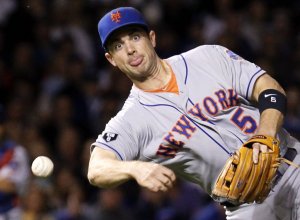
Here's what David Wright looks like. Like many of the conversations at that site, it’s an interesting discussion and worth checking out. In lieu of chiming in there, I’ll add some notes on Wright’s defense here.

I am a longtime defender of Wright’s defense and UZR skeptic. I appreciate that the stat is the best we have to quantify defense and I do use it to inform my understanding of baseball. But it’s so fickle and so frequently misused that it often frustrates me. And though I think sometimes knowledge of a player’s UZR can color our perceptions when watching the games, I do think there’s still a lot of value in empirical assessments, and I find it extraordinarily difficult to believe that Wright was a worse defensive third baseman from 2009-2011 as Miguel Cabrera was in 2012.

The stat, as you may know, requires huge sample sizes to be considered predictive, so much so that I suspect in many cases by the time it can be adequately used to measure a player, the player has already changed. In any case, I’d argue that Wright’s huge uptick in UZR in 2012 should not be viewed as an outlier in an otherwise alarming trend but another data point in Wright’s career totals, which show him to be an average to slightly below average defender at third base.

Though I do think I noticed defensive improvements from Wright at third base in 2012 — those frequently credited to better footwork from Tim Teufel’s coaching — I realize that my eyes were probably biased by my knowledge of his improved UZR. And I struggle to accept that he was the best defensive third baseman in the Majors last season after playing as pretty much the very worst for the prior three. I recognize that the data only reflects what happened, so I’m guessing that Wright was actually somewhere near the middle the middle of the pack throughout and suffered from the heavy hand of randomness.

Also — and I’m not sure if this is something that has been quantified or studied and dismissed — but I imagine some of Wright’s improvement can be attributed to the presence of Ike Davis at first base. It’s no secret that Wright has been plagued by throwing troubles at times in the past, but in 2012 he made only six throwing errors, his fewest in any full season. (And I’m pretty certain, for what it’s worth, at least one of those was thrown to second base and one to a non-Davis first baseman.) From anecdotal evidence alone, it’s not hard to figure why an infielder’s throws would improve with a big, steady target at first base.

My guess is that Wright, with Davis or some other solid defender at first, plays like the average or slightly below average defensive third baseman he has been, in aggregate, over the course of his career. If you want to use the fangraphs version of his WAR to assess his value to the Mets but prefer to dock him the “wins” he earned with his defense in 2012, it’s probably worth crediting him back some of those he lost from 2009-2011. Bottom line, David Wright’s a really awesome baseball player no matter which way you want to draw it up.

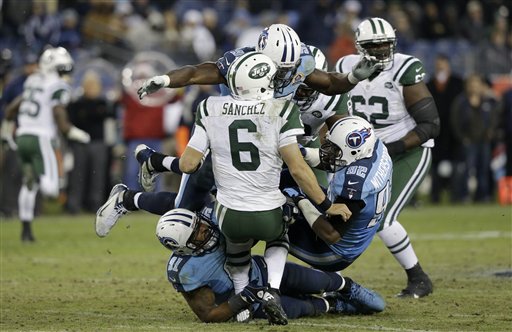
Oof

There are really no more words.

Mark Sanchez, Derrick Morgan, Will Witherspoon

If Greg McElroy doesn’t start next week, I’m probably not going to watch. ULTIMATUM!

Meh, I’ll watch anyway. I want to see how the Jets manage to win these last two to get to 8-8, plus it’s great for LOLs. I can’t remember there ever being a team I’ve rooted for that I’ve disliked so much.

New details, new poll

Per Jon Heyman, the “non-elite prospects” in the deal were Mike Nickeas on the Mets’ side and 18-year-old Venezuelan outfielder Wuilmer Becerra on the Jays’ side. Toby points out that Becerra signed to a $1.3 million bonus in 2011, but Becerra played only 11 games in rookie ball this year before, per Jays Journal, a pitch to the face broke his jaw and ended his season.

So it shakes out like this:

Blue Jays get: R.A. Dickey, Josh Thole, Mike Nickeas

Mets get: Travis d’Arnaud, John Buck, Noah Syndergaard, Wuilmer Becerra.

Now what do you say?

Wait, so if the Mets were going to trade Dickey, why did they sign David Wright?

The question in the headline seems to be coming up frequently, so I figured I’d take a crack at it.

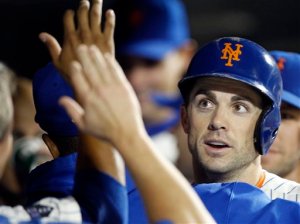
Here's what David Wright looks like. I understand the logic that says if the Mets were planning on rebuilding, they should have opted for a full rebuild by trading Wright for a package of prospects like the one they got for Dickey. But there are some big distinctions between Wright’s situation and Dickey’s situation that don’t make either decision seem like the wrong move. To boot:

– Wright has established a level of production that suggests he’s a safe bet to continue being excellent moving forward. Remember this post? That’s kind of the point. It’s impossible to expect any prospect — or any package of prospects — to outproduce Wright as soon as 2014 or 2015, or maybe ever. If Dickey maintains his 2012 pace through the next few seasons, that’s also the case for him. But Dickey’s future is far tougher to project than Wright’s, in large part because…

– Dickey is eight years older than Wright. I know everybody ages, and sometimes time catches up with a player quickly. But guys as good as Wright don’t often suddenly suck at 31. Will he still be the player he was in 2012 in 2014? Doubtful, but certainly not impossible. Chipper Jones had his two best seasons at 35 and 36. George Brett was still an elite hitter at 37. There’s always a risk Wright suffers some sort of career-altering injury and the deal become a huge albatross, but that’s true for any player with a big deal. Obviously Dickey wasn’t seeking the same money or years that Wright was, but the Mets need Wright more than they need Dickey because…

– The Mets don’t have any other good hitters. Wright was by far the Mets’ best hitter in 2012, with Daniel Murphy the team’s only other regular that provided above-average offense for his position. Behind Dickey, the Mets have Zack Wheeler, Jenrry Mejia and Jeurys Familia, plus guys like Collin McHugh and Jeremy Hefner that seem apt to at least fill in the back of a rotation. The Mets’ best offensive prospects are limited to a bunch of guys in low A or rookie ball and Wilmer Flores, who has a half a season of experience at Double-A. They could have traded Wright to clear the spot for Flores, but that’s putting a ton of eggs in a basket that hasn’t reached Triple-A and might never be able to defend third base as a Major Leaguer. The Mets’ next contender will need to score runs, and it’s hard to figure a better way to ensure that happens than keeping Wright around.

Bold Flavors Snack of the Week

My wife thinks sushi is overrated and overpriced. I like sushi, but not enough to buy it for myself when my wife’s not around. And what I like most about sushi, I’m pretty sure, is the flavor of soy sauce and wasabi combined. Hence this sandwich.

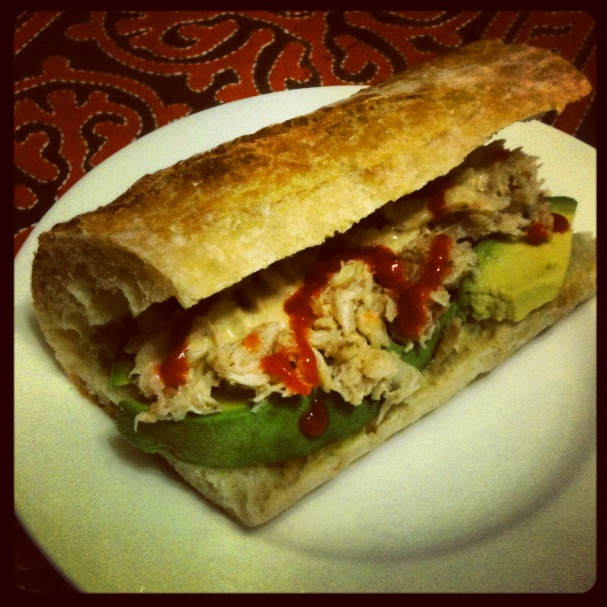
Bold Flavors Snack of the Week: The Sushi Sandwich. It’s based on a California roll because those contents seemed like convenient enough ingredients to turn into a sandwich/delivery method for soy sauce and wasabi.

Here's what the Sushi Sandwich looked like.

Directions:

1) Have a whole conversation with your wife about how you’d like to eat sushi more often even though she’s not that into it. Decide that you really just like the taste of soy sauce and wasabi. Conceptualize a sandwich.

2) Have mayo, soy sauce and Sriracha in your fridge.

3) Have that very same wife stop by the grocery store on her way home from her friends’ house and pick up a baguette, a ripe avocado, wasabi and crabmeat. Use real crabmeat even though it’s a bit more expensive. The sandwiches are only going to work out to like $4 each even with the good stuff.

4) Be surprised to learn that wasabi comes in powder form when you buy it at the store. Who knew? Maybe you, but not me. This is the first time I’ve owned my own wasabi. Pretty exciting day.

5) In a small bowl, stir wasabi powder into a large dollop of mayonnaise. I used about a heaping teaspoon of wasabi powder and maybe a third of a cup of mayo, but play around with it. If there’s too much wasabi, add mayo. I made it so the wasabi flavor is very evident in the mayo, but don’t worry about getting it spicy from wasabi. Too much wasabi will probably overpower the rest of the sandwich. At least that was my rationale.

6) Add soy sauce to the mayo. This one you want to be careful with: Soy sauce packs a lot of flavor and it’s a liquid, so if you add too much you’re going to have soupy mayo on your hands (literally; it’s a messy sandwich). I probably used a half a tablespoon of soy sauce, but I didn’t measure. It’s jazz baby, jazz. When you taste your wasabi/soy mayo, you should be able to taste wasabi and soy sauce and mayo. Pretty straightforward. I thought it would be a nasty color but it turns out it’s just beige.

7) Cut avocado into slices. Eat one, because avocado is delicious. Reserve the rest for, like, 30 seconds from now.

8) Cut baguette into appropriate sandwich-sized pieces. Slice them open, preferably without fully splitting them.

9) Assemble sandwich. Mine went like this: a thin layer of the mayo on the bottom part of the bread, a layer of avocado, a scoop of crabmeat, another drizzle of the mayo to keep the crabmeat moist, then a shot of Sriracha. You probably don’t want to go nuts with the crabmeat, since that stuff’s expensive and the sandwich is going to get some bulk from the avocado. I suppose you could add the mayo mixture to the crabmeat before you put it on the sandwich to create a crab salad, but I was concerned about the color of the mayo making the whole thing look unappetizing.

10) Eat sandwich. We boiled some edamame to accompany them, since it’s both delicious and thematically relevant. Same deal for the candied ginger we had for dessert.

This is a really good sandwich, and something I think I prefer to a California roll for no more money. It captured the wasabi/soy sauce flavor I wanted, but with more crab and avocado taste than I typically get when eating sushi and the added benefit of Sriracha spice. Plus it’s got a nice mix of textures, with the crunchiness of the baguette’s crust, the chewiness of the crab and the creaminess of the avocado. Next time I might try to incorporate some thinly sliced cucumbers for a little more crispiness and moisture, but I’m not sure they’re necessary.

The only issue with the sandwich is that it was kind of a mess. Use napkins, and maybe ready a fork to scoop up fallen crabmeat.

Cool things about Mike Pelfrey

The Mets said goodbye to another, less-heralded member of the 2012 Opening Day starting rotation yesterday when Mike Pelfrey signed a one year, $4 million contract with the Twins. Incentives included in the deal mean Pelfrey could earn up to $5.5 million, which puts into perspective how much of a steal R.A. Dickey is at $5 million. Also, the Dickey trade could have opened up a rotation spot for Pelfrey to start 2013 if the Mets wanted to bring him back, but presumably they wouldn’t have paid him what the Twins did and for all we know he wanted to get the hell out.

pelfcookAnyway, with Pelfrey’s departure, it seems appropriate to for once stop lamenting all the things he is not and celebrate the cool things about Mike Pelfrey. I mentioned a bunch of these a couple weeks ago, but I figured I’d hash them out a bit better. Here are some:

– He introduced me to the term “the yips.” Before Pelfrey balked three times in one game in 2009, I don’t think I had ever heard anyone refer to “the yips.” But it’s a great phrase, and perfect to describe what happened that day.

– He’s pretty funny.

– He’s braver than he gets credit for. Pelfrey spoke openly about consulting a sports psychologist because he wanted to combat the stigma against psychology in sports. The same psychologist treated Greg Maddux and Roy Halladay, both of whom are frequently praised for their bulldog mentalities. But Pelfrey’s reward for admitting it was constant undermining of his mental health whenever anything went wrong.

– He was remarkably consistent, year over year. I’ve joked that you could set your watch to Pelfrey’s xFIP. His ERA bounced around, but his peripherals stayed the same. Across Pelfrey’s four full big-league seasons from 2008 to 2011, he struck out exactly five batters per nine innings and walked exactly three. His lowest strikeout rate was 4.9 and his highest was 5.2. His lowest walk rate was 2.9 and his highest was 3.2. Pelf gonna Pelf, as we say.

– He warmed up to Nirvana’s Unplugged cover of “Lake of Fire.” Doesn’t seem like a traditional choice for walk-up music, but it’s a good groove and Pelfrey wore it well. A guy from Kansas could easily go country with it, so credit Pelf for bringing grunge to the park.

– One time he spent a few minutes talking to me about sandwiches. He pronounces bologna like “bo-low-nya.” It’s great. He’s a really nice dude.

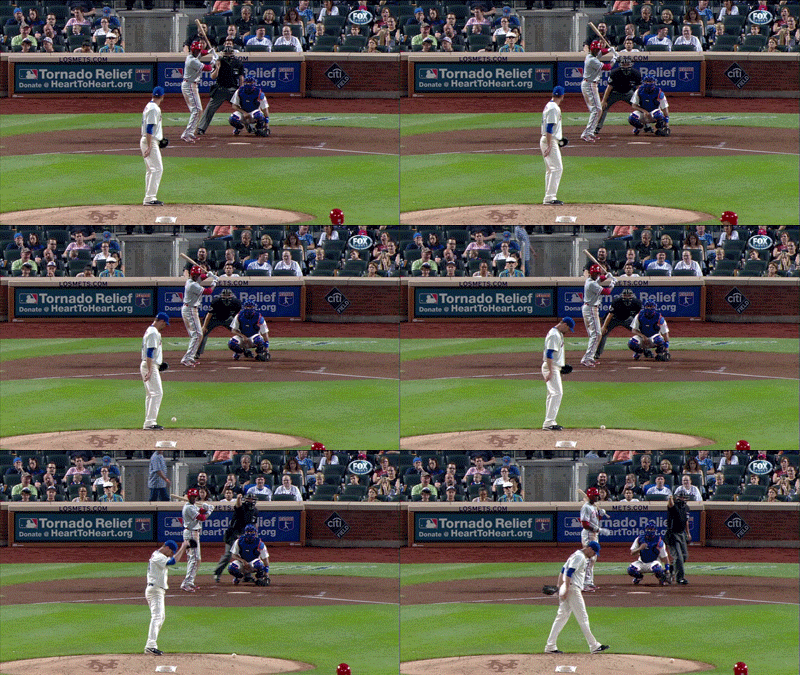
– This happened:

So did this.

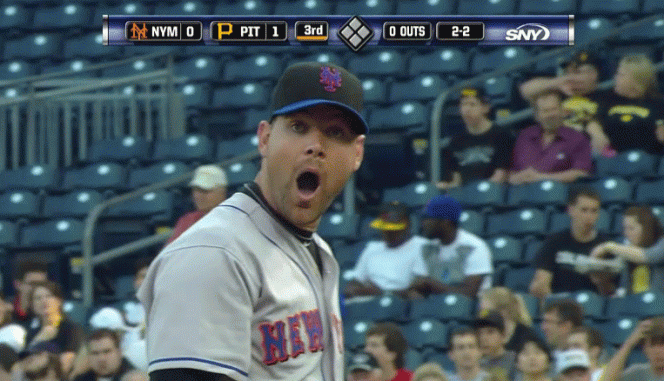
– This zombie face, too:

I can say (and have already said) without hesitation that I’ll be rooting for Mike Pelfrey as hard as I will any ex-Met not named Carlos Beltran.

The R.A. Dickey trade and you

Given the amount of vitriol being spewed about the Internet following the news that the Mets agreed to trade R.A. Dickey (and Josh Thole and a “non-elite prospect”) for Travis d’Arnaud and Noah Syndergaard (and John Buck and another non-elite prospect), I was surprised to see that over 70 percent of those polled on this site since yesterday feel good about the deal.
DickeyFrom my perspective that makes things easy, as it means I don’t need to talk most of you into the rationale behind the deal. It’s pretty straightforward: The Mets trade a guy who’s very good now for a couple of guys who might be very good in the future. Thole, who can catch a knuckleball better than most, goes to Toronto as Dickey’s caddy. Buck comes to New York presumably to serve as an Opening Day stopgap to allow d’Arnaud to spend a month in the Minors for an extra year of team control.

This is all assuming Dickey signs an extension with Toronto and the deal gets done, of course. Unless Dickey really hates the idea of pitching indoors in half his games, I’d guess he inks something within the window. Sure, he stands to make a lot more money if he can pitch like he did in 2012 in 2013 and hit the open market after the season, but Dickey seems like a pretty smart guy who realizes how fickle baseball can be. And though I can’t say for sure as I never expect to make close as much money for anything as Dickey already has for pitching, I’d bet for a guy with four kids, the difference between the $13 million he’ll have made through 2013 and the extra $26 million or so he stands to earn in an extension is the difference between “OK, great, we have a lot of money now,” and “we’ll never have to worry about money again ever.” (UPDATE: While I was writing this, reports came out that Dickey and the Blue Jays reached an extension.)

Oh, plus there are still some details we don’t know, most notably the names of the non-elite prospects and whether the Blue Jays will give the Mets another prospect or salary relief to compensate for the $6 million owed to Buck in 2013. The non-elite prospect swap seems like an odd particular of the trade, and could mean a variety of things. It could be as simple as the Mets wanting more outfield depth deep in their system and the Blue Jays preferring pitching, or maybe there’s an unheralded guy in the Toronto farm system the Mets really like and vice versa. Or the players could be — and this I’m hoping for — near-ready non-prospect types aimed to address each big-league team’s specific needs. But I’ll hold off on speculating any more on the subject, since presumably we’ll find out soon.

Instead, let’s assess the guys we know are part of the deal to figure the ways it could pay off or blow up for the Mets.

Dickey: Trading for Dickey makes a lot of sense for the Blue Jays, a club decidedly in win-now mode with a rare window opening up in the American League East. And Dickey seems a safe bet to pitch well in 2013, if not quite as well as he did in 2012. If he can pitch like he did in 2010 and 2011 (ie, excellently) from 2013-2015, Toronto has a great pitcher on what we assume will be a reasonable deal. But by now you know all the risks: He’s 38, and his style of knuckleballing is unprecedented. Those risks, it should be noted, are part of what makes Dickey so awesome and fun to root for: He’s 38 and his style of knuckleballing is unprecedented! Also, everything else.

Thole: I’m a pretty staunch Thole apologist and willing to bet he bounces back in 2013. He’s not about to emerge as a superstar, but a lefty-hitting catcher that can get on base is a rare and valuable thing. And Thole’s now under the Blue Jays’ control for the next four seasons. Look for him to start the year working primarily when Dickey’s on the mound, then steal at-bats against righties from J.P. Arencibia as the season moves along. Many Mets fans seemed to give up on Thole after his awful 2012, but I don’t think he’s an insignificant part of the deal.

Next, the guys coming to the Mets.

d’Arnaud: By most accounts, d’Arnaud is the best catching prospect in baseball. The concerns — all coming out now from many who clamored for him weeks ago — are that he has struggled to stay healthy and that his offensive numbers in Triple-A were bolstered by the hitting environment in Las Vegas. On the other hand, he has a rare lowercase d at the beginning of his name (his older brother Chase uses and upside-down “P” on his jersey) and he has had shirts made in honor of tacos. So he’s alright by me.

Syndergaard: Y’all know I’m not a prospect guy, but Syndergaard’s the type I like — a guy whose results match his hype. As a 19-year-old in Single-A Lansing in 2012, he struck out tons of guys, walked very few of them, and allowed only three home runs in 103 2/3 innings. I’ve read that Syndergaard’s ceiling is a No. 2 starter, but to me, if a 19-year-0ld is throwing in the upper 90s (as he reportedly does) and showing good control, his ceiling is the moon. It’s hard to find a lot of recent teenage pitchers who dominated the Midwest League the way Syndergaard did, and every pitching prospect is his own unique snowflake susceptible to all sorts of injuries. But Shelby Miller and Tyler Scaggs both reached the Majors in 2012 after tearing through the Midwest League as teenagers in 2010. Expect Syndergaard to start the season in High A at St. Lucie, and if all goes well, finish it in Double-A. If he stays healthy, he could be in the Majors as soon as late 2014.

Buck: John Buck is a legit Major League catcher, and the Mets have precious few of those. He’s not a great Major League catcher by any stretch, but he rates out pretty well on defense and can hit a home run every now and then. His batting average dropped below the Mendoza Line in 2012, but on paper it looks a bit like a fluky BABIP thing. He’s here to hold down the fort until d’Arnaud is ready, but I wouldn’t be surprised if his offense moves back toward his career mean and he hits about as well as the coveted Arencibia in 2013.

As for the rest of this…

Off-field stuff and whether it factored into the deal: Honestly, who cares? If we agree the trade is a good one for the Mets, there’s no real point delving into the he-said, they-said, he-reported drama. Because I work at SNY, anything I write about it will be assumed by someone to be coming straight from the Wilpons even if that’s 100-percent never the case. So it’s just not really worth my time.

How many seasons are the Mets “punting”?: At the New York Times, Tyler Kepner wrote this:

By trading Dickey to the Toronto Blue Jays, pending the negotiation of a contract extension, the Mets essentially told their fans that they do not expect to contend for the next three years. The Mets have already staggered through four consecutive losing seasons, three shy of the franchise record. Now the wait to be relevant drags on.

That’s absurd. Three years? We’re mostly Mets fans here — does anyone feel like this trade sent the message that the Mets don’t expect to contend until 2016? Anyone?

If d’Arnaud’s healthy and hitting in Vegas, he should be in the Majors by May. He’ll be 25, nearing his peak, by Opening Day of 2014. If by then he can emerge as a top-10 regular catcher — what the Mets are banking on in making this trade — he could very well be worth more to the Mets that season than Dickey will be to the Blue Jays. Throw in the stark difference in their likely salaries — money that we hope the Mets will allocate elsewhere — and the organization’s depth at starting pitching relative to its stock of legitimate Major League hitters, plus the fact that Dickey is a 38 year old man, and the idea that the deal implies punting three seasons seems stark raving mad.

This deal, if it goes through, makes the Mets significantly less likely to contend in 2013. They have sacrificed Dickey’s near-term value for players they hope will provide more in the future, trading from what appears to be an organizational strength to address what is certainly an organizational weakness. It’s more smart than it is scandalous.