One time one of my friends was planning to leave the country for a couple of years, so he threw a party and called it “The Last Party.” The rest of us tweaked him about it a lot, talking about how there would be no more parties after this party and as soon as he left the country all partying would cease.
Point is, I’ll eat many more sandwiches in the future and probably write about a bunch of them here. But this is the last sandwich of Sandwich Week, so I figured it needed a heavy headline like that.
The sandwich: Peanut butter and jelly, from the analog TedQuarters kitchen.
The construction: Pepperidge Farm whole grain bread with Skippy Creamy peanut butter on both sides and Smuckers raspberry preserves.
After construction, the sandwich is cut diagonally, which is very, very important. Really can’t stress that enough. I don’t even know why it makes peanut butter and jelly sandwiches exponentially better to cut them diagonally, but it definitely does. I think it has something to do with the angles. A diagonal cut gives you a nice corner to bite into to start the sandwich.
Important background information: Sandwich Week took me around the world, via sandwich. I ate sandwiches inspired by Asian, European, Caribbean, South American and Middle Eastern cuisine, plus some plain old-fashioned New York deli sandwiches. They say this nation is a melting pot, a broth stewed from the contributions of myriad cultures. But I say soup is lame, and we live in a giant, sliced-open hero roll just waiting to be layered with the meats of a thousand nations.
I finished Sandwich Week with a peanut butter and jelly I made at home, an intentionally symbolic choice. I will likely often make meals of PB&J’s in the coming weeks as I work to cut the weight I gained during Sandwich Week. Plus, though I realize it’s probably not what the Fourth Earl of Sandwich enjoyed on that fateful day, I feel like peanut butter and jelly is almost the O.G. sandwich. For a variety of reasons, a fitting finale to a wonderful week.
What it looks like:

How it tastes: It’s peanut butter and jelly, dammit. It’s delicious.
Whole wheat bread is not my favorite, I’ll be honest, but it’s a concession I make to health. I ate a lot of fried food last week, fellas, and I can use a little fiber in the diet. If I were making my ideal peanut butter and jelly, I’d probably use potato bread. Soft, delicious potato bread, oddly yellow even though potatoes aren’t.
Skippy peanut butter is clearly the way to go. I know it’s not the healthiest of peanut butters or the most gourmet. But I’ve had the fancy peanut butters where the oil separates on top and all that nonsense and they’re just not my thing. So inconvenient. You want me to stir my peanut butter before I spread it on my bread (and then lick the knife)? That’s a whole extra step. I’m a busy man.
It’s Skippy, baby. That’s the good stuff. I’m cool with creamy or crunchy or honey-roasted or whatever, I’m just loyal to the brand.
As for the jelly, the Smuckers Red Raspberry Preserves is where it’s at. I’ve never been entirely clear on what distinguishes jam from jelly and jelly from preserves, but I know what I like, and this is it. I think jelly tends to have big lumps of goo in there, and that’s not what I want. I want something I can spread evenly over the peanut butter on the bread to create sandwich uniformity. If there are big blobs of grape jelly in there — delicious though they may be — I’m going to inevitably get some bites that are mostly jelly, and I don’t want that.
Also, it’s of the utmost important that peanut butter be spread on both sides of the bread. If you’re reading this blog I kind of assume you’re smart enough to know that. A) Bread doesn’t get soggy with jelly B) More peanut butter.
What it’s worth: Way more than what it costs, which is so, so little. A jar of peanut butter costs what, like $5, tops? And you get like 20 sandwiches out of that. And the preserves are like $4, and once you buy them you pretty much have that jar until you move. It’s like magic, unless you make jam bars or something. So a peanut butter and jelly sandwich costs like a dollar maybe. And the 30 seconds it takes to make it. That’s amazing. It’s hard to find a better ratio of cost:flavor.
The rating: 80 out of 100. Peanut butter and jelly isn’t going to win any awards, and it’s certainly never going to be adequately appreciated. But it just keeps doing its thing, year and year out, performing at a very high level despite a limited set of tools. Maybe some day peanut butter and jelly will have its day in the sun, where it comes into vogue and everyone realizes how cool peanut butter and jelly is, but until then it will just remain a quasi-novelty act among sandwiches: simple, straightforward, heroic. Adam Dunn?

 That night, you take a limousine to the ace pitcher’s birthday party at a famous rapper’s nightclub. Your teammates are there. So is the famous rapper and his famous singer wife.
 There’s no way Raissman doesn’t know that. I mean, I certainly hope not — he’s the sports media critic for a major newspaper in a huge market. Seems like he’s employing a bit of duplicity to get in a jab at MLB and Fox.
 Pelfrey is the “head case” du jour on the Mets’ roster, so everyone will extrapolate and psychoanalyze and everything else. And yeah, pitching is both a physical and mental pursuit, and for all I know Pelfrey’s struggling with the latter half right now. But the hiccup, whatever it may be, more likely requires a mere adjustment and not any sort of massive overhaul. It’s hardly like he’s throwing every pitch to the backstop.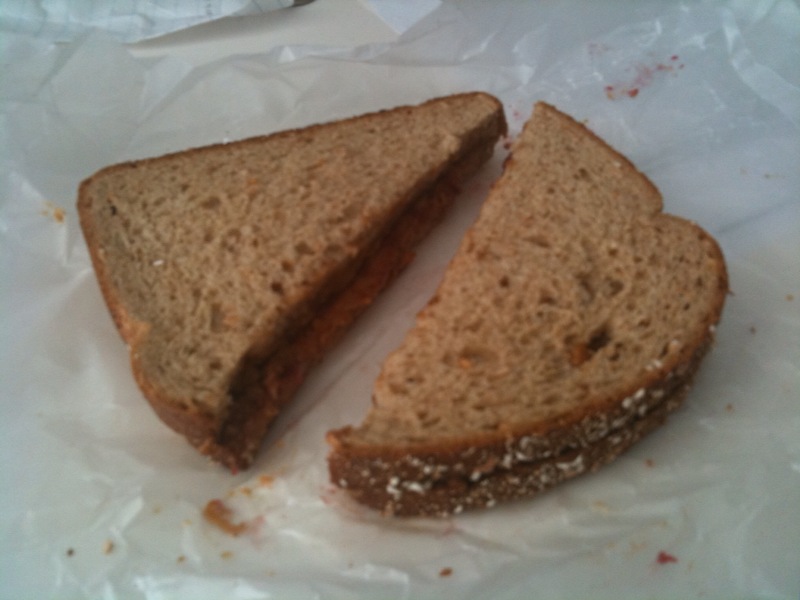
 Just one issue, really: He’s still getting results. Santana boasts a 2.87 ERA, 10th in the National League. And he’s third in the league in innings pitched. When you only look at what Santana has done in 2010, without trying to use the numbers to extrapolate how he will do moving forward, Santana appears to be one of the best pitchers in the league. Still.
 Tedquarters