Phillies-related lawsuits just keep piling up

From the people who brought you sex-for-tickets and intentionally-vomiting-on-children comes this much more reasonable-seeming legal proceeding, against the Phillie Phanatic.

A 75-year-old woman is suing the mascot for injuring her arthritic knees when he climbed over her at a Reading Phillies game.

First of all, I’d like to point out that clearly “Reading Phillies” is an oxymoron. And I know it’s not pronounced like that.

Second, the Philly Inquirer article linked above lists the Phanatic as a “bird-anteater hybrid.” A) Who knew? B) It looks nothing like a bird, and the resemblance to an anteater is tenuous at best. It just looks like some big stupid green thing.

I hope this lady wins and the Phanatic loses his shirt, mostly because I want to see him running around without his jersey on, but also partly because screw the Phillie Phanatic for climbing all over a 75-year-old woman. The Phillie Phanatic is a menace who deserves to be punished. You don’t see Mr. Met getting all handsy.

I do have a bit of contention with the woman’s lawyer, though. It seems like he might be on a single-minded campaign against mascots, for some stupid reason.

“[The Reading Phillies’] mascot is Screwball, and it’s like he’s on Valium,” Speicher said. “They say Screwball has the energy of Perry Como.”

Ahh, why do you have to take potshots at Screwball when your case is against the Phanatic, dude? Screwball has really been working to fight his prescription drug habit, and I’m sure the last thing he needs is some big-shot big-city lawyer taking swipes at his reputation.

Speicher better watch out or he’ll feel the wrath of a hot-dog cannon from point-blank range.

So that was awesome

If you ever see me complain about having to go a baseball game for work, please find me and punch me in the face. There is nothing more loathsome than when reporters or broadcasters paid to cover baseball whine about the heat or long games or the crummy press-box food. You’re watching baseball for a living, bro. No one’s saying your job is easy, but don’t pretend you’re so great at what you do that you couldn’t be replaced by someone from the legions who would kill for the opportunity.

I try not to express too much excitement over the awesome aspects of my job here because I fear it will sound like bragging. But it never stops amazing me that I am allowed to do some of the things I get to do. It’s crazy.

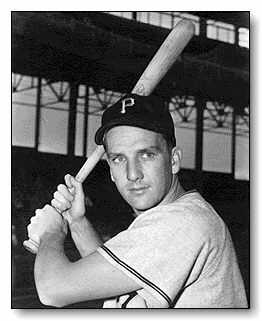
I spent two hours this morning in a conference room at a Connecticut country club talking baseball with Ralph Kiner for an upcoming series of web videos. We watched old clips from Kiner’s Korner and used them as jumping-off points for discussions about the sport and its history, plus Ralph’s personal memories.

It was amazing. I don’t want to scoop the videos as I’m hoping you’ll watch when they come out, but Ralph talked about everything from train travel to pitch counts, and even got into a tiny bit of his history of dating celebrities. Plus he mentioned how batting average is overrated because it doesn’t include walks, just in case his .946 career OPS wasn’t enough to endear him to sabermetricians.

It’ll make for quite a few videos, so I had to film a bunch of opens and introduce him many times. I asked him if being introduced as “Hall of Famer Ralph Kiner” ever got old, and he said, “how could that ever get old?”

It was cool.

I’ve got a friend named Lee, he cast a spell, a spell on me…

Lee, Lee, Lee, Lee, Lee, Lee, Lee, Lee, Lee! We’re talking f@#$in’ Lee!

– Tenacious D/SNY.tv the last three days.

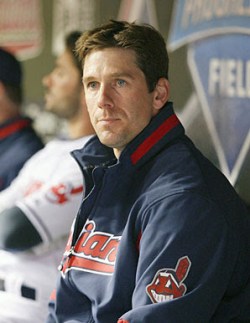
Has SNY.tv offered four takes on Cliff Lee in the last three days? Yes. You might say it’s a hot topic around these parts. And maybe that’s my fault and we shouldn’t be running so many columns about the same topic, but whatever. It’s on my mind too.

Check out Howard Megdal, Dan Graziano and Sam Borden on the pitcher, making a variety of reasonable points.

But the point I want to reiterate — one I touched upon earlier this week but failed to drive home, I think — comes in Mike Salfino’s take. He writes:

Madden says the Mets “would be well-advised not to make a trade for him unless they can sign him.”

Signing Lee long-term is a minus to the deal, not a plus. If the Mets’ resources were limitless, this would not matter. But overpaying Lee badly down the road, again the likely outcome, will hamstring future pennant pursuits.

Those negotiating windows are not what they’re cracked up to be. It’s not like the Mets are going to get the exclusive negotiating window and be able to sign Lee for far less than what he’ll get on the open market. Everyone involved — and most importantly, Lee’s agent — is smarter than that. A team that trades for Lee with a negotiating window will still have to sign him for a deal similar to the one he’s likely to get in free agency. And since Lee is one of the best pitchers in baseball right now, that’s going to be huge.

Reader and commenter Chris M made a great point via email about this. He argued that the Mets will inevitably pursue an ace — with the “ace” label — this offseason, so they might as well sign Lee if they can snag him. They’re not going to find anyone better on the free-agent market, he pointed out, and they’d have to give up even more young players to trade for anyone else.

But that seems a bit fatalistic to me. That’s just urging the Mets to do the least-dumb thing, since Lee is legitimately awesome and will probably provide at least a reasonable return on his contract for the first couple of years.

To me, the team should worry less about labels and more about putting the best team it can on the field for now and the foreseeable future. I don’t see how offering a long-term deal to Lee assures that. As Salfino points out, it seems more likely to hinder it down the road.

If you look, you will be hard-pressed to find a World Series winner that didn’t have a pitcher who could reasonably be called an ace. So it’s easy to argue, “Well, all World Series winners have aces, so the Mets must make sure they have an ace.”

Only it doesn’t really work like that. Pitching is a fickle thing, difficult to predict. And one ace, no matter how good, will only get you so far. You need to secure as many good pitchers as you can and hope that one performs like an ace instead of overpaying one with a recent history of ace-like performance and assuming he’ll continue it.

The sandwich that made me love sandwiches

I got a desperate text message from my old friend Charlie yesterday. It said this:
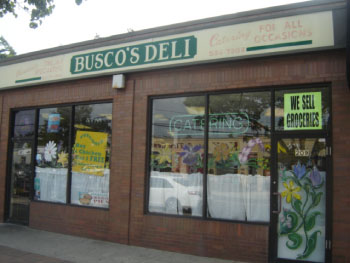
Buscos is no longer. RIP Full Bird, you will be missed.

My heart and mind raced. I furiously began texting him back, peppering him with questions about what happened. He didn’t know. He just knew it was gone. Busco’s is gone.

Busco’s was not the best deli in Rockville Centre, N.Y. Not even close. That honor belonged to E&W, right across the street, or my former employer DeBono’s, a bit off the beaten path.

But Busco’s boasted something none of the others could. The Full Bird. Her majesty.

There’s nothing particularly notable about a chicken cutlet hero with bacon and american cheese. Hell, something similar is on the specials board at every deli in America.

Busco’s did theirs particularly well, though. The proportions were great, and they sliced up the chicken cutlets into thin strips and piled them on the bread, maximizing delicious surface area and minimizing the all the inherent problems prompted by oddly shaped chicken cutlets. Every bite of every full bird had chicken, bacon and cheese on it. That’s important. Sandwich uniformity should not be underrated.

And the Full Bird is notable because it was the first of its kind in Rockville Centre, or at least the first I became familiar with. Before high school, my friends and I ate at Taco Bell and the McDonald’s Express. We were middle schoolers, so we didn’t have much money.

But in my first few weeks of football practice in high school, an older guy named Nick De Luca — a Mets fan, I know, so maybe he’s reading somewhere. Whatup De Luca? — took me to Busco’s and introduced me to the Full Bird.

Holy lord. I had eaten sandwiches before, of course, but usually the type we made at home on Pepperidge Farm bread with cold cuts from the supermarket. Not like this. This was a sandwich to make you love sandwiches. It was the sandwich that made me love sandwiches.

Football practice is an exhausting thing, and something that works up an appetite that can only be sated by piles of fried protein. We ate a whole lot of Full Birds those days. I never really gained any weight from them because we were exercising so much, but I realize now that I probably shaved about five years off my life with all the cholesterol. Whatever. Totally worth it.

And I would be remiss if I eulogized Busco’s without mentioning its best-ever employee. Busco’s was a true local place, the type where you recognized all the guys behind the counter. There was the mustache guy who I think was the owner, and that guy Pete who went to school with my brother, plus the older brother of that kid Jimmy from my Little League team.

And then there was Pat Greenfield. I should note that when I reminisce here about people from Rockville Centre I usually use made-up names so no future employer Googles them and ends up here to find me poking fun of them. But Nick De Luca and Pat Greenfield are real. These men deserve to be celebrated.

Greenfield was nothing short of the most legendary deli man in town history. A hero of heroes. When I went into the trade myself years later, I emulated Pat Greenfield. He was a hulking guy and I think a stud pitcher on the high-school baseball team a few years earlier. He wasn’t much one for conversation. He just made sandwiches.

But oh, how he made them. Oh, oh, oh. It’s not just about the amount of meat, though Greenfield gave you a ton. It’s about the proportion. The right mix of meat, cheese, bacon and dressing. And Greenfield — I don’t know if he studied or trained or just had an innate knack for it — he was the master. People in line would let other, less savvy customers cut ahead so they could get a Greenfield sandwich. Worth the wait.

Sometimes, when bragging about my own impressive abilities as a deli man, I claim this story for myself. But that’s a lie. It’s part of the Greenfield legend:

One time, my dad and I were waiting on line for sandwiches at Busco’s. Full Birds, no doubt. Greenfield was behind the counter working on someone else’s. He spun around to ask the person if she wanted tomatoes on it, but in so doing, he lifted up the sandwich and presented it to the crowd. And it was beautiful. It sparkled in the flourescent light, that signature Greenfield mix of ingredients.

There are people who are paid to dress up food for advertising photo shoots, and I can guarantee none of them has ever created a sandwich that looked like that one. It was perfect. It epitomized what sandwiches should look like. The crowd gasped. Seriously. A deli full of hungry, chatty customers fell silent at the sight of Greenfield’s hero.

Now Busco’s is no more, and Greenfield has gone off to who knows where. Hopefully he’s making sandwiches somewhere. He doesn’t know me, but maybe he’ll find this and agree to come to my house to make me some sandwiches.

That’s all I got. This is a sad day.

UPDATE, 8:05 p.m.: Just got a call from Charlie with an update. He called the nearby deli rumored to be taking over the Busco’s location, and it turns out commenter/Watson elementary school alum BHorn is right — Busco’s is taking over that deli, and not the other way around.

So Busco’s will be moving one town away, but the girl who answered the phone assured Charlie that the Full Bird would soon be added to the menu. As Charlie put it, “Like a beautiful bacon-filled Phoenix rising from the ashes.”

Long live The Full Bird.

I’ve also since been informed that Pat Greenfield is indeed still making tremendous sandwiches, just now at the aforementioned E&W Deli across the street. And someone else pointed out that this post will ultimately be sent to him and he’ll inevitably read it. Which is a bit awkward since, like I said, he has no idea who I am. But thanks for the sandwiches, dude. Your efforts are appreciated.

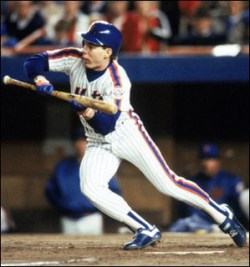
The Lenny Dykstra saga continues

So I needed to do anything I could to protect my job, take care of my family. Do you have any idea how much money was at stake? Do you?… Real money, bro, there’s no way you can’t do everything and anything you can to maximize that.

Lenny Dykstra on steroids.

As Michael O’Keefe and Andy Martino point out in the linked piece, the revelation that Lenny Dykstra took steroids isn’t exactly breaking news. Randall Lane’s new book puts it in context with Dykstra’s personality and provides more evidence that Dykstra uses the word “bro” in about every other sentence, but Dykstra was named in the Mitchell Report.

I like this quote, though, because of the way it speaks to Dykstra’s motivations, and I assume the moviations of many of baseball’s steroid users. Major League Baseball is a massively competitive undertaking and its players are massively competitive people. Many of them were (and many probably still are) willing to jeopardize their longterm health for an additional edge, or, once steroids became pervasive, to be on even footing with their juiced-up brethren.

I wrote this about Dykstra last July:

Look at Lenny Dykstra. He’s a punchline now, filing for Chapter 11 after all that posturing about his financial wizardry. But the things that endeared Nails to the fans — that grit and hustle and desire that so many are looking for and that no one ever doubted in Dykstra — are likely the same qualities that prompted his downfall. Maybe Dykstra couldn’t stop competing, so he thrashed and flailed to stay afloat and took out loans all over town.

Is it a coincidence that, according to Moneyball, Billy Beane called Dykstra “perfectly designed, emotionally” for baseball? Probably. Is it a coincidence that Dykstra was named in the Mitchell Report?

Probably not. I don’t know the guy, and I’m certainly not here to say all steroid users are just like Dykstra, but no one stumbles backwards into the Major Leagues. It takes a ton of work, and anybody who completes that work has to be seriously driven.

It’s sad, really. Everything you read about Dykstra’s career in finance essentially tells of a narrow-minded man striving desperately to get ahead. When Dykstra did everything in his power to win on the baseball field, we celebrated it. He was one of the great dirty-uniform guys in Mets’ history. When Dykstra did everything in his power to win off the baseball field, it was tragic and pathetic. Probably not the type of reward he was used to for his mindset.

Did the offense go away?

The end of Major League Baseball’s performance-enhancing drugs era is causing 1960s flashbacks.

With the baseball season almost halfway complete, 23 major- league starting pitchers with at least 10 appearances have earned run averages below 3.00. In comparison, there were 12 in 1998, when Mark McGwire and Sammy Sosa’s season-long home-run duel marked the era of steroid use in the sport.

Mason Levinson, Bloomberg.com.

There’s been a ton of talk this season about how offense is down and how it’s “the Year of the Pitcher” and everything else. A lot of that has to do with the perfect games and no-hitters, but others have pointed to a league-wide decline in offense prompted by the end of the so-called Steroid Era.

I’m not buying it. But we have graphs to help us visualize data a little better, so I plotted out the league-average runs per game (per team) since 1980. It looks like this:

So yeah, runs are down a little this year. It’s important to note, though, that we’re only dealing with half a season worth of data for 2010, and that offense tends to pick up in the summer months as the weather heats up and balls carry more.

Plus, there’s a lot of noise here, enough so that a fluctuation of .15 runs per game really doesn’t seem all that strange.

Total runs are definitely down from the 5+ run years in 1999 and 2000, but they haven’t really been steadily decreasing since 2002. And baseball implemented tougher performance-enhancing drug testing in 2004.

And for all the talk that the steroid era prompted the offensive explosion of the late 90s and early aughts, it sure looks to me as if the big change came around 1993, when baseball expanded to Miami and (whoa, nelly) Colorado.

Did players happen to start juicing that same year, or did the watered down talent pool lead to more runs? Or is it a little from Column A, a little from Column B? And how much impact did Camden Yards (opened in 1992) and all the hitter-friendly parks that followed have?

Maybe the “Year of the Pitcher” in 2010 does have something to do with all the talented young pitchers that have entered the league. Or maybe it has to do with a few new pitcher-friendly parks, early-season weather, the recent emphasis on run prevention and random fluctuation.

Rob Neyer wrote about the same subject today and called it “a puzzle” that no one “has come close to putting together.”

But I wonder if there’s really one solution to be found, one distinct way to solve the puzzle. Neyer cites the interesting uptick in strikeouts this season, which is certainly interesting. Could that be due to better scouting thanks to better technologies? More thorough understandings of hitter tendencies? Or could it be the residual effect of years of work by people like Neyer himself to destigmatize the strikeout for hitters?

I’ve got nothing. All I know is that baseball is in constant flux, and strange and random things happen all the time. We’re still not even halfway through the season. I’m not ready to call this anything yet.

Pascucci gone off

It is a testament, I guess, to the Mets’ improved roster management that there’s really no place for Val Pascucci on the 2010 team. For once, they are not devoting a roster spot to a useless bench player that could easily be upgraded with a Quadruple-A masher like Boss. Even though Alex Cora is eminently replaceable, he can at least sort of play the middle infield and so is way more valuable to his club than Marlon Anderson was back in 2008.

But Pascucci soldiers on in Triple-A regardless. And what a show he’s giving the people of Buffalo.

Pascucci has 10 hits in his last 30 at-bats. Nine of them have been for extra bases. Six have been home runs. Over the stretch, he’s slashing .333/.412/.1.033. For the season, he has a .934 OPS. For his six-year Triple-A career, he’s at .907.

Quad-A mashers like Pascucci, and hell, all so-called “organizational” players fascinate me. Are they just ignorant of all the indicators that they’ll never have a Major League career, or do they persevere in spite of them? Does Val Pascucci love playing baseball enough to put up with the crappy accommodations and poor pay that come with the level, or does he shoulder them hoping he’ll finally get a shot, something a little longer than his ill-fated 62-at-bat cameo in 2004?

Who knows? Maybe Pascucci simply loves hitting home runs, and is just thrilled people keep paying him to do so. What a stud.

Oh, and Jesus Feliciano has two three-hit nights in the Major Leagues. No one can take those away from him, even if he’ll likely be the odd man out when Carlos Beltran returns. That’s kinda awesome.

Do the Mets have to trade Mejia to get Lee?

Reader Todd used the fancy new contact box (linked from the tab at the top right of this page) to send in a question:

Ted, I have to ask, why does the media always tries to perpetuate this notion that it will take the Mets’ best prospect to acquire anyone of note?

Everyone’s busily discussing whether or not they’d part with Mejia, however, a look at recent history suggests that’d be an overpayment.

Todd went on to reiterate (in greater detail) a point I made last week: the hauls for Lee in the recent past have never been overwhelming, and have never included a prospect of Mejia’s caliber.

I should note that this may all be a moot discussion if Mejia’s shoulder injury keeps him out for any extended period of time. But my response to Todd was similar to the point Tim Dierkes made at MLBTradeRumors.com this morning: It might not take a prospect of Mejia’s caliber to land Lee, but the dropoff between Mejia and the Mets’ next-best movable prospect is big enough that some other team would be able to land Lee if the Mets didn’t include Mejia.

Fernando Martinez has been injured for some parts of the season and struggled for the other parts. Reese Havens is injured. Brad Holt has been terrible. Ike Davis, Ruben Tejada and Jon Niese are important contributors to the Major League team. The Mets would have to build a deal around a prospect with less perceived upside, like Josh Thole, or a prospect who is further from the big leagues, like Wilmer Flores.

Since Lee isn’t owed a lot of money this season and comes with the draft picks for any acquiring team (assuming it doesn’t re-sign him), every contender can afford to make a play for him. And I find it difficult to believe that another MLB club wouldn’t better any package the Mets offered that didn’t include Mejia.

Of course, the trade market is a weird and fickle thing, and I didn’t think the Mets had the horses to land Johan Santana way back when.