Matt Cerrone and Eric Simon are running down their all-decade lists for the Mets, and for lack of anything more interesting to write about, I figured I’d weigh in with my anti-all-decade team. Because I’m just that snarky and just that bored.
 To qualify, players had to play in at least 50 games at their position for the Mets. And they had to have failed miserably, at least based on my own completely subjective standards.
Catcher: Omir Santos, 2009. This might be the most controversial choice on the list, because ol’ Extra-Base Omir is responsible for at least as many good memories (the Omiracle) as bad ones, and he shouldn’t really be faulted for earning Jerry Manuel’s favor early in the 2009 season. But Santos makes the squad as a representative of the Mets’ frightful disdain for adequate sample sizes, evidenced both by the team’s willingness to trade Ramon Castro after Santos’ hot start and the baffling, unforgettable decision to pinch-hit Santos for Castro with the game on the line, after Castro was already 2-for-4, and while Santos was in the bullpen, not even anywhere near the action.
Other candidates were either way too good (Mike Piazza), way too likable (Jason Phillips), completely serviceable (Vance Wilson), or had at least one decent season before outing themselves as crappy (Paul Lo Duca).
First base: Mo Vaughn, 2002-2003. Vaughn actually hit 26 home runs for the Mets in 2002, and again, it’s not really his fault Steve Phillips thought he was worth bringing in after an impressive batting cage session. But Vaughn stands today as one of the Mets’ most massive failures, both literally and figuratively, for his inability to stay healthy or play even a semblance of defense. Too bad, too, because by most accounts he’s a really good guy.
My lasting memory of Vaughn’s time on the Mets will always be the sight of him hurling one into center field while attempting to throw the ball around the infield during David Cone’s first comeback start in 2003 on an absolutely miserable April day at Shea.
Second base: Miguel Cairo, 2005. This was a tough, tough choice, but Miguel Cairo earns the nod over various luminaries the Mets have trotted out to the second sack in the aughts. Signed as a free-agent after his only decent Major League season, Cairo proceeded to post an alarming 64 OPS+ for the Mets while starting 74 games filling in for the injured Kaz Matsui (also a strong candidate).
Cairo also lost points because the Mets actually started him at first base six times, which was mind-boggling. He was the poor man’s Alex Cora way before Alex Cora, and the first in a long line of Willie Randolph’s “guys” to accumulate far too much playing time.
Third base: Joe McEwing, 2000-2004. Inserting Super Joe into the third-base slot is sort of a stretch — he only played 57 games at the position in his tenure with the Amazins and many of them were as a late-game defensive replacement. But, frankly, he had to make the squad somewhere, and despite the Mets’ historical troubles finding an everyday third baseman, the position has mostly been filled admirably during this decade.
McEwing combined obnoxious grit with a complete inability to hit, tallying a 69 OPS+ in five seasons with the Mets. I felt a little bit guilty when I booed him mercilessly from a good seat in his new home in Kaufman Stadium in 2005, but not guilty enough to leave him off this squad. He was versatile, sure, and likable to many, but it can’t be that hard to find someone simply willing to play every position if he can’t hit at all.
Shortstop: Kaz Matsui, 2004-2005. Why does Matsui get the nod over Cora? Because people were actually convinced Matsui would be good. I wasn’t, for what it’s worth, but lots and lots of people were. So convinced, in fact, that the Mets were willing to move young Jose Reyes to second base to accommodate Matsui. That did not go well.
Before I had any sort of forum on which to spew my opinions about the Mets, I remember arguing with friends over Matsui’s merits before the 2004 season. I would point out that his career on-base percentage in the NPB was about 50 points lower than those of Hideki Matsui and Ichiro Suzuki, and they would always — always — counter that he was on the cover of ESPN the Magazine and thus must be good. He makes the team because of that argument alone.
Left field: Roger Cedeno, 2002-2003. Cedeno’s first stint with the Mets — in 1999, under the tutelage of Rickey Henderson — probably would have been enough to keep him off this list if it happened in this decade. But it didn’t, so here it is.
Cedeno manned mostly corner outfield positions in his second go-round with the club despite showing no appreciable and not getting on base enough to make his speed worthwhile. Plus, to paraphrase Keith Hernandez’s greatest quote, he played the outfield “as if being chased by bees.”
Center field: Carlos Beltran, 2005-current. This overpaid and oft-injured whining clubhouse cancer signed a mega-contract with the Mets before the 2005 season despite obviously hating baseball. Then he struck out with the bases loaded to end their 2006 season. HE DIDN’T EVEN SWING! HE SUCKS! TRADE HIM!
I’m kidding, obviously. The actual starter is Jeff Duncan, who posted a downright amazing 35 OPS+ in 69 games in 2003 and 2004. I actually liked Duncan because he walked 10 times in his first 46 plate appearances. Then, I guess, Major League pitchers figured out he wasn’t a free-swinger and just started putting pitches over the plate, where he couldn’t actually hit them.
Right field: Karim Garcia, 2004. Karim Garcia started 68 games in the outfield for the 2004 Mets. Somehow, and thankfully, I have managed to block all of them. He posted a .272 on-base percentage in the stretch and was so bad that I couldn’t go with my first instinct to ignore him and insert Marlon Anderson in the lineup, even though Anderson didn’t accumulate 50 games in right. I was going to argue that Anderson’s ample time in left made him a capable corner outfielder on the failsquad, but Garcia’s existence made it a moot point.
Starting pitcher: Jose Lima, 2006. Did Jose Lima hit the 50-game threshold? No, he stopped at four. But 50 games is a lot for a starting pitcher, and I really liked Jae Seo, and Lima’s four games of awfulness were so memorably bad that he makes the team just on principle. What was worse, he punctuated them with ridiculous posturing, the type of thing that’s exciting and fun when it comes from a great player like Reyes but completely intolerable when it’s pouring forth from one of the very worst starting pitchers of all time.
Relief pitcher: Jorge Sosa, 2007-2008. Sosa actually wasn’t terrible in 2007, and the Mets have had a lot of bad relievers over the past 10 years, but I couldn’t in good conscience pick someone who wasn’t on the 2008 team and Sosa was so bad in 20 appearances that I deemed him “The White Flag,” the human embodiment of forfeit. Plus it wasn’t like he was good enough in 2007 to make up for it, as Aaron Heilman was, or good enough at a specialty role, like Scott Schoeneweis.
Who’d I miss? Comment away and fill me in.

 The Beefy 5 Layer Burrito is a burrito filled with refried beans (you know, like in pintos and cheese), taco beef (the standard stuff), nacho cheese (plain old nacho cheese, the stuff that comes with nachos), sour cream (ie Supreme) and shredded cheese (which you may recognize from every Taco Bell product ever).
 As area wiseass
  Kerry Rhodes is not one such athlete. Kerry Rhodes can not tackle. When an opposing running back is bearing down on Kerry Rhodes, he turns his back and falls down. It’s terrible looking, and embarrassing. Then, in the rare event that Kerry Rhodes knocks a pass down or does something vaguely good, he gets up and carries on like he’s God’s gift to football.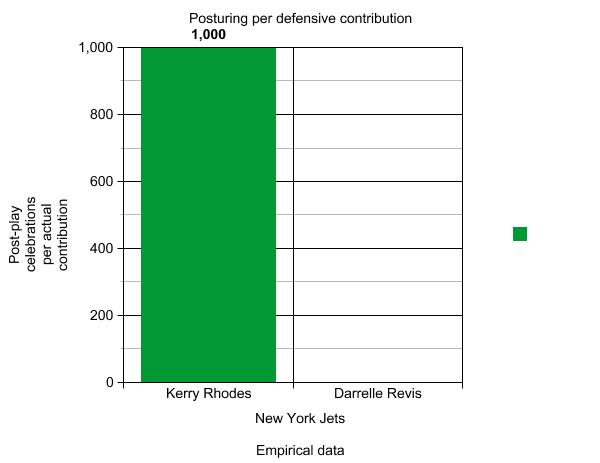

 Kelvim Escobar is pretty damn good when he’s healthy. Kelvim Escobar hasn’t been healthy since 2007. I don’t know the details of the contract yet, so it’s impossible to say whether it’s a good deal for the Mets. If it’s guaranteed multiple millions of dollars for a guy with major arm issues, it’s not. But it probably isn’t, in which case, it’s a good low risk pickup for a guy who could pay huge dividends.
 Isn’t this the type of creative dealing the Mets should be doing?
 Tedquarters