
Nothing I can reasonably imagine him doing. He did hit a home run last night, which was nice. A hot month would go a long way to convincing everyone he’s not toast, but if Bay’s going to stay on the Mets through next March, his chances for staying with them through April depend a lot on what happens in camp. If he shows up looking rejuvenated, the Mets can’t find another — or a couple more — righty-hitting outfielders in the offseason and/or they endure a spate of injuries to outfielders in the Spring, maybe he cracks the club. That’s the idea of keeping him around, anyway. If there are five obviously better outfielders ready for the big leagues come Opening Day, they have to be past the point of giving Bay the benefit of the doubt based on his resume and contract.
There were a lot of questions about Jason Bay’s future with the club. My bet is the same as it has always been: He comes to Spring Training and we read all about how he’s in the best shape of his life and determined to make good on his contract once and for all, but the Mets bring in another righty- or switch-hitting outfielder anyway. Bay’s outplayed by one or more of the fringe roster candidates — Lucas Duda, Kirk Nieuwenhuis, Fred Lewis if he’s around — and for a while everyone frets that Bay will make the club because of his contract and blame the Wilpons and Sandy Alderson. Then near the end of camp, he’ll be sent off — either cut or dealt in a Gary Matthews-type deal where the Mets eat most of his salary. Which of those outcomes probably depends on how he looks in Spring Training.
https://twitter.com/MitchNYM/status/236462601654136832
Massive disclaimer: I really don’t know what I’m talking about with prospects. I defer to Toby Hyde on all things Minor Leagues. Even if I sometimes disagree with his take on young guys, I assume he knows way more about them than I do and is probably, in truth, correct.
That said, I do think much of the SABRry side of the prospecting business has strayed a little too far away from using Minor League stats to predict success. Obviously there’s a ton of value in traditional scouting for prospects, but I suspect guys like Ruben Tejada get overlooked despite consistently strong numbers for their ages when they lack any overwhelming tools.
So to that angle, two Mets prospects I like are Jack Leathersich and Rafael Montero. I haven’t seen either throw a single pitch outside of a intrasquad scrimmage in March, but there’s so much to like about their Minor League numbers.
Leathersich has struck out 36.7 percent of batters he has faced in High-A as a 22-year-old. I understand that he’s supposedly relying on a deceptive delivery, but I just don’t think you can fake those results. He’s been hit a bit harder at High-A than he was in Low-A and short-season ball, but he’s also been victimized by a high batting average in balls in play. I guess I’d be more bearish on his prospects if anyone could find me some examples of lefties who struck out nearly two batters an inning in A-ball and fizzled at the higher levels — presumably they exist, I just don’t know enough about the Minors to know them.
Montero seems like he’s a bit more on the radar so I’m not sure he counts as a sleeper, but he’s got impressive control for a guy his age. Maybe he gets hit harder as he rises through the system, but I’d bet on him over a guy who throws harder but can’t throw strikes.
Pitching prospects be pitching prospects, of course.
Going with yes. Right now it’d be hard for the Mets to deal Santana without eating a lot of his massive salary for 2013. The only way that changes is if Santana pitches the way he did in the first couple months of this season in the first couple months of next season. And if Santana pitches like vintage Santana again, the Mets could be too good to want to trade off pieces. So the only way he looks likely to be elsewhere are if he’s great but the team sucks and they want to get back some value for him while they can, or if they’re so hard-up for cash that they’re willing to eat a lot of his salary just to part with the rest of it. Both those things could happen, but I’d say the odds are better that he pitches too ineffectively to be traded, he pitches effectively enough to keep the Mets in contention, or he gets hurt again and can’t be moved.
https://twitter.com/cormac_leddy/status/236462805069479936
Depends on how much money they have to spend and if they’re ready to bro it down, because Nick Swisher always wants to bro it down, 100 percent of the time.
I’d probably lay off, though, no matter how badly and how frequently I want to bro it down. Swisher’s a nice player, but he’ll be 32 by next Opening Day, he’s benefited from Yankee Stadium the past few years, and though he’s a switch-hitter, he’s got a pretty pronounced platoon split of late — and not the type the Mets could use. He’d be another guy in the lineup that doesn’t hit lefties well, and they’ve got plenty of those already.
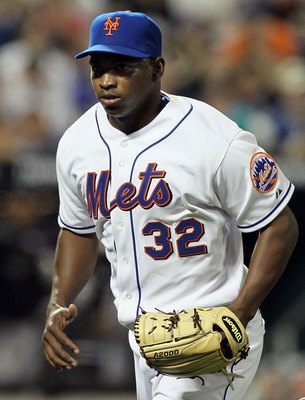 The other Minor Leaguers currently on the 40-man? Rob Johnson and Mike Nickeas, both of whom we’re familiar with, plus Kirk Nieuwenhuis, Wilmer Flores, Reese Havens, Juan Lagares and Cesar Puello. Nieuwenhuis is hurt and Puello hasn’t hit in A-ball, so neither of them seems likely to see lockers in Flushing.
 Mets fans often reference Generation K and/or Alex Escobar when reminding each other of the way prospects frequently fail to match their surrounding hype. And I do that too, of course. But to me no former Met better embodies the distinction between expectations and actual performance than Jefferies, largely because I legitimately expected he’d end up in the Hall of Fame.
 Tedquarters