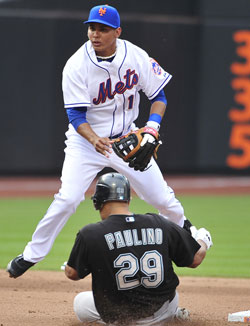
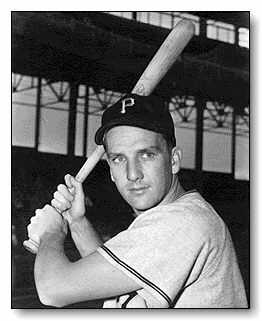
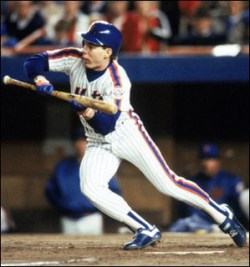
Josh Thole stuff

Josh Thole has been with the Major League Mets for nearly two weeks now, but has averaged less than a plate appearance per day in that time. He has made the most of the scant chances he has had, going 5-for-10 with a double and a walk. And in his two starts behind the plate, Thole failed to single-handedly destroy the Mets’ pitching with his purported inability to call games: He has a 3.00 catcher’s ERA over the tiny sample.

It would be reasonable to question why Thole is with the Mets at all since he’s a 23-year-old catcher that, by almost all accounts, needs more experience behind the plate. But who knows? Maybe the knowledge he can gain studying under old hands like Rod Barajas and Henry Blanco is more advanced than what he’d pick up playing everyday in Triple-A.

I can’t say, nor can I reasonably contend that Thole should be up in the Majors for a team with playoff aspirations and several banged-up regulars who aren’t catchers.

What I can argue, though, is that if Thole’s going to be with the big club, he should probably play more. Predictably, Barajas’ ridiculous run of early-season heroics ran up just as soon as everyone remembered how he swings at everything. His OPS has plummeted to an eminently Barajasian .730 thanks to his .502 rate since June 1. Henry Blanco has been great — and especially outstanding defensively — but it would be a lot to ask his 38-year-old body to hold up under more frequent play.

No one is accusing Thole of being the next Mike Piazza, but he can hit a bit. After a brutal start to the season in Triple-A, he posted a .410 OBP in May and June before his call-up. Though he lacks home-run power, it’s not unreasonable to suggest Thole is a better hitter than Barajas right now. He’s certainly more likely to get on-base. And he hits left-handed, which could add to the righty-heavy lineup a bit of that balance that Jerry Manuel loves so dearly.

The only things that should prevent Thole from playing more often are difficult ones to measure: Leadership, game-calling, defense behind the plate.

I don’t doubt that they’re important; Mets pitchers have been praising Barajas and Blanco all season for their approaches to opposing hitters. I just wonder how much they’re worth compared to an extra 50 points of OBP. In other words, does Barajas’ superior ability to handle pitchers overwhelm Thole’s superior ability to get on base?

Again, I can’t say. The Mets apparently think so.

My guess is that, barring another injury somewhere, Thole will be the odd man out once Carlos Beltran returns. But it wouldn’t kill the Mets to give him a few more chances to prove himself worthy of a Major League spot before that happens. If it turns out he can handle the job behind the plate, he’s another free offensive upgrade for the stretch run.

Time to look elsewhere?

MLB source hears #twins have offered OF Aaron Hicks (1st rnd, 08, 900 minor lg OPS) and top C prospect Wilson Ramos for C.Lee.

Jeff Fletcher of AOL Fanhouse, per Twitter.

By rule, I’m skeptical about all trade rumors. But if there’s any truth to this report, you can probably forget about Lee joining the Mets.

Going by Baseball America‘s preseason ranking, the Mets don’t have a prospect in their system as promising as Hicks, who ranked #19 overall. The Mets’ top guy on that list, Jenrry Mejia, ranked #56 — only two spots ahead of Ramos, who has been reported as the object of the Mariners’ affection in talks with the Twins.

The Mets could certainly match or better that deal if it came down to it, but the cost is probably too high for a rental player. And a negotiating window for Lee, as I’ve discussed, should not be considered added value to any deal for the pitcher.

A no-doubter

Adding a five-time All-Star to the roster seems like a no-brainer as a recipe for success, certain to help a team get to another level. But for Mets manager Jerry Manuel, the expected addition of Carlos Beltran next week in San Francisco after the All-Star break comes with this potential backlash: How can he keep his entire outfield corps happy and productive?

“It will be a tough thing,” Manuel said about seamlessly integrating Beltran and divvying up playing time. “I think a lot will depend on them. It gets now to the point of you have to perform to kind of be out there. I think that’s where we are.

“We’ll sit down and talk with them and let them know what’s to come. We’ll try to map it out for them so they don’t come to the ballpark not knowing whether they’re going to play or not. I’m going to try to give them an advance schedule as to what I anticipate the lineup to be.”

Adam Rubin, ESPN New York.

For a while it looked like Angel Pagan’s oblique injury might linger and render this entire conversation moot, but the 2010 Mets’ best outfielder has five hits including two doubles and a homer in his last two games, so it appears Pagan is healthy.

Mets fans have come to expect the worst from the team and its manager when decisions like this one come up. After all, it’s the same club that started Gary Matthews Jr. and Mike Jacobs on Opening Day.

But I’m going to take “you have to perform to kind of be out there” as a glimmer of hope.

This may be inconceivable to many Mets fans and beat reporters, but Jeff Francoeur should lose the most playing time when Carlos Beltran returns. It’s a no-doubter. Shouldn’t even be up for debate.

“You have to perform to kind of be out there,” like Jerry says, and Francoeur has not performed. Not at nearly the same level as Angel Pagan or even the long-befunked Jason Bay.

Francoeur himself said that Manuel’s decision should be difficult because none of the Mets’ current outfielders is “flat-out sucking.” That’s a relative term, I suppose. Francoeur is not flat-out sucking compared to how your average man on the street might suck if tossed into the rigors of Major League play. I could not post a .711 OPS at any level of professional baseball.

But every other starting Major League right fielder can better that rate, and that’s the issue. Among the men who man his position, Francoeur is dead last in OPS. He’s second to last in OBP, last in wOBA and third to last in WAR.

And why shouldn’t Francoeur, a Major League veteran, be given more leeway? Because these numbers are precisely in line with the ones he has posted across his career. This is Jeff Francoeur.

Flashes of awesomeness like the one he had to start the season or his three-week stretch starting in late May are nothing new; they were enough to enchant the Braves into giving him everyday playing time for four seasons. But Francoeur still hasn’t mastered the strike zone, so he is forever prone to the lengthy droughts that have hampered his 2010.

Angel Pagan has been great this season. Straight-up great. Jason Bay hasn’t been himself, but he has still performed a whole lot better than Francoeur. So — and the joke could very well be on me — I’m going to go ahead and assume that when Jerry Manuel speaks about “performance,” he also understands what that means. Pagan and Bay have far outperformed Francoeur. And Carlos Beltran is really, really good.

There should still be playing time for Frenchy, no doubt. With Fernando Tatis on the disabled list, the Mets will need a primary right-handed pinch-hitter. Plus Francoeur has always torched lefties, so he should spell Pagan against tougher ones. And Beltran will need plenty of rest days for his achy knee.

It just shouldn’t come down to an even split for Pagan and Francoeur or equal shares for everyone or anything like that. The Mets’ outfielders have not performed equally.

What’s baseball?

All the walk-off losses on the road is indicative of an eighth-inning guy. That’s where an eighth-inning guy pitches. It’s basically that simple. If that eighth-inning guy is the guy, he pitches the tie game on the road. At home, the closer pitches the tie game because you get a chance to bat. That’s just the way that works. I mean, that’s baseball.

Jerry Manuel.

OK. Exhale.

That’s baseball?

The Mets’ absurd and quixotic quest for this elusive “eighth-inning guy” has crippled them all year. It forced Jenrry Mejia into the big leagues before he was ready, Fernando Nieve into an ungodly amount of work, and now Pedro Feliciano and Elmer Dessens into situations they should never face.

That’s not baseball. Not good baseball, at least.

Look: Some teams have an eighth-inning guy. If you have two awesome relievers, great, make one the closer and one the eighth-inning guy. Shorten the games. And yeah, you might be better served using one of them in higher-leverage spots in the sixth or seventh when the starter tires and there are men on base, but whatever. The eighth inning and ninth inning of close games are pretty big spots. By all means, use your two best relievers there.

But if you don’t have some distinct second-best reliever, or hell, even a second decidedly good reliever, holy crap, don’t force it. There’s no need at all to anoint someone “eighth-inning guy” if he’s not cut out for it.

Pedro Feliciano is a valuable bullpen arm who can pitch nearly every day and retire tough lefties with unbelievable reliability. I am a fan of Pedro Feliciano. He is very good at his job.

But he is not capable of reliably getting right-handers out, nor has he ever been. He should absolutely not be facing right-handed hitters with the game on the line.

And look, before you ask: I’m not even certain what I would’ve done there. Presumably Bobby Parnell was unavailable after pitching in three of the last four games, clearly next in line for the Nieve treatment. And Jerry’s not getting much help from the front-office, with his team already man-down and carrying three catchers and a crappy bullpen.

But if K-Rod needs work badly enough to come in with the Mets down one run in the eighth inning Tuesday, why is he not allowed to pitch with a tie game on the line on Thursday? Hell, he was warming up. Is it — heaven forbid! — that a save situation might arise without K-Rod available to nail it down? Because, you know, managing to a pointless stat, that’s baseball.

Also a big part of baseball: Throwing your entire bullpen under the bus when you’ve mismanaged it all season. The Mets aren’t suffering walk-off losses on the road because they need an eighth-inning guy, they’re suffering walk-off losses on the road because they think they need an eighth-inning guy.

Sagiv at Fire Jerry Manuel covered last night’s game with his unique brand of vitriol. Check it out (language furiously unsafe for work).

Something about a Ruben that’s not a sandwich

Tejada had a 10-game hitting streak, but his biggest contribution was on the defensive end. The folks at Baseball Info Solutions tell us Tejada had 19 balls hit to him in double play situations at second base this month.

He turned 12 of them into twin killings, a conversion rate of 63 percent. That’s a significant improvement over Castillo’s 47 percent conversion rate (the major league average for a second baseman is 52 percent).

Mark Simon, ESPN.com.

Simon uses one stat to quantify something that’s pretty clear to every metric and eyeball in the world: Ruben Tejada is a better defender than Luis Castillo. Castillo’s certainly got experience on the 20-year-old, but Tejada appears able to mitigate his lack of familiarity with the position with his impressive range and excellent instincts.

Thus far, Tejada has not embarrassed himself with the bat, either — no small feat for a player his age in the Major Leagues. It’s still a tiny sample, but Tejada’s .269/.329/.328 line is not terribly far off the league-average .264/.333/.386 mark.

Whether Tejada can keep that up remains to be seen, though it’s not as if his Major League offensive performance is a massive improvement over his respectable Minor League history. But he appears to rely on slapping the ball to the opposite field, so it’ll be interesting to see if the league adjusts to him with a little more exposure.

If he can maintain this performance, though, he should remain starting at second base even if and when Castillo returns. Though Castillo is likely to improve upon his meager offensive line this season and be a better hitter than the rookie, Tejada’s defense makes up for the difference in production.

Castillo has not yet started a rehab assignment and is apparently recovering slowly — in that he can ever truly “recover” — from his injury, so this could be immaterial.

But if it does happen — assuming Jose Reyes’ injury is as minor as the Mets are making it out to be — how will the team handle it if Castillo returns and Tejada is still playing this well? It sets up a fascinating test for a front-office on a recent run of reasonable decision-making. Castillo will have less than $9 million owed to him over the remainder of his contract. Is that little enough for the Mets to stomach cutting him free, eating the sunk cost?

But wait! Castillo is a switch-hitter and a better offensive player and baserunner than Alex Cora. Cora is on the team because he can back up Jose Reyes at shortstop, but Tejada could just as easily slide over when Reyes needs a rest and fill that position more aptly than Cora, with Castillo replacing Tejada at second.

So if Castillo returns and Tejada still appears a better bet to be playing second base everyday, Cora should be the odd man out. But can the Mets cut Mr. Vesting Option himself, the catalyst of all clubhouse chemistry?

I’m guessing no. But they’ve been surprising me since the day Mike Jacobs got cut.

So that was awesome

If you ever see me complain about having to go a baseball game for work, please find me and punch me in the face. There is nothing more loathsome than when reporters or broadcasters paid to cover baseball whine about the heat or long games or the crummy press-box food. You’re watching baseball for a living, bro. No one’s saying your job is easy, but don’t pretend you’re so great at what you do that you couldn’t be replaced by someone from the legions who would kill for the opportunity.

I try not to express too much excitement over the awesome aspects of my job here because I fear it will sound like bragging. But it never stops amazing me that I am allowed to do some of the things I get to do. It’s crazy.
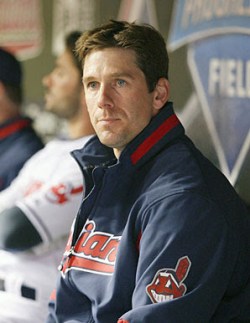
I spent two hours this morning in a conference room at a Connecticut country club talking baseball with Ralph Kiner for an upcoming series of web videos. We watched old clips from Kiner’s Korner and used them as jumping-off points for discussions about the sport and its history, plus Ralph’s personal memories.

It was amazing. I don’t want to scoop the videos as I’m hoping you’ll watch when they come out, but Ralph talked about everything from train travel to pitch counts, and even got into a tiny bit of his history of dating celebrities. Plus he mentioned how batting average is overrated because it doesn’t include walks, just in case his .946 career OPS wasn’t enough to endear him to sabermetricians.

It’ll make for quite a few videos, so I had to film a bunch of opens and introduce him many times. I asked him if being introduced as “Hall of Famer Ralph Kiner” ever got old, and he said, “how could that ever get old?”

It was cool.

I’ve got a friend named Lee, he cast a spell, a spell on me…

Lee, Lee, Lee, Lee, Lee, Lee, Lee, Lee, Lee! We’re talking f@#$in’ Lee!

– Tenacious D/SNY.tv the last three days.

Has SNY.tv offered four takes on Cliff Lee in the last three days? Yes. You might say it’s a hot topic around these parts. And maybe that’s my fault and we shouldn’t be running so many columns about the same topic, but whatever. It’s on my mind too.

Check out Howard Megdal, Dan Graziano and Sam Borden on the pitcher, making a variety of reasonable points.

But the point I want to reiterate — one I touched upon earlier this week but failed to drive home, I think — comes in Mike Salfino’s take. He writes:

Madden says the Mets “would be well-advised not to make a trade for him unless they can sign him.”

Signing Lee long-term is a minus to the deal, not a plus. If the Mets’ resources were limitless, this would not matter. But overpaying Lee badly down the road, again the likely outcome, will hamstring future pennant pursuits.

Those negotiating windows are not what they’re cracked up to be. It’s not like the Mets are going to get the exclusive negotiating window and be able to sign Lee for far less than what he’ll get on the open market. Everyone involved — and most importantly, Lee’s agent — is smarter than that. A team that trades for Lee with a negotiating window will still have to sign him for a deal similar to the one he’s likely to get in free agency. And since Lee is one of the best pitchers in baseball right now, that’s going to be huge.

Reader and commenter Chris M made a great point via email about this. He argued that the Mets will inevitably pursue an ace — with the “ace” label — this offseason, so they might as well sign Lee if they can snag him. They’re not going to find anyone better on the free-agent market, he pointed out, and they’d have to give up even more young players to trade for anyone else.

But that seems a bit fatalistic to me. That’s just urging the Mets to do the least-dumb thing, since Lee is legitimately awesome and will probably provide at least a reasonable return on his contract for the first couple of years.

To me, the team should worry less about labels and more about putting the best team it can on the field for now and the foreseeable future. I don’t see how offering a long-term deal to Lee assures that. As Salfino points out, it seems more likely to hinder it down the road.

If you look, you will be hard-pressed to find a World Series winner that didn’t have a pitcher who could reasonably be called an ace. So it’s easy to argue, “Well, all World Series winners have aces, so the Mets must make sure they have an ace.”

Only it doesn’t really work like that. Pitching is a fickle thing, difficult to predict. And one ace, no matter how good, will only get you so far. You need to secure as many good pitchers as you can and hope that one performs like an ace instead of overpaying one with a recent history of ace-like performance and assuming he’ll continue it.

The Lenny Dykstra saga continues

So I needed to do anything I could to protect my job, take care of my family. Do you have any idea how much money was at stake? Do you?… Real money, bro, there’s no way you can’t do everything and anything you can to maximize that.

Lenny Dykstra on steroids.

As Michael O’Keefe and Andy Martino point out in the linked piece, the revelation that Lenny Dykstra took steroids isn’t exactly breaking news. Randall Lane’s new book puts it in context with Dykstra’s personality and provides more evidence that Dykstra uses the word “bro” in about every other sentence, but Dykstra was named in the Mitchell Report.

I like this quote, though, because of the way it speaks to Dykstra’s motivations, and I assume the moviations of many of baseball’s steroid users. Major League Baseball is a massively competitive undertaking and its players are massively competitive people. Many of them were (and many probably still are) willing to jeopardize their longterm health for an additional edge, or, once steroids became pervasive, to be on even footing with their juiced-up brethren.

I wrote this about Dykstra last July:

Look at Lenny Dykstra. He’s a punchline now, filing for Chapter 11 after all that posturing about his financial wizardry. But the things that endeared Nails to the fans — that grit and hustle and desire that so many are looking for and that no one ever doubted in Dykstra — are likely the same qualities that prompted his downfall. Maybe Dykstra couldn’t stop competing, so he thrashed and flailed to stay afloat and took out loans all over town.

Is it a coincidence that, according to Moneyball, Billy Beane called Dykstra “perfectly designed, emotionally” for baseball? Probably. Is it a coincidence that Dykstra was named in the Mitchell Report?

Probably not. I don’t know the guy, and I’m certainly not here to say all steroid users are just like Dykstra, but no one stumbles backwards into the Major Leagues. It takes a ton of work, and anybody who completes that work has to be seriously driven.

It’s sad, really. Everything you read about Dykstra’s career in finance essentially tells of a narrow-minded man striving desperately to get ahead. When Dykstra did everything in his power to win on the baseball field, we celebrated it. He was one of the great dirty-uniform guys in Mets’ history. When Dykstra did everything in his power to win off the baseball field, it was tragic and pathetic. Probably not the type of reward he was used to for his mindset.