
Niemo bearing brunt of bullpen’s frustration

“So I got up in the eighth and after Feliciano got Cano I sat back down, and they told me in case something else happened and someone gets on base, I will be in there.”

Asked if it was difficult to do that, to keep warming up, Rodriguez said it was a matter of being smart.

“You have to save your bullets and not waste them back there and throw too much,” he said.

But sure enough, in the top of the ninth, Rodriguez was quickly warming up again after another reliever, Ryota Igarashi, gave up a walk and two hits. In came Rodriguez to get the final two outs, although it was not easy. Derek Jeter doubled, and after a groundout, Mark Teixeira reached on an infield single.

David Waldstein, N.Y. Times.

When I saw this story on the back page of the Daily News this morning, I figured it was just a slow news day and the News was mucking up a fuss for lack of anything else to print.

But the News’ story didn’t include the above details and didn’t mention that the spat between Frankie Rodriguez and bullpen coach Randy Niemann stemmed from a dispute over how the reliever has been used.

This is nothing new: Jerry Manuel’s quick hook severely taxes the arms in his bullpen, and his apparent insistence that every reliever warm up at some point in every game must get frustrating for a crew of already-overworked men. Relievers hate warming up without pitching — they call it “dry-humping” — and the decision to get them throwing represents one of the real, impactful managerial moves that are never represented in the box score.

Sure, it may look like Fernando Nieve sometimes goes a couple of games without pitching, but scour tapes of those games and you’ll note that Nieve is almost perpetually warming up in the bullpen. K-Rod reportedly threw 100 pitches in the bullpen before he entered the Mets’ 20-inning win over the Cardinals. I can’t say for certain, but I’d guess that’s the type of thing that will make you want to fight the bullpen coach.

The Daily News mentioned Rodriguez’s history of spats with Tony Bernazard and Brian Bruney, but this story shouldn’t be about the fiery closer. It should be about Manuel’s myopic bullpen management, and it’s unfortunate that Niemo should have to bear the brunt. I don’t know all the mechanics behind the decision to warm a guy up, but I’ve got a feeling the fault here falls on the man making the call, not the one receiving it.

What he said

And with Francoeur making $5 million this year, it is hard to see the Mets accepting that he is a sunk cost when Beltran returns, either by putting Pagan in right or giving Beltran the right field job in the hope that it puts less stress on his knees….

The answer to Francoeur is Pagan/Beltran in those two outfield spots, but there is zero reason to expect that Beltran is going to return healthy. (Not zero reason to hope, but to expect it.) The Mets, unwilling to swallow even Gary Matthews’ remaining salary, seem like poor candidates to do the same with Francoeur.

Howard Megdal, SNY.tv.

Howard’s right, you know. The problem of what the Mets should do in the outfield once Carlos Beltran returns isn’t one I’ve tackled here, since it doesn’t seem too worthy of my tackling until its clear that Beltran will return. But if and when that happens, Pagan absolutely must retain a starting spot unless Francoeur has turned his season around in a big, big way.

During the offseason, I wrote that I didn’t agree with sabermetricians arguing that Francoeur’s uptick with the 2009 Mets was merely the product of a reversal of fortune. I still feel that way, but it’s become pretty clear that whatever was happening for Frenchy in the second half of last season has stopped happening, and that he has likely returned to being Jeff Francoeur. Check out Francoeur’s OPS+ lines over the past few years:

2008: 72
2009 (with Braves): 68
2009 (with Mets): 120
2010: 69

One of these things doesn’t belong here, one of these things isn’t the same, etc.

That’s not entirely fair, of course. Isolating just these two and a quarter seasons conveniently ignores the first two and a half seasons of Frenchy’s career, across which he posted a Major League average 100 OPS+.

But even with Francoeur’s strong defense, that’s not really good enough to be a starting corner outfielder in the big leagues. And his line this season, like his line with the Braves in 2008 and 2009, is bad enough to make him a sub-replacement level right fielder. That means a team should be able to find a better player in Triple-A or on the scrap heap. Chris Carter, for example.

It’s still early in 2010, so there’s still hope that whatever magic or mechanical adjustment or attitude change turned Francoeur into a productive player for a half season in 2009 will again do its bidding on the Mets’ right fielder.

That just looks less likely to happen with every passing ofer.

Meanwhile Pagan, with his range in center, speed on the basepaths and reasonable plate discipline, has maintained (or even improved upon) the form that made him one of the Mets’ most valuable — and underrated — position players in 2009.

In Rod We Trust

Rod Barajas is prominent among possible catchers whom the Rangers are scouting as spring moves into summer, and the July 31 Trade Deadline gets closer.

The Rangers had interest in Barajas in the offseason as a free agent, and industry sources said the club will have interest again if the Mets look to move him.

The Mets are not in a selling mode yet. But they are sitting in last place in the National League East, while Barajas is off to a strong start. He went into the weekend series with the Yankees hitting .276, with 10 home runs and 24 RBIs in his first 33 games.

T.R. Sullivan and Chris Cox, MLB.com.

I should mention before I get into this that watching Rod Barajas play baseball has been one of the most thrilling parts, for me, of being a Mets fan this season. And that’s not despite his relative inability to get on base, it’s in part because of it. Barajas takes lots of massive cuts, and when he squares one up, whoa nelly. That’s a spectacular thing to see, and it’s happening pretty damn frequently. More than half of Barajas’ hits have been for extra bases. Dude’s slugging .551. He has provided the Mets way, way more than they could have hoped for, and more than they could have hoped for from Bengie Molina for way less money.

Oh, and he comes to the plate to “Low Rider” and “California Love.” And when pressed for quotes, he provides some of the smartest baseball analysis you’ll ever hear from an active player. He’s the only person connected with the team that I’ve heard even suggest that Jenrry Mejia might need more than one pitch to succeed at the Major League level. I hope the Mets make Rod Barajas their manager someday. I really do.

Also, I don’t believe the Mets will become trade-deadline sellers if they’re even remotely near playoff contention. As long as the current front office is in place, I have my doubts that the team will ever cut bait on a season or trade their home-run leader to a more legitimate contender.

Nor does this administration appear likely to sell high on a player, ever. If anything, these Mets seem more apt to sign Barajas to an extension now, while his OPS+ is 22 points higher than it ever has been for a full season.

But trading Barajas now would indeed be selling high on a player who has never performed like this before, so, depending on the return, it could be a shrewd move. The Rangers are obviously too smart to give up the type of package a catcher with an .840 OPS should net, since I’m certain no one values Barajas as a catcher who can maintain an .840 OPS.

The Rangers have one of the league’s best Minor League systems and a ton of young pitching, though, and if the Mets could net even a halfway decent prospect or a useful player for the future for a 34-year-old catcher signed to a one-year deal playing way above his head, in a season in which they appear unlikely to contend, then, you know, duh.

I’d guess that the only way it would happen, though, is if Josh Thole forces the issue from Triple-A Buffalo. Thole appears to be getting about that, going 11-for-21 in his last six games with five doubles, a home run and three walks to raise his season line to .250/.314/.417. If Thole keeps hitting and Henry Blanco keeps playing well as the big-league backup, Barajas may seem a lot more expendable soon.

And then there was no more Lima Time

Word passed around on Sunday that Jose Lima died of a massive heart attack. He was not yet 38 years old. They had a moment of silence for him at the stadium in Kansas City, before the Royals-Rockies game, though I’m not sure that in this case that was quite right. It probably should have been a moment of music — Lima never cared for silence. They could struck up a mambo band — maybe played one of his most popular lyrics as relayed by Sports Illustrated’s Kostya Kennedy: “Parate a batear que te voy a alimar.”

Step up to the plate. I’m going to strike you out.

And I thought about that image of Jose Lima, smoking his cigar, smiling happily, telling stories, all in the aftermath of his own loss and the Royals’ 15th straight loss. Over time, most of the people around baseball came to understand that Jose Lima was just having fun. That’s all. Baseball was fun. Life was fun. As he would say to friends and strangers and kids who wanted autographs: “What time is it?” The correct answer was “Lima Time.”

Even if you lost, it was still Lima Time.

“Man, if I see a guy with his head down, I know I’ve got him,” he told me that day in the clubhouse. “We can’t put our heads down. We can hurt, man. But we’ve got to hurt on the inside.”

In my memory, then, he took one more puff of his cigar and blew out the smoke and smiled. In show biz, they say, “The show must go on.” In the clubhouse, Lima said: “That’s what baseball is, man. You hurt on the inside. On the outside, we’ve got to win some games.”

Joe Posnanski, JoePosnanski.com.

I was privately, snarkily wondering if Jose Lima’s obituaries would neglect to mention how Lima spent much of his career being one of the worst pitchers imaginable. All due respect and all, but I hated Lima when he came to the Mets. Lima Time in Flushing remains the only time I can ever remember being put off by a player’s on-field antics.

Lima, I was certain, hadn’t earned the right to dance in the dugout. He hadn’t even earned the right to be on the team. He came to the Mets with a 5.21 ERA and only managed to raise that in his four starts.
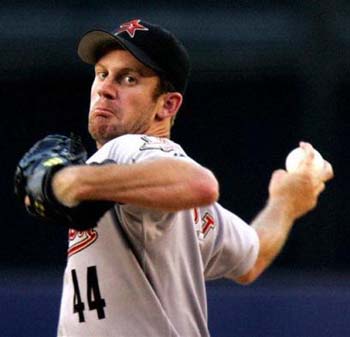
But Posnanski, as he often does, puts everything in perspective. Jose Lima’s badness felt closely tied to Jose Lima’s brief goodness, and Jose Lima’s apparent madness. And it seems somehow fitting, if still tragic, that a guy like Lima would die so young. Everything Jose Lima did was loud, obnoxious, extreme, and kind of awesome. Guys like that aren’t made to fade away.

So rest in peace, Jose Lima. Here’s hoping heaven has some poorly run franchises.

Head, meet desk

Acosta optioned to Buffalo to make room for Igarashi tomorrow. Guess Mejia’s staying in pen.

David Lennon, on Twitter.

Awesome. And by “awesome” I mean “not at all awesome.”

Acosta’s actually been better than Mejia out of the pen in small samples. And Acosta’s not a 20-year-old stud prospect who should be starting and needs work on his secondary pitches before he can help a decimated rotation.

It’s a shame about Roy (revisited)

Simply put: Oswalt is being paid like he can still be expected to be one of the game’s elite pitchers and that’s simply not a safe bet. Moving that contract for a good return on his talent is going to be a chore for Ed Wade, although the San Diego Padres proved such a move is possible. Of the recent high-priced starting pitchers to be traded, only Jake Peavy’s current contract had more annual money remaining than Oswalt’s. The Padres even had the unfortunate break of Peavy missing most of the season and holding a no-trade clause. Somehow, they got the White Sox and him to agree to a deal, and thus ridded themselves of his three-year, $52M deal.

Scott Kazmir was owed nearly $34M over three years and the Rays didn’t receive an elite prospect in return for him last August. Cliff Lee only had a season and $9M remaining when the Indians (and then Phillies) traded him. Even Roy Halladay was owed less money ($15.75M) than Oswalt will make next season when the Blue Jays traded him to the Phillies this past winter. Those contracts look cost efficient when stacked next to Oswalt’s, and those were for two of the game’s absolute best arms.

R.J. Anderson, Fangraphs.

I’m happy Anderson wrote this, because he says basically all the things I planned to write this morning anyway. And it’s a beautiful Saturday and I’ve got  lawn to mow.

Roy Oswalt is still a good pitcher. But he showed signs of a decline in 2008 and 2009, and his early-season dominance in 2010 is more likely due to the whims of small samples than any real change.
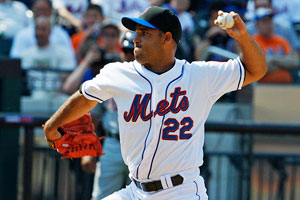
And Oswalt is being paid like an elite pitcher. I know Mets fans are incredibly eager for the team to pick up Oswalt, who spent most of this decade as one of the best, steadiest pitchers in the National League. But trading premium prospects for the right to pay Oswalt $25 million over the next year and a half would be foolish. If the Mets were willing to trade Wilmer Flores and Jenrry Mejia, two top-100 prospects, they should look for a more efficient return — a pitcher under control for more years and signed to a more reasonable contract.

It’s not my money, of course, so if the Mets were able to acquire Oswalt on something closer to a salary dump, I’m all for it. Like I said, he’s a good pitcher, and the Mets don’t have many of those. But it’s bad business to mortgage the future for an expensive, aging pitcher in a year the team’s no safe bet to contend even with Roy Oswalt on the staff.

And for what it’s worth, there’s a reasonable chance Oswalt wouldn’t waive his no-trade clause to come to the Mets. Check out Oswalt’s “preferred” destinations, according to Jayson Stark. Now check out the Google Map for Oswalt’s hometown in Mississippi. Doesn’t seem to hard to decipher why he favors the Rangers, Cardinals and Braves, in the three Major League cities geographically nearest to where Oswalt grew up.

Raul Valdes: Actually pretty good?

I’m not sure I’m willing to go that far just yet, but the 32-year-old Cuban defector who came to the Mets on loan from Tabasco of the Mexican League is quietly quieting some doubters — this one included — in 2010.

Valdes has struck out more than a batter an inning and more than three times as many guys as he’s walked. And he has induced enough weak contact that it’s reasonable to argue he’s unlucky to hold a 3.20 ERA. He has yielded a high .361 batting average on balls in play despite an 18.8% line-drive rate, and his FIP is nearly a run lower than his ERA. Plus, in small samples, Valdes has actually been much more successful against right-handed batters than lefties.

Valdes’ solid but unspectacular five innings in relief of John Maine last night has Mets fans speculating that Valdes could take Maine’s place in the rotation if Maine is actually injured.

Dillon Gee has struggled of late for the Triple-A Bisons. Pat Misch has pitched well, but with predictably unexceptional peripherals. (Also, his name is an anagram for “Sh-t Camp.” “Raul Valdes,” on the other hand, is an anagram for “Larva Duels,” which I imagine would be awesome to watch.)

The problem with starting Valdes is mostly that there’s almost nothing in his past to suggest he’s anywhere near this good. In the Minors from 2005-07, Valdes struck out 6.8 batters per nine innings and allowed a ton of hits. He was a starter for most of it, so it’s reasonable to expect he would pitch a bit better in a relief role. Not this much better, though.

Way, way crazier things have happened in samples this small, so the early success is not necessarily an indicator that it’s all suddenly clicking for Valdes, or something like that.

But since Valdes hasn’t pitched in the U.S. since 2007, there’s some chance he picked up a new pitch or approach in Mexico that has made him more effective. I can’t find any Mexican League stats for Valdes, so I don’t even have any clues. There’s not much about Valdes’ tenure in Mexico in Adam Rubin’s excellent profile of the pitcher from last month.

Finally, I’m open to the possibility that the Valdes pitching for the Mets is the beneficiary of some sort of international identity conspiracy. Mostly I’m open to that because I think it’d be kind of awesome and not because I think it’s actually plausible, but check this out: Not only is Valdes pitching far better at the Major League level than he ever did in the Minors, but the headshot on his MiLB.com player page is clearly not him.

Could that be the real Raul Valdes, the one who suffered a 6.30 ERA in 131 1/3 Triple-A innings? Did the Olmecas de Tabasco loan the Mets a ringer?

No, probably not. But it’d be pretty sweet if they did.