To herald the coming of Matt Garza, the Chicago Sun-Times ran a backpage photo of Joaquin Benoit, who looks nothing like Matt Garza.
Whoops
Reply

To herald the coming of Matt Garza, the Chicago Sun-Times ran a backpage photo of Joaquin Benoit, who looks nothing like Matt Garza.
Rumors are swirling that the Rays and Cubs are finishing a deal to send starter Matt Garza to Chicago. In return, the Rays will supposedly get prospects Chris Archer, Hak-Ju Lee, Brandon Guyer and Robinson Chirinos.
 Last month, about 70% of Tedquarters readers said they would not trade Wilmer Flores and Jenrry Mejia to get Garza. I countered that I might, since both players appear so far off from contributing to the Major League team and Garza is a durable if unspectacular starter under team control though arbitration for several years.
Obviously we have no way of knowing how the Rays value the Mets’ and Cubs’ prospects, but as a point of comparison: John Sickels gave Archer a B+ and Lee a B in his most recent overview of the Cubs’ system. He gave Flores a B+ and Mejia a B.
Archer, like Mejia, is a hard-throwing right-hander who has had success up to — but not beyond — Double-A. Archer is a year older than Mejia, but his status as a prospect benefits from the fact that he was never in the hands of Jerry Manuel. Unrushed, he was able to stay in Minor League rotations for 142 1/3 innings in High A and Double-A. Mejia threw 81 1/3 across five levels (including rehab stints).
For what it’s worth, Mejia had a much better reputation as a prospect than Archer did coming into the 2010 season, before the ill-fated eighth-inning-guy experiment. But Archer’s stature grew thanks to an excellent season.
Lee, like Flores, is a young shortstop who played in A-ball this season. Other than that, they don’t have a ton in common. Scouting reports say Lee is a plus (or even “special”) defender, while few experts believe Flores has any shot of sticking at shortstop. Flores projects to hit for a lot more power, but Lee has shown a lot more discipline in the low Minors.
Still, by Sickels’ admittedly shorthand rating system, Archer/Lee and Flores/Mejia is basically a wash. But since both Flores and Mejia have spent time on both Baseball America‘s and Keith Law’s Top 100 prospects lists in the past, let’s say the Mets pair would have slightly more trade value, if only based on their reputations.
But then on top of Archer and Lee, the Cubs traded Guyer and Chirinos, two players that likely enticed the Rays. Sickels had them at B- and C+ grades, respectively, but both enjoyed success in the high Minors in 2010. Chirinos, a 26-year-old righty-hitting infielder-turned-catcher, appears ready to at least backup to John Jaso behind the plate after a .999 OPS across Double-A and Triple-A in 2010.
I’m not sure there are great comps for either in the Mets’ system. But using sweeping strokes at players of similar caliber, let’s say the Mets could have landed Garza for Mejia, Flores, Sean Ratliff and Dillon Gee (not that the Rays need starting pitching, but whatever). Would you make that deal?
I’d say no. Not because I’m convinced any of those guys will ever produce as much in the Majors as Garza will in the next few seasons, but because it’s simply too much bulk to give up from an already thin system. The Mets, as I’ve been saying for years now, need dudes. Cost-controlled, contributing, non-star dudes. And the best way to get those is to develop them, and the best way to successfully develop players is to hang on to as many as possible, knowing that most won’t pan out.
What am I doing wrong? Is there more comparable package of Mets’ prospects than the one I created? Would you trade that package for Garza?
Not sure how or where these folks saw my Hall of Fame post from yesterday, but they used my words to defend the suspected steroids user’s case for the Hall of Fame. Whole thing seems like an interesting idea. Megan Murphy does a decent job with the comic inflection and everything too:

Ripped from Aaron Gleeman’s blog, via shameless Ruben Tejada-basher Eno Sarris.
I got to thinking about R.A. Dickey last night, which happens sometimes. It struck me that, though Dickey’s awesomeness on the mound in 2010 certainly endeared him to Mets fans more than any of his other qualities, his quirky off-the-field awesomeness turned out to be one of the most entertaining aspects of the last few brutal months of the season. Dude says smart things and reads literature and writes poetry and wants to be a U.S. Open ballboy and goes on solitary retreats for contemplation. For a while it seemed like we were getting new and interesting information about R.A. Dickey everyday.
 OK here’s where I start making some leaps. First, don’t get me wrong: I have always been confidant that performance affects morale more than morale affects performance. And I believe that the general manager’s task should be to put the best possible team on the field year after year and that the most effective way of doing that often involves entirely tuning out media bluster.
But undoubtedly morale has some affect on a baseball team. No? You have to figure it at least creates an environment that’s more amenable to free-agents (though obviously not as important as the whole money thing). And rumors have always swirled about the way Mets ownership reacts to the newspapers.
So I wonder if there’s some advantage to Sandy Alderson and his crew in signing players that might provide reporters some good copy in Spring Training to distract the media and, in turn, fans, from getting all bent out of shape about how there have been no major changes.
I mention because Chris Capuano seems like, yes, a good upside gamble for a reasonably low price. But he’s also a well-spoken Phi Beta Kappa Segway enthusiast who, that OnMilwaukee interview tells us, doesn’t eat like most ballplayers. And two of the other starters the Mets have been rumored to be pursuing this offseason — Jeff Francis and Chris Young — have reputations as some of the smartest guys in baseball.
Of course, it’s way more likely that the three seemingly most cost-effective reclamation-project starters this offseason also happen to be smart guys. And when I think about it, it doesn’t seem like it’s really all that hard to catnip fans and the media during Spring Training, with hope springing eternal and all. Plus, as a fan I really don’t want the front-office worrying about anything but building a sustainable winner, and I’d much rather it just shoulder any criticism than work to alleviate it.
So never mind then. I’m just saying it’d be cool if Chris Capuano would grow a beard and start making an awesome yelling face when he pitches. I’d appreciate that.
Outstanding collection of GIFs of Adrian Beltre overreacting to having his head rubbed. Hat tip to Andy Hutchins.
Of course, not all players in the recent past were steroid users. But the common ground for all players is the fact that their workplace did not test. And the common ground for players before 1947 was the color barrier. It was disgraceful and disgusting, but it was part of the game….
The fear is that a player could be elected and then exposed as a steroid user. But voters have already taken that risk, because we will never know the complete roster of steroid users.
Guessing is dubious. The first player who tested positive, in 2005, was a speedy outfielder named Alex Sanchez. Did anyone ever look at Jason Grimsley, a nondescript middle reliever, and think hardcore steroids user?
Maybe Bagwell took steroids, maybe not. Bagwell played most of his career before testing, but so did everybody else who has ever appeared on a Hall ballot.
I’ve been avoiding the Hall of Fame debate here because most of it has gotten so loud and stupid that I stopped paying attention. But when I saw the sacred name of Mike Piazza sullied in the Daily News this morning, I figured it was time to chime in.
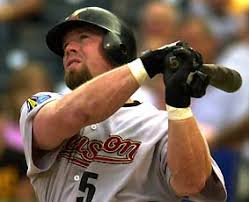 Kepner’s entire piece is worth a read. He nails it. It’s unfair to punish players simply for playing in an era when the league (and the journalists covering it) failed to do anything to stop cheaters.
I don’t get too worked up over the Oscars or the Grammys or the Gold Gloves or even the MVP and Cy Young Awards. I’m arrogant enough to be confident in my opinions, and no academy of voters is ever going to convince me that The English Patient was a better movie than Happy Gilmore.
But I care about the Baseball Hall of Fame. It is our most comprehensive monument to our greatest thing. I like Cooperstown; every single store and restaurant is baseball-themed. It’s like Mecca.
And if Barry Bonds and Roger Clemens and — more ridiculously — Mike Piazza are somehow not enshrined in the Baseball Hall of Fame, then the place becomes a total joke.
Those fellows are among the best players who ever lived. Many, many of the best players who ever lived — ones already in the Hall of Fame — were cheaters and racists and addicts and wife-beaters and everything else. Many great baseball players were pretty terrible people because many people are pretty terrible people.
I mean, holy hell, if we’re making character judgments based on guilty-until-proven-innocent speculation, Roberto Alomar — who likely will be elected to the Hall of Fame — has been sued by two different women for knowingly exposing them to AIDS. Alomar should be a Hall of Famer, and I don’t know that he actually has AIDS or actually did anything wrong. But he’s basically been accused twice of attempted murder.
And people aren’t voting for Jeff Bagwell because they think he might have done steroids even though there’s no concrete evidence to suggest it.
None of Bonds, Clemens, Piazza and Bagwell were ever punished by Major League Baseball for doing whatever they did, if they did anything. It’s ridiculous to try to punish them now. The Hall of Fame should just eliminate the character clause from the voting criteria and focus on honoring the best players.
Baseball’s 2010 regular season featured two perfect games, but arguably the most memorable pitching performance came from 28-year-old righty Armando Galarraga.
 Galarraga, you’ll recall, retired the first 26 Cleveland hitters in order on June 2. The 27th, Jason Donald, slapped a soft grounder to the right side of the infield. You know all this: Miguel Cabrera handled it cleanly and fired it to Galarraga, covering first, beating Donald by a step. Umpire Jim Joyce called Donald safe, robbing Galarraga of a perfect game.
Galarraga didn’t argue the call. He smiled instead.
Armando Galarraga is not a great pitcher by Major League standards. He’s not even a good one; he’s just a guy. He won’t make the Hall of Fame, he won’t win the Cy Young Award, and he probably won’t ever make an All-Star Team. But thanks to the whims of the sport and small sample sizes and in part to a brutal Indians lineup, Galarraga had a shot at baseball immortality.
I don’t know Galarraga personally, but I know he was signed by the Expos out of Venezuela when he was 16. And I know he spent seven years kicking around the Minor Leagues before settling in to the Tigers’ rotation in 2008. And then on June 2, he saw before his eyes the culmination of all the work he has certainly endeavored and all the physical toil he has doubtlessly endured: perfection, the ultimate single-game accomplishment for a pitcher. Then it was taken from him, and he only smiled.
Joyce, for his part, watched a replay of the call immediately after the game, admitted he blew it and apologized to Galarraga. Galarraga said he understood.
In the end, Joyce and Galarraga shared something perhaps as rare as a perfect game: Two apparently decent and reasonable human beings behaving in a civilized and understanding manner despite an awful situation.
Roy Halladay’s perfect game further confirmed my knowledge that Roy Halladay is really good. Dallas Braden’s perfect game further exposed Braden’s Happy Gilmore-esque silliness and introduced me to his smack-talking grandma. Armando Galarraga’s near-perfect game reminded me of the human capacity for dignity. It’s hard to imagine a more impressive performance on a baseball field.
In 2010, Albert Pujols led the National League in home runs, RBI and runs scored. He finished third in on-base percentage, second in slugging and second in OPS and OPS+, and placed second in the National League MVP Award voting. It was something of a down year for him.
 I will keep this short because there’s little I can say about Pujols that can’t be told more eloquently by his baseball-reference page. He created some sort of stir this season by showing up at a political/religious rally, but I’m not here to quibble with or judge Albert Pujols for his beliefs. I figure if I were as good at anything as Albert Pujols is at hitting, I’d have a wildly different outlook on just about everything.
Just how good? He is tied with Mickey Mantle for sixth all time in park- and league-adjusted OPS+. The men above him? Ruth, Williams, Bonds, Gehrig, Hornsby.
Pujols will be 31 when 2011 opens, so it’s safe to argue his career rates will ultimately drop off a little bit. Frank Thomas, after all, had a 174 career OPS+ at age 30 and finished his career (some 5000 very good plate appearances later) with a still totally awesome 156 mark.
And Albert Pujols didn’t earn his way onto the TedQuarters Top 10 Things of 2010 by showing signs of his decline. Instead, he maintained his excellent and remarkably consistent level of performance. I could list stats to show the clock-like regularity with which he dominates Major League hitters — he has finished in the top 3 of MVP voting eight times, he has never hit fewer than 30 home runs or driven in fewer than 100 runs, he has only once finished a season with an on-base percentage below .400 (and it was .394) — but again, it’s easier and more effective to defer to the back of his baseball card.
Pujols is in the inner circle of greatest hitters of all time, and we are lucky to be able to enjoy his prime in thrilling HD. Historically great hitters don’t come around all that often, so though it’s safe to say we might see a couple more hitters as good as Pujols in our lifetimes, we probably won’t see a few.
I compare PED users to murderers — of course, it’s not the same thing. But please follow my reasoning. Lots of murderers never get caught. Yet society has no trouble punishing murders who get arrested and convicted. It’s not like a defense lawyer walks into court and says, “Thousands of murderers get away with their crimes, so you should let my client, who wiped out an entire family, go free in the interest of fair play.”
That would be absurd. It also is absurd to let McGwire or Palmeiro into the Hall just because we don’t have the goods on somebody else. We have the goods on McGwire and Palmeiro.
– Lowell Cohn, Santa Rosa Press-Democrat.
Cohn has become the Internet’s new whipping boy for his ridiculous murder comp, but that’s not actually the thing that most stands out about this article to me.
He repeatedly states that he feels good about not voting for known PED users like Mark McGwire, Rafael Palmeiro and Barry Bonds. That’s weird to me. Does that really feel good? Even if you’re broken up about steroid use in baseball — as Cohn undoubtedly is — is it really ever enjoyable to punish someone? Don’t get me wrong, there are times when punishment is just and proper. But even in those cases, is it fun to be the punisher?*
Apparently Cohn thinks so, and that’s his right. It’s just not for me. I made a terrible substitute teacher.
* – It is definitely fun to be The Punisher, except for the whole tortured-antihero thing.
 Tedquarters