Three “urbanist entrepreneurs” want to turn an abandoned below-ground trolley station on the Lower East Side into a sun-lit park.

Renderings crack me up. Also: This is a pretty cool idea that seems likely to prove unfeasible.

Three “urbanist entrepreneurs” want to turn an abandoned below-ground trolley station on the Lower East Side into a sun-lit park.
Renderings crack me up. Also: This is a pretty cool idea that seems likely to prove unfeasible.
Jonah writes for Grantland.com and Tweets as @jonahkeri. He wrote a book about the Rays, mentioned herein:
I was enjoying some graham crackers last night and got to thinking, “man, if graham crackers are called that because they’re made with graham flour, and graham crackers are delicious, why don’t we have more stuff made with graham flour? Where’s the graham cake and graham cookies?”
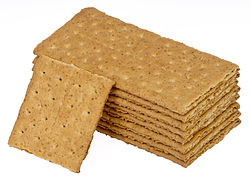 So I consulted the Wikipedia, only to find that the history of the graham cracker was way more interesting than I expected.
From the Wikipedia: Graham cracker.
Graham crackers were invented in 1829 in Bound Brook, New Jersey, by a Presbyterian minister and early dietary reformer named Sylvester Graham. Graham accurately argued that white bread from commercial bakeries, growing in popularity at the time, contained unhealthy additives and lacked the nutritious value of bread made from whole-grain flour.
Only Graham had more in mind than helping Americans enjoy the cardiac and gastroenterological benefits of a high-fiber diet. He believed that healthier lifestyles would cleanse his congregants of lustful thoughts, and in particular quell one indecent but ever-popular habit he referred to as “self-abuse.”
So to stop people from touching themselves, Graham began producing flour that incorporated course-ground wheat germ and bran in addition to the fine-ground endosperm of white flour. From this he created graham crackers — originally marketed as “Dr. Graham’s Honey Biskits” — to be a staple of his eponymous diet.
Graham’s followers, called Grahamites, reaped the rewards of frequent bathing and the daily brushing of teeth — neither yet a common custom in the early 19th century — believing uncleanliness to be a source of impure thoughts. Per the Wikipedia, Graham “felt that all excitement was unhealthful, and spices were among the prohibited ingredients in his diet.” The Graham diet grew popular enough that it became mandated at Oberlin College, where a professor was fired for bringing contraband pepper to faculty meals.
The Grahamites ate tons of graham crackers and tried to suppress carnal urges until Graham himself died at age 57 in 1851. But Reverend Graham’s beliefs later caught on with the brothers Kellogg, who invented Corn Flakes in the 1890s in part because they thought their cereal would help extinguish sexual desire.
Yes, if you’re playing at home: Both graham crackers and Kellogg’s cereal are named for people who thought they could end the masturbation epidemic with bland foods.
Of course, the delicious graham crackers we enjoy today would have the Reverend Graham spinning in his grave (while taking care not to arouse himself in the process). Most mass-marketed graham crackers are made with far more sugar-type stuff and far less whole-wheat flour than the originals. Many do not use graham flour at all, which answers my graham-flour question that started the Wikipedia tangent.
And today the Internet delivers all sorts of vile and debased porn instantly to every corner of the country, and we coat graham crackers with an impious amount of sugar to serve them as breakfast cereal and crush them up to use as crusts for sinfully rich cheesecake. Because this is America, bro.
The venerable @BobbyBig_Wheel got a bunch of writers to weigh in on what they’d eat if they had one meal in New York City. Today is my turn. My choice isn’t a particularly surprising one but I regret nothing.
Conventional wisdom suggests that Ruben Tejada is quickly maturing into the perfect Plan B at shortstop if the Mets lose Jose Reyes in free agency this offseason.
But Sandy Alderson, along with the rest of the team’s decision-makers, are concentrating on Plan A, which involves pairing Tejada with Reyes deep into the next decade….
Not only have the two developed a mentor-pupil type of relationship, they share the same agent, Peter Greenberg, and already have made plans to work out together this offseason at the Long Island facility Reyes uses.
As recently as a few weeks ago, I figured that if the Mets re-signed Reyes they’d be best served sending Tejada back to Triple-A to play everyday and using some combination of Daniel Murphy and Justin Turner at second. The way I had it, Tejada’s superior defense at second wouldn’t be enough to make up for the difference in offense.
 But Tejada keeps hitting — slap-hitting, but hitting nonetheless — enough so that it’s no longer clear that Turner is even a better offensive player. The two share an identical .314 wOBA, with Tejada’s driven by a higher on-base percentage and Turner’s by more power. Turner has much more production on his Minor League resume, but Tejada has been extremely young for every level — including the Majors now.
Murphy will outhit both of them and by a great enough margin that if the Mets believe he can capably and regularly play second without again getting injured, he should see most of the playing time there. But since Murph can also play first and third, and might yet get another go of it in left field, the Mets shouldn’t have too much trouble finding semi-regular opportunities for his left-handed bat.
Perhaps the best solution would be using a combination of Tejada and Murphy at the keystone, with Tejada starting behind the heaviest ground-ball guys — Jon Niese and R.A. Dickey — and Murphy also seeing time in left field against tough righties and at third or first whenever David Wright or Ike Davis need a day.
An infield of Davis, Tejada, Reyes and Wright should represent a strong defensive upgrade over most combinations the Mets have used in 2011, and Terry Collins should have little trouble finding chances for a viable, versatile left-handed hitter like Murphy (consider that the less viable [but more versatile] Willie Harris has 243 plate appearances in 2011).
That would leave Turner either coming off the bench as a better, less expensive fit for the Alex Cora role or spun for pitching in the offseason. Both could help the club.
Of course, all of that is predicated on the Mets re-signing Reyes — far from a safe bet right now.
“I couldn’t believe they were cheering me for hitting into a double play,” Swisher said. “I said: ‘Whoa, what’s this? And then I looked at the bullpen and saw Mo coming out and I said: ‘Now I get it!’ This was the greatest double play of my life.”
“Runners at first and second…it was unbelievable,” Rivera said. “I don’t ever want my teammates to do bad so I can pitch, but this time I was happy for the opportunity. I’m listening to the fans and I said: ‘Wow, these guys are into it!'”
Fearing embarrassment in forthcoming conference matchups with the mighty Georgetown Hoyas, the pathetic Syracuse Orange will flee the Big East like petrified children.
 “We’ve been mulling this move for a long time, and we think it’s best for our program,” Athletic Director Daryl Gross probably said. “The truth is, the rigors of Big East play and Georgetown’s ever-looming presence made this decision easy for us.”
Syracuse’s departure clears the way for the remaining basketball-only teams in the Big East to form a new, way better conference unsullied by the ever-filthy, perpetually overrated, and utterly detestable Orange.
“I suppose this renders our conference’s future uncertain,” Georgetown coach John Thompson III could have said. “But at least I never have to set foot in that godforsaken hellhole again in my life.”
“I’m a big stupid jerk,” added Syracuse basketball coach Jim Boeheim, presumably. “Look at my jerk face! Waaaah! Waaaah!”
 Tedquarters