I’m off to Citi Field to conduct some interviews and watch Jenrry Mejia. I’m on a Mitchell and Webb kick, so enjoy this sketch that reminds me of something me and my friends from college might have made for our sketch-comedy show if we ever got our acts together, and also got much funnier:
The R.A. Dickey Photoshop contest is drawing to a close, and Eric at Amazin’ Avenue put together this montage of all the entries. As it stands, my vote would to Dickey Kong for the attention to detail.
Major-league players have combined for 448 disabled-list trips so far this season, good for an average of nearly 15 per team. While this figure falls in line with the past couple seasons, the number of injury stints has been on the rise for the past quarter century. From 1984-89, baseball teams averaged 9.3 DL stints a year. That number rose to 12.2 in the 1990s and has reached 14.8 since 2000….
While the primary theory for the injury spike is better testing and diagnostics, players might have been better off when the winter workout consisted of lifting six packs and hot dogs. New York Mets medical director Dr. David Altchek of the Hospital for Special Surgery in Manhattan believes today’s player may be too committed to his craft. “The modern player, in trying to constantly improve, may not be getting the necessary rest and recovery time,” Dr. Altchek says. “This year, we decided that the Mets would reduce time spent in off-field workouts by two-thirds. The result thus far in 2010, knock on wood, is that DL days have been cut in half.”
Interesting facts from Salfino on the increasing rate of DL stints over the past 25 years. I imagine at least some of it has to do with something not mentioned in the article — players make a lot more money these days, so teams are less willing to take risks with their investments.
And so I’d also be interested in seeing an exhaustive study that would be impossible to undertake — the relative length of careers now and then, plus how many fewer careers were shortened by permanent injury and stuff along those lines. In other words: Does more careful treatment of players benefit them in the long run? I would guess yes, but then I’m no doctor.
With few fans on hand at Citi Field last night and presumably few people watching on TV, in a meaningless game against a terrible team, Nick Evans seized his opportunity for some rare Major League playing time and smacked a home run. It looked like this:
I bleat on about this endlessly: Too often under this regime, the Mets have overpaid free agents to fill out the margins of their roster instead of developing in-house options to fill useful, albeit unheralded, roster roles. It appears that in 2011, more out of necessity than design, they will not be able to repeat that.
Evans is 24 now and will be 25 when Spring Training rolls around, and it sure doesn’t seem like the team considers him much of a prospect anymore. But before he gets cast into a Mike Hessman mold, some Minor League masher doomed to dominate Triple-A pitching for the next decade, perhaps the Mets will provide him an opportunity to serve a valuable role as a righty corner bench bat in the bigs.
Evans, after all, crushed pitching at the two upper levels of the Minors to the tune of a .317/.371/.536 line this season, and boasts a career Minor League split of .314/.391/.572 against left-handed pitching.
At this point, it doesn’t seem like carrying Evans on the Major League level — even with limited at-bats — would amount to hindering his development much. Though for some reason the Mets didn’t let him play the outfield spots this season, he can man all four corners and provide a bit of pop, as a few of us saw last night.
In short, Nick Evans is probably ready to be a Major League guy for several years on the cheap, and the Mets could use those.
In the comments section yesterday, djonpoynt brings up an interesting point about Dr. Dre:
Dre is known to use “ghost producers” on some tracks on which he gets sole production credit. This is tough to substantiate because it’s such a touchy and ambiguous subject in hiphop. And obviously, Dre would never go on record and admit it.It’s been talked about in hiphop circles since “Chronic 2001″ was released when he had a production team working with him, including Scott Storch (former Roots keyboardist and now super-producer himself). Dre isn’t known for his instrumental skills, so he usually relies on others like Storch to lay down riffs, basslines, etc. Though to his credit, he’s probably the one who lays down drums and ultimately sequences these beats.
In fact, if you check out his production discography (http://en.wikipedia.org/wiki/Dr._Dre_production_discography), it’s littered with co-producers whom he does give credit to. Notables: Storch did the famous riff on Still DRE and Xzibit’s X. A key guy named Mel-Man co-produced Chronic 2001 and The Marshall Mathers LP, doing significant synthesizer work on Xxplosive, Next Episode, Forgot About Dre, and Real Slim Shady.
My personal take is, he established himself by doing the bulk of production for the original Chronic and Doggystyle. But after he reached celebrity status, he needed to enlist others just to keep up with demand, which is completely fine.
Where it gets fuzzy is, how many no-name producers did he work with who never appeared on liner notes? I’m sure there’s more than a few, which probably isn’t that big of a deal given how hiphop production works in the first place (sampling, drum machines, etc). It’s just that a lot of people solely associate Dre with certain classic tracks, when much of the time he actually has a team of co-producers working for him.
I can’t speak to the uncredited producers part of it, but I can say this for sure: Very, very few pieces of art in any medium are truly the work of an individual. Certain works of fiction, maybe, but even then there’s usually plenty of editorial interaction. It is the tendency of the consumer and critic to associate the finished product with a single artist, usually attributing to that artist some sort of unified vision, but clearly that’s not often how it works.
Even some great Renaissance masters didn’t actually paint large portions of their paintings. They sketched out ideas for what they wanted them to look like, worked certain important parts of the pieces themselves, and then left big portions up to their apprentices and underlings. Blew my mind when I learned that. I always envisioned the lonely-painter-in-a-studio type image we romanticize, but those guys — like Dr. Dre, really — were in high demand.
Probably the best and most obvious example is with film. We talk about Woody Allen movies like they’re all his own because it’s simpler to do it that way than to consider the creative input and choices of the hundreds of other people involved in creating a motion picture.
And I don’t know if that’s a good thing or a bad thing or anything else, it’s just a thing. But the truth is, perhaps the person making the final, overarching aesthetic decisions should get the bulk of the credit, since he or she is the one making the choices that ultimately determine the piece’s success.
No, Dre didn’t play the riff on Still D.R.E., but presumably he recruited Storch to record on the track, influenced what Storch played and selected that particular riff from many that got left on the proverbial cutting-room floor. And while maybe none of that classifies as typical nuts-and-bolts production in one sense, it seems like it should all fall under some larger umbrella of “producer.”
After all, those tracks are nearly all unified by the throbbing funk we identify we Dre’s production. It could be that he’s relying on co-producers as an easier way out, but it strikes me — and this, I should say, is entirely uninformed and spoken mostly as a hopeful Dr. Dre fan — as equally possible that he’s leaning on collaborators to help develop his production beyond the scope of his own limitations.
Regardless, the most awesome news is that Dr. Dre has a sweet robot helmet:
Right Field: … Where the starter next April has to be Carlos Beltran, assuming certain reasonable outcomes. Consider that Beltran has an $18.5 million contract for 2011, a history of bad knees, just turned 34, and his OPS this year is .709.
Who exactly is trading for him? A team willing to take on almost none of his salary, and part with an unimpressive prospect for their trouble, I figure.
So since the Mets could pay some other team $17 million for the chance to see Beltran rebound, why not pay him a little more and see if he can help you in the final year of his deal? As recently as last season, he hit at an elite level, and though it is a foolishly small sample, his OPS is up above .900 in September.
I don’t know what will happen with Beltran this offseason. His agent, Scott Boras, has grumbled — with reason — about the way team brass “anonymously” fumed to reporters after Beltran, because he had other charitable commitments, missed an optional trip to Walter Reed hospital to visit veterans.
So I imagine politics will play into whatever happens with Beltran this offseason, for better or worse. But that said, I agree with Howard. Even if Beltran demonstrates some massive turnaround in the next two weeks, no team is likely to take on his contract unless the Mets essentially provide the Gary Matthews Jr. treatment — eating most of it and accepting little in terms of players in return.
And if they’re going to do that, then, man, I don’t know. It’s hard to bet that he’ll ever be anything like healthy again, but if you’re just looking in terms of back-of-the-baseball-card likelihood for a bounceback, Beltran seems a reasonable bet.
Basically what Howard said. He’s got too much potential upside to be kicked to the curb like he’s Gary Matthews Jr. They would just need a very solid backup plan for if Beltran gets hurt or proves ineffective.
This split doesn’t really do it justice because there aren’t a lot of great pictures of Danny Woodhead without his helmet available online, but as far as I’m concerned one of the most underreported stories out of Jets camp this season is how much their third-string runningback/jack-of-all-trades resembles Edward Furlong.

 Even some great Renaissance masters didn’t actually paint large portions of their paintings. They sketched out ideas for what they wanted them to look like, worked certain important parts of the pieces themselves, and then left big portions up to their apprentices and underlings. Blew my mind when I learned that. I always envisioned the lonely-painter-in-a-studio type image we romanticize, but those guys — like Dr. Dre, really — were in high demand.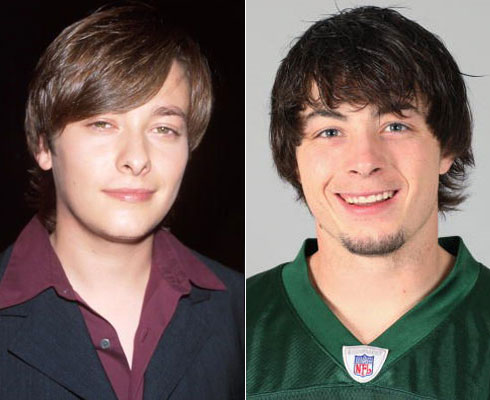
 Tedquarters