
The end of the Ollie era?

I kind of don’t give a darn about Perez, but this may be an interesting test of Collins. Martino notes that Jerry Manuel used to ruffle feathers on the team by talking publicly about a player’s job being in trouble, and casts Collins’ statement yesterday as a different kind of approach.

And it is. But isn’t it also the case that, if Martino is right and Perez is released, that Collins is either (a) undermined as a guy who has any kind of authority to speak about such matters; or (b) shown to have been something less than trustworthy based on his comment yesterday?

Craig Calcaterra, HardballTalk.

Probably worth reading Andy Martino’s original story to which Calcaterra is reacting, too. It’s a good overview of the pending Ollie decision, and what it would say about the Mets’ ability and willingness to cut bait on sunk costs.

As for Craig’s questions, I’d guess that these things are probably all reasonably fluid at this point in the spring, and so Collins could just be reiterating the current plan — giving Perez until March 10 — even while knowing that the plan could be changed any day. And to be honest, as a fan I’d rather have a manager who guards or obfuscates information to protect his players than a manager who essentially airs all the team’s dirty linen to protect his own image.

I’ll say this right now: Barring either a miracle or a massive calamity, Oliver Perez isn’t making this team. The $12 million left on his contract buys him a few Spring Training innings, but nothing more. No sense fretting and whining about it on March 3 unless you happen to a clubhouse attendant annoyed by the extra laundry or a non-roster invitee eying a better parking spot.

I imagine if the Mets had any more certainty in the back end of their rotation or more proven lefty options for the bullpen, Perez would already be looking for work. Hell, think about it: The only team emissary that went to watch him pitch in Mexico this winter was the second-string bullpen catcher.

We can complain about Perez taking opportunities away from other pitchers this spring, but between split-squad games and Minor League camp there are tons of innings to go around. Collins himself said he planned to use his starting pitchers in Minor League games during the last week of Spring Training, rather than expose them to the Marlins, Braves and Nationals. The only good reason to hope Perez is cut March 4 rather than March 11 or March 22 is that then we can all stop talking about it.

David Wright on sandwiches

It has been widely reported that David Wright eats a ton of peanut butter and jelly sandwiches. This report is, to paraphrase R.A. Dickey, erroneous.

Wright denied eating “a ton” of them and suggested that rumor was overblown, though he confessed he eats peanut-butter sandwiches often. Moreover, his sandwich of choice is not peanut butter and jelly, it is peanut butter, banana and honey, sometimes with oatmeal in the sandwich.
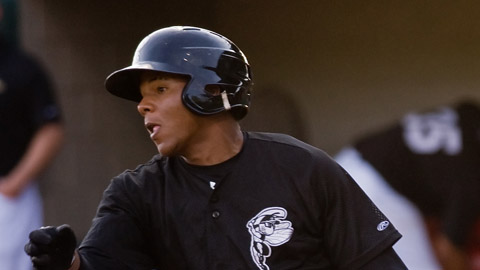
Oatmeal in the sandwich? Groundbreaking. But Wright is typically humble.

“I’m no sandwich connoisseur,” he said.

I suggested that the sandwich wasn’t terribly far off from Elvis’ favorite, and described The King’s peanut butter with honey, banana and bacon on bread grilled in butter.

“No bacon, no butter,” Wright said. “And I usually eat it on a wrap.”

Interesting. Wright said he makes the sandwiches himself and that he doesn’t have a preferred peanut-butter brand — “Whatever’s around.”

I explained that I am particular about my peanut butter and jelly sandwiches, that I always use Skippy on whole wheat bread cut diagonally. He seemed vaguely entertained and perhaps a little sketched out. I might have come on too strong, presenting myself as a sandwich expert and all.

“So that’s your go-to?” he asked. I told him it was, anytime I was heading into the office, at least.

“Hey, it’s good, and it stays fresh all day,” he said.

He’s right, you know. Portability and durability are big parts of the peanut butter sandwich’s appeal.

From Minor League camp

Video producer Jeff and I spent the afternoon at Mets Minor League camp, banking a bunch of video and interviews that we’ll roll out over time. It’s not full camp yet for the Minor Leaguers — it’s the Mets’ Step camp (not sure if Step is an acronym or not), so it was just a select group of young players. It poured here, so the workouts were curtailed and we didn’t get to see much batting practice, but it’s nonetheless interesting to see some of the Mets’ prospects we hear about all the time in action.

Reese Havens, notably, looks pretty fluid and comfortable at second base. I guess because he hits for power I was expecting a bigger guy, but he’s built like a middle infielder.

Cesar Puello looks awesome doing just about everything. Not hard to see why Toby Hyde and a bunch of other prospects experts are so high on him. Also not hard to see why people think he’ll develop power. He’s got broad shoulders and seemed to be ripping the ball in the cage.

After just about every other player was done, Matt Harvey and Brad Holt stayed behind to work on bunting in the batting cage. So that’s cool.

Also, and perhaps most notably to TedQuarters readers: While we were standing in a conference room protecting our camera from the rain, Jeff called me over to the glass door that opens out to the batting cages. “It’s your boy,” he said.

Blocking the doorway was the enormous Val Pascucci, of folk-hero fame. He came to camp early knowing he’d be given opportunities in split-squad games like the one he got in Orlando yesterday. Extremely nice guy, it turns out. We talked for a while, a fraction of which you’ll see on video soon. He was aware of the Internet’s vehement Val Pascucci Lobby.

I asked Dickie Scott, the Mets’ new Minor League Field Coordinator, about Pascucci, and he said, “you know, he has hit everywhere he’s been.” As a matter of fact, I do know that.

Beltran selfishly punishing Digital Domain scoreboard

Thought you’d like to know [WFAN host Mark] Malusis just actually said on air that the only reason Beltran is moving to RF is to have a better offensive year for his next contract and it could be looked at as a selfish act.

Jared, via email.

I’m not out to pick on Malusis here; he’s a nice dude and it’s a well-known fact that the last question of every WFAN employment interview is: “How selfish is Carlos Beltran?” And if the prospective talk-radio host says, “unselfish,” he is ushered out the door, even if he has the voice of Casey Kasem with the knowledge of Ken Jennings and the charisma of Winston Churchill.

I’m sick of arguing about Beltran’s supposed selfishness with other people who do not know Beltran personally (as I don’t); it is a frustrating and pointless exercise. I can point to the way he has mentored Angel Pagan, and how Lucas Duda specifically named Beltran as the guy who helped him when he came up and struggled, and, of course, how Beltran just moved to right field yesterday to make Terry Collins’ life easier and the team better.

But you can just counter that Beltran is consciously building his reputation as a good clubhouse guy and (as Malusis did) switching to right field to improve his chances of getting a big contract this offseason. And then we can debate whether there’s really even such a thing as an unselfish act, since anything we do that could be viewed as unselfish we really do because it makes us feel better about ourselves, and so it is maybe in some way also selfish.

Here’s the good news about baseball: Being selfish helps.

Concerning yourself with bettering your own numbers in the NBA or the NFL means you’re very likely trying to take opportunities away from your teammates. Concerning yourself with bettering your own numbers in baseball means you’re very likely giving your teammates more opportunities — because you’re getting on-base more and driving in more runs — and, more importantly, those numbers you’re compiling are helping your team win games.

If Carlos Beltran wants to get as many at-bats as he can and make the most of every single one, yeah, ahh, maybe that makes him selfish. How that distinguishes him from any other player in baseball, I do not know.

If there were any real evidence from the clubhouse that Beltran’s supposedly selfish behavior or aloof demeanor bothered his teammates, there might be some way to justify the endless bluster aimed at him. But what he does is the opposite of that. I just watched him and Pagan take batting practice in a group of Mets outfielders. They took the field together, then sat together while the other guys hit, chattering the whole time. Then they walked together to the back fields for baserunning practice. They are like Batman and Robin. Did anyone ever accuse Batman of being selfish?

He doesn’t care about Gotham; he just wants to see his symbol in the sky and his name in the papers.

OK, I’m arguing now with people who have already made up their minds and don’t want to hear it, so I’ll stop.

But about the batting practice: Beltran is crushing the ball. Again, I’m not a scout or a coach or any sort of professional talent evaluator, but I can count, and it wasn’t hard to see how many more home runs Beltran was hitting than the rest of the lot — a group that included Pagan, Jason Bay and Scott Hairston, and later Daniel Murphy and Nick Evans.

I only saw Beltran batting right-handed today — I’m not sure if he hit lefty before I got there or took the day off from that side. At one point, Beltran hit four out of five pitches out of park in one turn. His homers battered the scoreboard here at Digital Domain Park multiple times. He looked great.

Of course, it’s only batting practice in Spring Training, so it doesn’t count twice over. As for running the bases: Beltran didn’t look overwhelmingly Beltran-ish. He clearly was not going all-out, though, and there was no noticeable limp or anything. For the millionth time, I’m not really qualified to make these evaluations; he wasn’t running as fast as Hairston or Pagan, that I can promise.

Brief conversations about equipment, Part 4

Milling about the Mets’ locker room, I’ve noticed that very, very few of the players have ash bats in their lockers — it’s almost exclusively maple. The only two ash bats I’ve seen belong to Nick Evans and Lucas Duda, so I interrupted Evans’ crossword-puzzle work this morning to ask him about it.

He said there are a few more guys on the team who will use ash in games, but that most everyone uses maple for batting practice because they don’t splinter and wear down as quickly as ash bats do.

I mentioned Major League Baseball’s new restrictions on maple bats, and Evans chuckled a little. “It’s dangerous, but no one’s about to tell Albert Pujols he can’t swing a maple bat,” he said.

He added that players know that a) the best place to hit a maple bat is still on the tight part of the grain, not the softer flat part where they are less likely to shatter and b) the league forced maple-bat companies to move the labels on the bat to encourage players to hit with the softer part.

Hitters normally try to strike the ball with the label facing straight up or straight down, because the label is traditionally on the flat-grain part of the bat and the edge-grain (where the lines of the grain are tighter together) is the best place to make contact. Evans suggested that, since it’s no secret the labels on maple bats have been moved, everyone will just turn the label to account for the difference.

As for his choice of ash over maple, Evans said he thinks ash has a larger sweet spot and compared it to the difference between cavity-back irons and blade irons in golf: A maple bat might drive the ball further if struck perfectly, but ash is more forgiving. “And I need that,” he said.

The Mets are off to Viera to face the Nationals again, but I am staying behind in Port St. Lucie. It’s really quiet here with half the team and nearly all of the media out of town, so it’s a good opportunity to get some work done and talk with the players that didn’t travel.