Cerrone and I talk offseason stuff:
Because our studio guys are testing out Skype
Reply

Cerrone and I talk offseason stuff:
Rumors are swirling that the Rays and Cubs are finishing a deal to send starter Matt Garza to Chicago. In return, the Rays will supposedly get prospects Chris Archer, Hak-Ju Lee, Brandon Guyer and Robinson Chirinos.
 Last month, about 70% of Tedquarters readers said they would not trade Wilmer Flores and Jenrry Mejia to get Garza. I countered that I might, since both players appear so far off from contributing to the Major League team and Garza is a durable if unspectacular starter under team control though arbitration for several years.
Obviously we have no way of knowing how the Rays value the Mets’ and Cubs’ prospects, but as a point of comparison: John Sickels gave Archer a B+ and Lee a B in his most recent overview of the Cubs’ system. He gave Flores a B+ and Mejia a B.
Archer, like Mejia, is a hard-throwing right-hander who has had success up to — but not beyond — Double-A. Archer is a year older than Mejia, but his status as a prospect benefits from the fact that he was never in the hands of Jerry Manuel. Unrushed, he was able to stay in Minor League rotations for 142 1/3 innings in High A and Double-A. Mejia threw 81 1/3 across five levels (including rehab stints).
For what it’s worth, Mejia had a much better reputation as a prospect than Archer did coming into the 2010 season, before the ill-fated eighth-inning-guy experiment. But Archer’s stature grew thanks to an excellent season.
Lee, like Flores, is a young shortstop who played in A-ball this season. Other than that, they don’t have a ton in common. Scouting reports say Lee is a plus (or even “special”) defender, while few experts believe Flores has any shot of sticking at shortstop. Flores projects to hit for a lot more power, but Lee has shown a lot more discipline in the low Minors.
Still, by Sickels’ admittedly shorthand rating system, Archer/Lee and Flores/Mejia is basically a wash. But since both Flores and Mejia have spent time on both Baseball America‘s and Keith Law’s Top 100 prospects lists in the past, let’s say the Mets pair would have slightly more trade value, if only based on their reputations.
But then on top of Archer and Lee, the Cubs traded Guyer and Chirinos, two players that likely enticed the Rays. Sickels had them at B- and C+ grades, respectively, but both enjoyed success in the high Minors in 2010. Chirinos, a 26-year-old righty-hitting infielder-turned-catcher, appears ready to at least backup to John Jaso behind the plate after a .999 OPS across Double-A and Triple-A in 2010.
I’m not sure there are great comps for either in the Mets’ system. But using sweeping strokes at players of similar caliber, let’s say the Mets could have landed Garza for Mejia, Flores, Sean Ratliff and Dillon Gee (not that the Rays need starting pitching, but whatever). Would you make that deal?
I’d say no. Not because I’m convinced any of those guys will ever produce as much in the Majors as Garza will in the next few seasons, but because it’s simply too much bulk to give up from an already thin system. The Mets, as I’ve been saying for years now, need dudes. Cost-controlled, contributing, non-star dudes. And the best way to get those is to develop them, and the best way to successfully develop players is to hang on to as many as possible, knowing that most won’t pan out.
What am I doing wrong? Is there more comparable package of Mets’ prospects than the one I created? Would you trade that package for Garza?
Add “donut hero” to the long list of R.A. Dickey’s accolades. <3. The producer of this segment, Joe Kraus, confirmed that the donut holes are incredible.
Pete Barrett at New York Sports Cookie hooks up with Darryl Hamilton to discuss a broad variety of baseball topics. But sadly, not cookies.
GC at Can’t Stop the Bleeding passes along this Marty Noble article about John Franco appearing on only 4.6% of Hall of Fame ballots, which means he drops off future ballots for good.
 Franco is by no means a Hall of Famer, but he probably has a better case than some Mets fans realize. Franco is 17th all time in ERA+ among pitchers with 1000 or more innings pitched. Franco has a better rate over more innings than Hall-enshrined closer Bruce Sutter, though Sutter pitched far more innings per season (just way fewer seasons) and likely earned votes for both his reputation as inventor of the splitter and his possession of perhaps baseball’s best-ever beard.
Franco didn’t pitch nearly as many innings in relief as fellow Hall of Famers Rollie Fingers and Goose Gossage, plus he didn’t have nearly as cool a name. Also, for whatever it’s worth, Gossage was an All-Star nine times and Fingers won the Cy Young and MVP in 1981. Franco made only four All-Star teams and finished in the top 10 of Cy Young voting only once, in 1994.
Still, if Franco had managed to muster something like 15 more innings per season, a reasonable case could be made for his Hall of Fame worthiness. I’m blinded by bias, of course, but the guy was a very good reliever for a very long time and pitched through an outrageous offensive era.
Franco, quoted in Noble’s piece, sounds disappointed that he won’t stay on the ballot but resigned to his fate as a non-Hall of Famer. But the awesome thing about John Franco is you kind of know he thinks he’s a Hall of Famer no matter what anyone says. I once watched Franco throw four straight changeups — three of them right over the middle — to strike out Barry Bonds in the midst of Bonds’ ridiculous stretch of dominance.
I know a lot of Mets fans have soured on Franco for a variety of reasons, but I’ll forever think he was pretty sweet. Good pitcher, great mustache man, exemplar of New York-guy bravado.
I got to thinking about R.A. Dickey last night, which happens sometimes. It struck me that, though Dickey’s awesomeness on the mound in 2010 certainly endeared him to Mets fans more than any of his other qualities, his quirky off-the-field awesomeness turned out to be one of the most entertaining aspects of the last few brutal months of the season. Dude says smart things and reads literature and writes poetry and wants to be a U.S. Open ballboy and goes on solitary retreats for contemplation. For a while it seemed like we were getting new and interesting information about R.A. Dickey everyday.
 OK here’s where I start making some leaps. First, don’t get me wrong: I have always been confidant that performance affects morale more than morale affects performance. And I believe that the general manager’s task should be to put the best possible team on the field year after year and that the most effective way of doing that often involves entirely tuning out media bluster.
But undoubtedly morale has some affect on a baseball team. No? You have to figure it at least creates an environment that’s more amenable to free-agents (though obviously not as important as the whole money thing). And rumors have always swirled about the way Mets ownership reacts to the newspapers.
So I wonder if there’s some advantage to Sandy Alderson and his crew in signing players that might provide reporters some good copy in Spring Training to distract the media and, in turn, fans, from getting all bent out of shape about how there have been no major changes.
I mention because Chris Capuano seems like, yes, a good upside gamble for a reasonably low price. But he’s also a well-spoken Phi Beta Kappa Segway enthusiast who, that OnMilwaukee interview tells us, doesn’t eat like most ballplayers. And two of the other starters the Mets have been rumored to be pursuing this offseason — Jeff Francis and Chris Young — have reputations as some of the smartest guys in baseball.
Of course, it’s way more likely that the three seemingly most cost-effective reclamation-project starters this offseason also happen to be smart guys. And when I think about it, it doesn’t seem like it’s really all that hard to catnip fans and the media during Spring Training, with hope springing eternal and all. Plus, as a fan I really don’t want the front-office worrying about anything but building a sustainable winner, and I’d much rather it just shoulder any criticism than work to alleviate it.
So never mind then. I’m just saying it’d be cool if Chris Capuano would grow a beard and start making an awesome yelling face when he pitches. I’d appreciate that.
Of course, not all players in the recent past were steroid users. But the common ground for all players is the fact that their workplace did not test. And the common ground for players before 1947 was the color barrier. It was disgraceful and disgusting, but it was part of the game….
The fear is that a player could be elected and then exposed as a steroid user. But voters have already taken that risk, because we will never know the complete roster of steroid users.
Guessing is dubious. The first player who tested positive, in 2005, was a speedy outfielder named Alex Sanchez. Did anyone ever look at Jason Grimsley, a nondescript middle reliever, and think hardcore steroids user?
Maybe Bagwell took steroids, maybe not. Bagwell played most of his career before testing, but so did everybody else who has ever appeared on a Hall ballot.
I’ve been avoiding the Hall of Fame debate here because most of it has gotten so loud and stupid that I stopped paying attention. But when I saw the sacred name of Mike Piazza sullied in the Daily News this morning, I figured it was time to chime in.
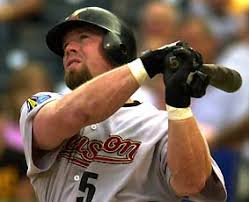 Kepner’s entire piece is worth a read. He nails it. It’s unfair to punish players simply for playing in an era when the league (and the journalists covering it) failed to do anything to stop cheaters.
I don’t get too worked up over the Oscars or the Grammys or the Gold Gloves or even the MVP and Cy Young Awards. I’m arrogant enough to be confident in my opinions, and no academy of voters is ever going to convince me that The English Patient was a better movie than Happy Gilmore.
But I care about the Baseball Hall of Fame. It is our most comprehensive monument to our greatest thing. I like Cooperstown; every single store and restaurant is baseball-themed. It’s like Mecca.
And if Barry Bonds and Roger Clemens and — more ridiculously — Mike Piazza are somehow not enshrined in the Baseball Hall of Fame, then the place becomes a total joke.
Those fellows are among the best players who ever lived. Many, many of the best players who ever lived — ones already in the Hall of Fame — were cheaters and racists and addicts and wife-beaters and everything else. Many great baseball players were pretty terrible people because many people are pretty terrible people.
I mean, holy hell, if we’re making character judgments based on guilty-until-proven-innocent speculation, Roberto Alomar — who likely will be elected to the Hall of Fame — has been sued by two different women for knowingly exposing them to AIDS. Alomar should be a Hall of Famer, and I don’t know that he actually has AIDS or actually did anything wrong. But he’s basically been accused twice of attempted murder.
And people aren’t voting for Jeff Bagwell because they think he might have done steroids even though there’s no concrete evidence to suggest it.
None of Bonds, Clemens, Piazza and Bagwell were ever punished by Major League Baseball for doing whatever they did, if they did anything. It’s ridiculous to try to punish them now. The Hall of Fame should just eliminate the character clause from the voting criteria and focus on honoring the best players.
During the 2010 season, I wondered if David Wright was actually any streakier than any other hitter. I know he has a reputation for ups and downs, but I speculated that perhaps all players endure ups and downs and we just notice Wright’s because he’s the best hitter on the Mets and because we’ve labeled him “streaky.”
 Today at Beyond the Boxscore, Bill Petti investigates Wright’s “volatility” by calculating and plotting 10-day moving averages for his WPA (win probability added) from 2005 on. It’s an interesting read with colorful graphs, and using the moving averages seems as good a way as any to try to track consistency. He concludes:
As one would expect, Wright experiences peaks and valleys over the course of the season. If we look closely, however, we see that Wright does appear to have become both more volatile over the past few years and has experienced an increase in stretches where, on average, he negatively affects the Mets chances of winning games. Wright’s positive streaks do not last as long and his negative streaks have deepened and last longer.
Wright’s best year was 2007, where he averaged a WPA of .029 (highest since 2005) and had a standard deviation of .032 (second lowest since 2005). Wright’s lack of volatility coincided with his best overall performance at the plate (OPS+ of 149, offensive Wins Above Replacement of 7.5). Since 2007 we see an increase in deep negative stretches, with 2009 and 2010 looking especially volatile. Essentially, Wright has gone from a consistent high-performer to a boom-or-bust type player.
OK, a couple issues here: First, it’s really difficult to determine if Wright is any more volatile than any other baseball player without points of comparison. Petti shows that Wright has endured longer and deeper slumps in 2009 and 2010 than he did in 2007 and 2008, but he doesn’t show how Wright’s peaks and valleys in any season compare with those of similar offensive performers.
And more importantly, it seems like mere common sense that Wright would have endured more slumps in 2009 and 2010 than he did in 2007 and 2008: He wasn’t as good. Wright enjoyed the best offensive season of his career in 2007. Of course he didn’t have as many slumps then as he did in 2009.
Wright’s wOBA has been on a steady decline since 2007, so it seems to me to make perfect sense that he’d also seem to be getting progressively “streakier” in that time. If I had to bet, I’d guess a similar analysis of Ryan Howard would determine he was way more volatile from 2008-2010 than he was in 2006 and 2007.
It’s a chicken-and-egg thing, of course, because you can say, “oh well maybe if Wright were less volatile the last two seasons his stats for the season would have been as good as they were in 2007 and 2008.” And that’s true, but it doesn’t really matter much one way or the other. Without other players for comparison, we have no way of knowing if Wright’s perceived streakiness is something unique to him or just normal fluctuation, an expected function of performance at his 2009 and 2010 levels.
My expectation is — as it was in June — that the only very consistent performers in baseball are the truly excellent (like Wright in 2007) and (to reuse a phrase from yesterday) the downright Rafael Belliard awful.
The Mets signed lefty Chris Capuano and righty Taylor Buchholz last night and designated Ryota Igarashi for assignment.
 According to Adam Rubin, Capuano contract provides a $1.5 million base salary with incentives. Back in the middle part of the aughts, after his first Tommy John surgery but before his second, Capuano was a stalwart member of the Gary (IN) Templetons’ rotation (also the Brewers’, but my fantasy league was pretty high stakes back then).
In 2005 and 2006, Capuano chewed up innings and struck out a decent number of batters, a nice if unspectacular pitcher. Though he missed all of the 2008 and 2009 campaigns after another arm injury shortened his 2007 season, he returned to the Brewers in June of 2010 and enjoyed a decent stint as a long reliever and spot starter until he took a place in Milwaukee’s rotation in late August.
In those final seven starts of the season, Capuano posted a respectable 4.14 ERA with small-sample peripherals vaguely in line with his 2005 marks. He featured a similar mix of pitches as he did in his healthy years and actually threw his fastball a touch harder. He seems like a great pickup at the cost, and should earn a role in the middle of the Mets’ rotation if he can stay healthy. That’s nothing certain, of course — he has, after all, had two Tommy John surgeries. But if he hadn’t, he wouldn’t be available for $1.5 million.
Perhaps most importantly, Capuano is apparently a Segway enthusiast. In this 2007 interview, he reported that he was frequently called a nerd by passersby while he sped around Milwaukee on his personal transporter. I can’t speak for my fellow New Yorkers, but I can promise Chris Capuano this: If I ever see him riding around Midtown on a Segway, I’ll call him a different name: “Hero.”
(Hero? That could work for me.)
Capuano also appeared on an episode of The Young and the Restless and was Phi Betta Kappa at Duke. Bronx Banter’s Emma Span recently described him as “blogger catnip.”
As for Buchholz, former roommate and Rockies fan Ted Burke called him “the best setup man in the game” in his healthy 2008 campaign, and though my namesake is prone to hyperbole, Buchholz was pretty awesome that season. A converted starter, in his lone healthy year of full-time relief Buchholz posted a 2.17 ERA and a sub-1 WHIP. Those numbers belied his just-pretty-good peripherals, but even just-pretty-good would be a nice addition to the Mets’ bullpen.
Buchholz missed all of 2009 following Tommy John surgery, returned to the Rockies in July of 2010, then promptly returned to the disabled list with lower-back stiffness. He did finish the year with two healthy innings for the Blue Jays in September. At $600,000 — barely above the league minimum — he seems a worthwhile bargain.
Incidentally, both Buchholz and Capuano went to high school in Springfields — Buchholz in Pennsylvania and Capuano in Massachusetts.
While I was on vacation, the Mets got some guy. His name is Chin-Lung Hu, and he’s interesting mostly because he leads all Taiwanese-born Major Leaguers in most offensive categories. Of course, he’s one of only two Taiwanese-born position players that have played in the Majors, and he actually trails pitcher Hong-Chih Kuo in slugging percentage and OPS.
 That’s the bad part: He’s not much of a hitter. He enjoyed one very good season in the Minors across two levels in 2007, but he almost never walks and has been downright Rafael Belliard awful in his first 173 Major League at-bats.
Apparently Hu is an excellent defender, though. If the Mets go with a platoon of Daniel Murphy and Justin Turner or Brad Emaus at second base, perhaps Hu takes the 25th spot on the roster as the all-purpose defensive backup and utility infielder. Like Alex Cora, except cheaper, better at defense, and hopefully never called upon to pinch hit.
Thinking out loud: That would make the bench whichever of Murphy and his platoon partner isn’t playing, Ronny Paulino, a fourth outfielder, Nick Evans or Lucas Duda and Hu. Evans is out of options, which probably gives him a leg up on Duda. Of course, if the fourth outfielder in question does not bat left-handed, the Mets might be forced to reconsider. Another good reason to pursue Fred Lewis.
Hu and tragic-homer-hero Luis Hernandez are both also out of options, but I’m maintaining hope that the Mets’ new front-office administration knows better than the last that its worth risking the loss of a player on waivers to optimize the 25-man roster.
Also, and most importantly, should Hu ever reach base safely for the Mets (or spell Ike Davis, for that matter), we’ll inevitably get a “Hu’s on first” comment from the SNY booth. And that gives me a good excuse to remind y’all that this is amazing:
 Tedquarters