Season in preview: Starting pitchers

With Opening Day now a week away and very little else Mets-related to write about besides the very fringes of the roster, I figure it’s about time I roll out this now-annual season-preview tradition. Like last year, I’ll start with starting pitchers, work my way around the diamond, then close with the bullpen.

The starting pitchers in April: Mike Pelfrey, Jon Niese, R.A. Dickey, Chris Young and Chris Capuano.

Overview: This group lacks a pitcher that fits the traditional, brand-name “ace” mold, and it likely will until if and when Johan Santana returns (more on that to follow). But there’s nothing in the MLB rulebook that says a team can’t compete with five solid starters and no One True No.1.

Do the Mets have five solid starters?

Mike Pelfrey we know. He has been pretty consistent since taking on a full-time job in the Mets’ rotation in 2008: He’s good for about 200 innings with a lot of ground balls and not many strikeouts or walks. Guys like Pelfrey that pitch to weak contact are subject to bigger fluctuations in results — see Pelfrey’s rough 2009 — but with good infield defense behind him, Big Pelf can be expected to post numbers similar to the ones he put up last year. And that’s not bad; reliable, durable starters hardly grow on trees.

Jon Niese enters his second full season off a solid rookie performance in 2010. He faltered down the stretch, posting a 7.57 ERA over his last seven starts, but his early-season success, his history of staying mostly healthy (aside from the awful hamstring tear in 2009) and his strikeout-to-walk ratio bode well for his future. Not a lot of pitchers perform as well at age 23 as Niese did, and though pitchers don’t seem to enjoy as smooth a learning curve as hitters often do, the peak age for pitchers is still right around 27. Niese should be getting better.

R.A. Dickey’s future is more difficult to predict. I’ve pointed out in the past that Tim Wakefield enjoyed the best seasons of his career in 1992 and 1995, implying that Dickey could regress from his stellar 138 ERA+. But for a variety of reasons, Dickey is unique even among knuckleballers. Plus, as Mike Salfino pointed out, knuckleballers often enjoy success into their 40s.

Still, I’d be pleasantly surprised if Dickey can repeat his outrageous success in 2011. If he can do it for a full season, the Mets will have the ace we all want. If he can’t, he’ll still likely be a good, durable starter for the middle of the rotation. And that will still be awesome, since he’ll be a bearded, literary knuckleballer making hilarious faces.

Behind the three holdovers from last season, the Mets have newcomers Chris Young and Chris Capuano. Though there is rightfully a good deal of concern about both pitchers coming off several injury-plagued season, it’s worth noting that they both finished 2010 in their teams’ rotations and pitched well. Both were good when last healthy, and neither is terribly old.

Young hasn’t pitched a full season since 2007 and Capuano hasn’t since 2006, so it’s silly to expect both will hold up and hold down the back end of the Mets’ rotation for all of 2011. But if they can combine for even 200 innings, they’ll be 200 better innings than the Mets were likely to get from Oliver Perez.

When a pitcher succumbs to injury — as pitchers do — Dillon Gee should step in. Gee was hit hard in Triple-A in 2010, allowing 23 homers in 161 1/3 innings, but he strikes out a lot of batters and doesn’t walk many, meaning he should be able to avoid total meltdowns and keep the Mets in games when he pitches. And though I wouldn’t pencil him into the Mets rotation for at least another year, Jenrry Mejia could establish his secondary stuff and dominate hitters in Buffalo, leapfrogging Gee and/or kicking down the door to Citi Field.

As for Santana: I hate to be doom-and-gloom, but that July target date seems, well, quite optimistic. There just aren’t a lot of pitchers Santana’s age who have successfully come back from the surgery he endured. I asked injury expert Will Carroll about it on Twitter, and he mentioned Ted Lilly and Dustin McGowan, though McGowan is not all the way back yet and hasn’t pitched in the Majors since the surgery ended his 2008. At the press conference announcing that Santana would need surgery, someone mentioned — as if this was a positive thing, believe it or not — Chien-Ming Wang and Kelvim Escobar.

Santana is his own unique snowflake, and a snowflake that happens to be outrageously fit and competitive, so it’s hardly time to start singing his death knell. But shoulder injuries being what they are and pitching being what it is, we have to amount for the realistic possibility that we don’t see Santana pitch at all in 2011. And if and when he does comes back, Santana cannot be expected to revert to being Johan Santana.

Matthew Artus noted that Orel Hershiser returned from the same surgery, and indeed, Hershiser started 271 games after the procedure ended his 1990 campaign. But before the surgery, Hershiser had a career 131 ERA+. After the surgery, it fell to 101. Granted, aging has a lot to do with that mark, and Hershiser enjoyed good seasons with the Indians in 1995 and 1996, but it’s impossible to say he was ever again the same pitcher he was before the operation. And Santana is aging too.

The starting pitchers in September: Pelfrey, Niese, Dickey, Gee and one of Capuano and Young.

Just playing hunches there and assuming one of Capuano and Young is injured by September. Also assuming Santana is not back. I will be thrilled if I am wrong about that.

How they stack up: A reminder, the Mets’ pitchers do not technically face off with the opposing teams’ pitchers. As I said last year, I always think it’s silly when series previews compare teams position-by-position to determine which has the advantage at which spot, since it doesn’t work like that. Jose Reyes does not face Hanley Ramirez.

But that said, the Mets’ starting pitchers will not be as good as the Phillies’. They will likely not be as good as the Braves’ or Marlins’ starting staffs either. They look to be better than the Nationals’ Livan Hernandez-helmed group.

Next up: Catchers, now with 100% more Ronny Paulino.


Will Rockville Centre, N.Y. get its own Ben Wyatt?

Michael J. Leboff, a 20-year-old junior at Sacred Heart University, signaled his intent to run for mayor of Rockville Centre on Monday when a family member went to Village Hall to get an election information packet for him and a link to a website for downloading nominating petitions and financial forms.

Leboff, a media studies major who was born and raised in the village, says he plans to run as an independent in the June 21 village election. He will compete against Francis X. Murray, who threw his hat into the ring several weeks ago and introduced running mates Nancy Howard and Michael Sepe on the new RVC United Party, and Mayor Mary Bossart, who is expected to announce that she will run for a second term on the Concerned Citizens line, along with Trustee David Krasula and a second candidate who has not yet been identified.

Judy Rattner, Long Island Herald.

Fellow Rockville Centre native Paul passes along this link. I don’t know Leboff, but good luck to him. My friend Ripps put together an exploratory committee to run for mayor when we were 18. His platform was to be making the cops less adamant in “harassing” high-school kids (nearly all of whom totally deserved it), and his exploratory committee was me and my friends sitting around in his backyard talking about how hilarious it would be if he got himself elected mayor. We got lazy and never followed through.

Anyway, if elected, Leboff faces a huge challenge. The mayor of Rockville Centre has to cut a ton of ribbons. I’m pretty sure that is the primary function of the office. Every single time a new business opens, you need to be there with oversized scissors to cut the ribbon. Candidate Francis X. Murray’s father, the O.G. Mayor Murray, cut about a ribbon a week for like 30 years. It’s quite a feat of endurance. Are you up for that, Michael Leboff?

Also, Leboff is up against some stiff competition. Bossart has been in town politics since at least the late 80s, when she ran for the library board on the same ticket as my friend’s dad. And the Murrays are a village institution.


Depth perception

Twitterer @SNESMaster asked me this morning if the Mets seem to have more depth than in previous years. I was actually thinking about this last night.

I put together this chart, comparing the Mets’ Plan As, Bs and Cs at the non-pitching positions Opening Day 2011 to those from 2010. To the previous administration’s credit (and as noted in the chart), the 2010 Mets started with three would-be regulars on the disabled list. Still — and maybe I’m just being optimistic here — it looks like a pretty stark contract.

Ronny Paulino gets an asterisk because he’ll be suspended to start the year. I put Carlos Beltran down for “disabled” to start the season not because I’m certain that will be the case, but just to hedge my optimism. Obviously if Beltran is disabled it opens up another big-league roster spot to start the season, so you could probably slide Nick Evans in for Willie Harris in left and/or right field.

If it weren’t for the presence of David Wright in last year’s lineup, I might actually take this year’s Buffalo lineup over the fellows trotted out at Citi Field last April.

Sorry if it looks a bit funky. Tables screw with this WordPress theme.

First 2011:

Position Starter Backup Triple-A
C Josh Thole Ronny Paulino* Mike Nickeas
1B Ike Davis Daniel Murphy Nick Evans?
2B Brad Emaus Daniel Murphy Justin Turner
3B David Wright Daniel Murphy Zach Lutz
SS Jose Reyes Chin-Lung Hu Ruben Tejada
LF Jason Bay Willie Harris Lucas Duda
CF Angel Pagan Willie Harris Jason Pridie
RF Scott Hairston Willie Harris Fernando Martinez
Disabled Carlos Beltran

And now 2010:

Position Starter Backup Triple-A
C Rod Barajas Henry Blanco Josh Thole
1B Mike Jacobs Frank Catalanotto Ike Davis
2B Luis Castillo Ruben Tejada Russ Adams
3B David Wright Fernando Tatis Mike Cervenak
SS Alex Cora Ruben Tejada Luis Hernandez
LF Jason Bay Angel Pagan Chris Carter
CF Gary Matthews Jr. Angel Pagan Jesus Feliciano
RF Jeff Francoeur Angel Pagan Fernando Martinez
Disabled Carlos Beltran, Jose Reyes, Daniel Murphy

Further adjusted bullpen odds

As promised. A reminder: I recognize that we’re talking about the last two spots in the bullpen here and it’s all inevitably going to change once the season gets started and injuries begin to pile up. But find me something more compelling to talk about and we’ll cover that instead. Would you prefer constant updates on Oliver Perez?

Pedro Beato (1:2): Beato becomes a better-than-even-money favorite to land a job based on his age, upside and Rule 5 status. I’m not calling him a lock yet, but it doesn’t seem like any of the other guys has shown enough to wrest a spot from the 24-year-old.

Manny Acosta (1:1): Despite a rough outing yesterday, Acosta moves up the list. As I said earlier, he has been more effective and more often healthy as a Major Leaguer than Boyer has. He could make it through waivers even if he doesn’t crack the roster.

Blaine Boyer (2:1): Boyer, based on Adam Rubin’s report earlier, is the big gainer here. His eight Spring Training innings probably help his chances more than they should; he has a career WHIP of 1.438, not great for a reliever.

Jason Isringhausen (3:1): Isringhausen, a favorite to win a job the first time I did this, slides further down the list. Though he reportedly felt great the first time throwing after hearing a pop in his elbow and being shut down for five days, he heard a pop in his elbow and had to be shut down for five days. Since carrying Isringhausen would mean the team could lose Acosta, Boyer and Pat Misch as fallback options, it seems like a riskier choice by the day. I’m still rooting for Izzy regardless. And this story from the Bergen Record is sort of heartbreaking.

Pat Misch (7:1): Misch remains versatile, accurate, left-handed and subject to waivers, all factors working in his favor. Sure doesn’t sound like he’ll make the club though. I am a Pat Misch fan, so here’s hoping he clears waivers — certainly a possibility — and joins Dillon Gee, Jenrry Mejia, Josh Stinson and Boof Bonser in a surprisingly deep Buffalo rotation.

Mike O’Connor (11:1): O’Connor still throws left-handed, but since he has options, it’s hard to figure how he could trump fellow lefty Misch for a roster spot. He will likely vie with Taylor Tankersley for opportunities out of the Buffalo bullpen.

The field (23:1): Keep fighting, Les Walrond.

Blaine Boyer has an out; will he take it?

Adam Rubin uncovers the news that Blaine Boyer has an out clause in his contract, meaning he could leave the Mets rather than be assigned to Triple-A.

Needless to say, that changes the picture with the adjusted bullpen odds posted here earlier this week. Boyer, a hard-throwing right-hander like Manny Acosta and Pedro Beato, has been the best in Grapefruit League play of the men vying for the last spot in the bullpen. It’s a tiny eight-inning sample and Spring Training stats are silly, but if the team deems all else equal, his 1.13 ERA could earn him a spot over Acosta or 38-year-old Jason Isringhausen.

But is all else equal? Since Beato is a 24-year-old Rule 5 guy with impressive stuff and the most upside of the four, Rubin assumes he has a leg up for one of the spots. That makes sense; of the candidates, he is the most likely to contribute to the Mets’ future, and it seems silly to risk losing that for a guy that might not be around come July.

Boyer and Acosta are comparable, serviceable arms for the back end of a bullpen. They are roughly the same age. Acosta has been more effective as a Major League reliever, with a 123 career ERA+ to Boyer’s 93. The Panamanian strikes out more batters, but he walks more too. Boyer has yielded a higher groundball rate across his career, and — though tons of sample size caveats exist — it might be worth noting that Acosta has yielded progressively fewer grounders in every season since his rookie campaign.

According to the Baseball Injury Tool, Acosta has been hurt only once in his career — a hamstring strain that required a DL stint in 2008 –. Boyer endured a shoulder surgery in 2006 and has suffered a host of minor back and trunk injuries. Boyer has more Major League service time and thus more time to accrue injuries. Though the tool tracks Minor League injuries, I am not sure to what extent.

Still, based on that information, I’d probably opt for Acosta over Boyer, though it’s kind of a toss-up. And that’s only based on information readily accessible on the Internet. The team has more than I do, no doubt, including a crucial piece: Knowledge of if Boyer would take the opt-out in his contract should he fail to make the team.

Plenty of clubs need bullpen help at this and every juncture; would Boyer find a spot on a Major League team if he left Mets camp on March 31? Hard to say. Would a Triple-A job with another organization be more desirable? I tend to doubt it — the Mets have plenty of uncertainty in the bullpen, and perhaps Boyer would accept an assignment to Buffalo knowing he will likely be the first-call replacement when one of the guys that breaks camp with the big club goes down.

I haven’t spoken to the man (or his agent) and I’m not certain it’s the type of thing a player would be eager to talk to reporters about anyhow. Maybe Boyer is hellbent on starting the season in the Major Leagues and certain some team would swoop him up as soon as he becomes available.

Plus there’s the whole Isringhausen thing to consider. Isringhausen, since he has proven he can be a great Major League reliever, offers the team the most short-term upside. Given Isringhausen’s age and injury history, though, it’s hard to expect him to be able to contribute to the club even for a full season.

In any case, the news about Boyer’s option doesn’t seem to bode well for Pat Misch or Mike O’Connor, especially the latter. Because this is how I entertain myself, I will post even further adjusted bullpen odds sometime later today, after I get a chance to do the math.

Meet the meat: Antelope

It has been a while, but now that some good weather is coming ’round and the snow has melted off my barbecue (until this morning, at least), I figured it’s about time I dug into the stash of exotic meats in my freezer to revive this feature.

This weekend’s meat of choice? Antelope.

Funny thing about antelope is there’s actually no one animal called an antelope, so I’m not even sure what the meat I enjoyed on Saturday looked like before it came to me in ground meat form. But here is a picture of a pronghorn antelope, which is actually not an antelope at all:

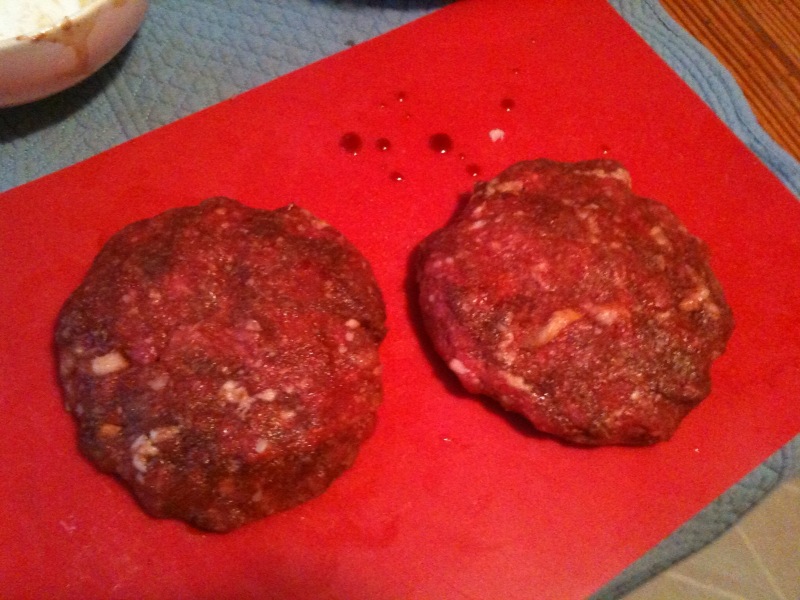
In the comments section here a while back, Mike suggested that antelope meat goes well with sweet flavors. I also read that it’s quite lean. So, using bits of a bunch of different recipes I found online, I cut up a slice of bacon into tiny little bits and mixed it in with the meat to add some delicious fat (and bacon, obviously). I added teriyaki sauce, too, for flavor. Here are the burgers, ready for the grill:

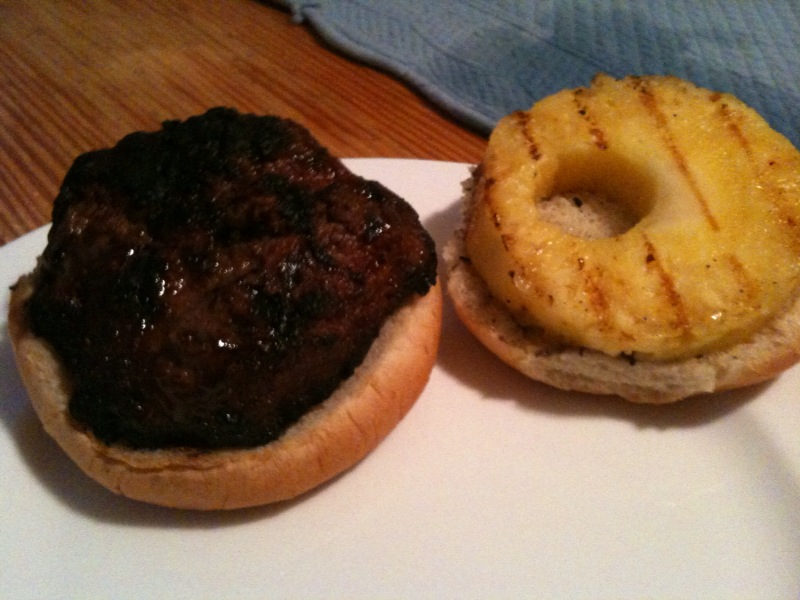
The fire was pretty hot and I charred the burgers a little more than I would have liked. I think the sugar in the teriyaki might have caused some of the charring. Regardless, I put them on buns with a slice of grilled pineapple, a suggestion I saw at V for Venison. It looked like this:

So how is it? Pretty good, though not as transcendently awesome as the wild boar buns of the last experiment. Grilled pineapple works with a teriyaki burger, it turns out, and it definitely seemed to go well with the antelope meat.

The meat itself tastes, well, meaty. Maybe a bit like the venison burger I ate long ago? Very rich, and flavorful enough to not be overpowered by the bacon or teriyaki flavors. The former was entirely lost, the latter only barely evident. I’m never exactly sure what someone means when they say something tastes “gamey” but I think this tasted gamey.

I thoroughly enjoyed the meal, but I’m unsure how much of that was due to the antelope and how much was thanks to my first pineapple-on-a-burger experience. If I saw antelope on a menu in some item that otherwise looked good to me, I’d order it again, but there wasn’t anything so exceptional about it that makes me want to run out and buy more antelope meat.

Steven Seagal rides a tank to a cockfight bust

Neighbor Debra Ross was so worried she called 911 and went outside where a nearby home had its windows blown out, was crawling with dozens of SWAT members in full gear, armored vehicles and a bomb robot.

“When the tank came in and pushed the wall over and you see what’s in there, and all it is, is a bunch of chickens,” Ross said.

In a massive show of force on Monday, the Maricopa County Sheriff’s Office executed a search warrant and arrested the homeowner, Jesus Llovera, on charges of suspected cockfighting.

Llovera was alone in the house at the time of the arrest, and he was unarmed….

Thousands of dollars in damages were made to the property and 115 birds were euthanized on the spot.

KPHO.com.

Sometimes it’s really difficult to choose which part of an article to excerpt for this site. I don’t want to go overboard and just grab the whole thing, but every single sentence in it is amazing and hilarious and worth reading. Go read the full report and come back here, why don’t you.

Long story short: An Arizona sheriff used a tank to bust up an illegal cockfighting ring, and Steven Seagal was in the tank.
Then, while enforcing a law presumably created to protect animal welfare, the sheriff and his men killed 115 roosters in the dude’s cock stash. And you’re going to have a hard time convincing me that the guy who took a tank to an unarmed man’s house put those roosters down in some sort of humane fashion. In fact, you’re going to have a hard time convincing me he didn’t somehow use the tank to kill the birds.

Look: I get that forcing roosters to fight isn’t a very nice thing to do to roosters. But neither is massacring them, far as I can tell. Isn’t there some farm in the country to which Steven Seagal could dispatch all these liberated cocks?

Also, if you happen to know of an illegal cockfighting ring in the New York area and can get me in, shoot me an email. I’m not advocating cockfighting, but at the same time I won’t tell the cops or show up in a tank or anything. I just think a recap would make for a pretty interesting blog post.

Link via Deadspin.

Exit Justin Turner

The Mets optioned Justin Turner to Triple-A today, thus ending — for now — the Justin Turner Lobby.

Paul DePodesta said something interesting in his Baseball Prospectus chat yesterday:

Our Opening Day roster is just that – a roster for Opening Day only. We can change it the next day and the day after and the day after. Though there’s a certain cache to the Opening Day roster, it’s really just one day in a long season. All that means is that the 2B job will probably continue to be a competition until somebody makes it their own, and I suspect somebody will.

Though I am still not convinced Brad Emaus is a better fit for the position than Turner, sending Turner down buys the Mets some time to determine if Emaus can be a long-term contributor to the team. It was the only way to keep both Emaus and Turner in the organization, so it is probably the most logical move.

If at some point it becomes clear that Emaus cannot handle the position — either offensively or defensively — the Mets can ship him back to the Blue Jays or find a spot for him on the bench and recall Turner. Going with Turner out of the gate would mean dispatching Emaus to Canada now.

If Emaus is going to start the bulk of games at second base, as most suspect, Daniel Murphy becomes the team’s primary left-handed bat off the bench. And that brings up a point I made to Matt Cerrone yesterday: Willie Harris becomes somewhat redundant on the roster.

Terry Collins has raved about Harris’ versatility, but Collins raves about practically everyone. It’s hard to envision a situation calling for a left-handed bat in which the team would choose Harris over Murphy (bunting?), and Scott Hairston gives the Mets a suitable fourth outfielder with plenty of experience (more than Harris) in center field. Harris can back up the infield positions too, but presumably the first call for all replacement-infielder needs will go to Chin-Lung Hu.

Most of the media has acted all spring as if Harris is a lock for the roster. Harris has an opt-out in his contract, so though he was signed to a Minor League deal he cannot be forced to accept an assignment to Buffalo. Internet legend Nick Evans, out of options, would have to pass through waivers to be sent to Triple-A.

If Carlos Beltran needs a week or two on the Disabled List to start the season, it buys the team some time to make a decision — the Mets could keep both Harris and Evans around, since presumably Hairston would be the stopgap in right field.

But if Beltran is ready to go by April 1, it seems to me (and I’ve said this before) like the team might be better served keeping Evans over Harris. Though Evans cannot boast quite the same defensive versatility or Major League resume as the veteran, he is seven years younger, locked up under team control for way longer and has more offensive upside.

I realize I’m once again quibbling over the 25th spot on the roster and that this season, it seems like the Mets’ front office might actually be thinking about these decisions more than I am. Perhaps they think Harris is the sparkplug that will catapult the Mets to contention, and Evans is doomed to a Hessmanian life of itinerant Triple-A mashing. But since neither is obvious, I’d rather see them go with the younger player and try to convince Harris to accept the Minor League assignment, knowing that he’ll likely get the first call when someone inevitably goes down with injury.

The thing about Izzy

Isringhausen played catch on flat ground Tuesday and pronounced himself fit after taking what he said was “4-5 days off” because of inflammation in his elbow. The Mets had indicated Monday that Isringhausen was shut down for one day, but the pitcher said he took off more time, and his elbow was helped by taking anti-inflammatory medicine.

Isringhausen said he will throw a bullpen session Wednesday, have a day off and then resume pitching every other day as he tries to make the team as a reliever. Manager Terry Collins said he hoped to get Isringhausen into a game Wednesday, but then said he would discuss the pitcher’s schedule with Warthen.

Anthony McCarron, N.Y. Daily News.

Look: I want Jason Isringhausen to make the Mets’ Opening Day roster. Isringhausen, with all the hope and hype surrounding him, played a vital role in the summer of 1995, one of my favorite years of Mets fandom. His return to the team would make for a great story, plus he has been an excellent reliever for much of his career. If he could pull it all together for one more season, he would be a very valuable cog in the Mets’ bullpen.

But the thing about Izzy, heck, the thing about most 38-year-old pitchers — not just the ones with Izzy’s lengthy medical history who haven’t thrown more than eight Major League innings during the Obama administration —  is there’s a pretty good chance he falls victim to injury at any time. This four-to-five day shutdown is not a big deal in Spring Training because Grapefruit League games are meaningless. But how often will Isringhausen need to be shut down for four to five days during the regular season?

Who knows? He says he feels good, apparently. We will know more after he throws a bullpen session today.

If Isringhausen makes the Major League roster, it will come at the expense of one of Pedro Beato, Manny Acosta and Pat Misch. Beato is a Rule 5 pick who would have to be returned to the Orioles, Acosta and Misch are out of options and would have to clear waivers to be sent to Triple-A. Though none of those relievers has anything like Izzy’s resume, they’re all more likely than Isringhausen to stay healthy for a full season, or, for that matter, a full month.

The Mets’ front office is, presumably, working with more information than I am. They should have a better sense of the severity of Isringhausen’s elbow inflammation, the potential of Beato, Acosta and Misch to help the club over a full season, and the chances that Acosta and Misch would clear waivers.

I guess the question is: Is Isringhausen, at 38 and basically four seasons removed from being an effective Major League reliever, going to hold up long enough and be so much better than Acosta (or pick any of the three) that it’s worth losing Acosta?

Maybe. Acosta and Misch are known quantities, and neither is likely to go all Cliff Lee on the National League in 2011. But they’re both decent enough to contribute to a big-league bullpen, and if Isringhausen’s not healthy he won’t be.

The “Playing in the NFL Curse”

Mark Sanchez is in the running to be on the cover of the next Madden game, and while I’m all for it, Brian Bassett is a bit concerned about the “Madden Curse.”

You, me and Bassett all know that curses don’t really exist, but it struck me that maybe the curse in question has nothing to do with the video game and everything to do with the rigors of life in the NFL.

So, following Brian’s lead, I went back and checked on all the recent Associated Press NFL MVPs to see if they fell victim to a similar curse. For the purposes of this list, I started with 1998 because it’s an arbitrary endpoint perfectly suited to prove my point.

Here we go. The year listed is the season for which the player was given the MVP award. The description that follows is what happened to him the following season:

  • 1998, Terrell Davis: Tore his ACL and MCL in the fourth game of the 1999 regular season. Played in only 13 more games in his NFL career.
  • 1999, Kurt Warner: Broke his hand in the middle of the 2000 season, missed five games. Returned for playoffs but lost in the Wild Card round.
  • 2000, Marshall Faulk: Still mostly awesome in 2001, but missed two games due to a sprained MCL in October, the first of a series of knee problems that would plague the latter parts of his career.
  • 2001, Kurt Warner: Got off to a terrible start in 2002 then broke his finger and wound up missing 10 games.
  • 2002, Rich Gannon: Suffered a shoulder injury that ended his 2003 season after Week 7.
  • 2003, Peyton Manning (tie): Still awesome in 2004; won another MVP.
  • 2003, Steve McNair (tie): Suffered a bruised sternum in the third game of his 2004 season, played in only eight games.
  • 2004, Peyton Manning: Still awesome in 2005.
  • 2005, Shaun Alexander: Broke foot in Week 3 of 2006, missed six games.
  • 2006, LaDainian Tomlinson: Still very good for 2007 regular season, but bruised his knee in the playoffs and could carry the ball only five times in an AFC Championship loss.
  • 2007, Tom Brady: Tore knee ligaments in Week 1 of the 2008 season, missed the remainder of the year.
  • 2008, Peyton Manning: Still awesome in 2009; won another MVP.
  • 2009, Peyton Manning: Still awesome in 2010.

Note that the only player to win the award and appear on the cover of Madden for the same season is Alexander. So is the AP NFL MVP award also cursed? Is Peyton Manning, perhaps thanks to some Louisiana mojo, the only player immune?

Perhaps, but I doubt it. I’m sticking with my guns here: Playing in the NFL is really, really hard on the body. It is among the reasons the life expectancy of NFL players is 52, and why it is an utter travesty that the league only provides health insurance to players for five years after they retire.

Manning is a massive outlier in terms of durability, style of play and, probably, luck. The rest of these guys all fell victim to the exact same curse that haunts Madden cover boys: The “Playing in the NFL Curse.”