Maybe free will really is an illusion, and all the choices we think we’re making are only the inevitable fallout of our nature and nurture: Neurons, developed through genetics and years of experience, programmed to fire certain ways in response to certain stimuli, fooling us into believing we’re in control of our decisions.
 It’s one of those things we can debate and consider and turn inside out for hours without coming to any objective conclusion, and it doesn’t much matter. I believe such a thing as free will does exist, but I’m willing to amount that my belief could itself be merely the product of my own determined constitution. And again: Who cares? I’m going to go on making the decisions I think are best one way or the other.
Point is, if you wanted to or could opt out of being a Mets fan, I’m pretty sure you would have by now. You watched the Great Collapse of 2007 and the Epic Middling of 2008, and withstood the injury plague of 2009. You gasped in horrified disbelief at the 2010 Opening Day lineup. You sweated out talk of the 2011 fire sale.
And that’s just the big-picture misery. That doesn’t even consider the anecdotes: Omir Santos pinch-hitting from the bullpen, Luis Castillo dropping the pop up, Mike Pelfrey falling, Luis Hernandez hobbling around the bases, Alex Cora actually playing baseball, Daniel Murphy crumpling up in the fetal position in short left field, and too many failed and ill-conceived sacrifice bunts to remember now.
There’s the off-field stuff too, of course: Shirtless Tony Bernazard and the Binghamton Bro-down, and the he-lobby press conference that followed. Ownership’s Bernie Madoff mess, the investigations and lawsuits, the foot-in-mouth feature articles, the failed partial sale, the shrinking payroll, the $70 million loss, the empty stadium, the loans from the league, and probably a hundred other things I’m forgetting.
It’s a veritable bad-news symphony, swelling over five seasons to a frenetic crescendo, its cadence ringing out in the streets and on the airwaves and all around the Internet:
LOLMets.
And you’re still here. The day after Jose Reyes, one of the best and most exciting players the Mets ever developed, signed with a division rival over (we assume) a matter of money, you’re still here reading this purportedly Mets-focused blog. And I’m still here writing it. We’re in this deep.
I have, I think, an enormously high threshold for pain. Because pain-tolerance is also impossible to objectively understand, I can only guess this based on empirical evidence and the suggestions of a series of doctors who initially misdiagnosed various ailments due to my apparently atypical nonchalance. I once played two weeks of middle-school football with a broken rib. A gastroenterologist suggested I had acid reflux when it turned out I had Crohn’s Disease. An orthopedist once chalked up to bad posture the symptoms of Multiple Sclerosis.
I mention all that not to brag and certainly not to seek pity, but to provide context. Maybe I’m not the best person to be coaching or commiserating or doing whatever the hell this is, given the neglectful and ultimately often counterproductive way I normally approach pain. Besides, I am an employee of this network and it behooves me to have you reading this website and watching Mets games in 2012.
But it strikes me that life and fandom are a series of massive tradeoffs, ones that must come out in our favor or else we would choose not to endeavor them. They are marked by so many harsh infinitives we wish we could split: They are to suffer, to shoulder, to stomach, to endure. And we do, almost always, because the rewards – though sometimes few and too far between – are so grand as to make the neverending onslaught of awfulness worthwhile. There are fireworks and funk music and Jose Reyes rounding second. Balloon animals and fried food and the ref’s palms pressed together above his head after a safety.
Every winter 29 teams don’t land the prized free agent. Every year 29 teams don’t win the World Series. One does, and the hope for that combined with the distractions provided by all the more mundane marvels are enough to keep us plodding forward through the agony.
Jose Reyes is off to Miami, and it stings to think about Reyes hitting triples in Little Havana and firing bullets across the infield in the Marlins’ ugly-ass new uniform. And we can fret about its impact on jersey and ticket sales and the long-term ramifications for our Mets, and we can wonder about what would have happened if Reyes hit the market at a different time with the team in different circumstances. But he didn’t.
Sandy Alderson and the Mets need to do what they can to get the team back toward being a regular winner, and once that happens the asses will return to the seats and the revenue will return to the payroll, Reyes or no Reyes.
It’ll happen. Maybe not in 2012 or even 2013, but it will. Great new Mets will come along to soften the blow of Reyes’ departure and leave us only with hazy, pleasant memories of his triples and steals and smiles and dances. It sucks now, and if it sucks more than you can bear you’re welcome to join Reyes in that stupid new hat. But the upside to this — and everything — is that there’s always more awesome stuff on the way eventually.

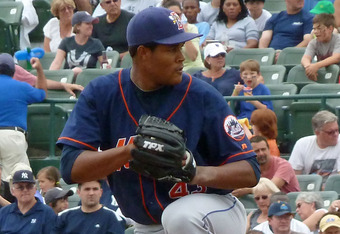 But it has kind of come to that for the Mets. If this team is to be a legit contender within the next few years, it’s going to need its prospects to pan out. And if all goes incredibly well, we might start getting a glimpse of that this season. So there’s something. Hey!
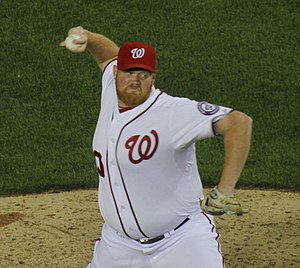 Coffey is utterly unspectacular. He has a career 105 ERA+, he allows a decent number of baserunners, he doesn’t really strike a lot of guys out, and he yields his fair share of home runs. Statistically, he’s really not any better than Manny Acosta has been for the Mets these past two seasons*. He just has more experience.
 I could rattle on for hundreds of words about Pedro’s hilarious and sometimes divisive persona, or remember his mostly underwhelming tenure with the Mets, or defend him for defending himself from a hard-charging Don Zimmer. Or I could write about the first time I talked to Pedro after a ceremony in 2007 celebrating his 3,000th strikeout, and how he told me it was his first time his mother had been on a Major League field, and how speaking to him — one of my favorite players of all time — made me so giddy I called my own mother afterward.
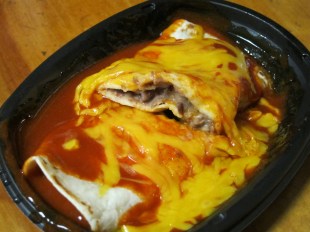 No, it turns out it isn’t. Enchiladas are made of corn tortillas, whereas burritos use wheat.
  The letter doesn’t say where on 42nd St. the stadium would have gone. The Wikipedia tells me that in 1915 there were elevated trains crossing 42nd on
  Tedquarters