
Is anyone really ready for some football?

In April, with the help of SNY promos man Brett, I published to YouTube a video of myself singing lyrics I “wrote” to the tune of a Bizet aria. Those lyrics are as follows:

Small sample size, small sample sample size
Small sample size
Small sample size
Small, small sample size, small sample size
Small sample size, sample size!
It’s a small sample size
Small sample size
It’s a small sample size.

There’s nothing worse than explaining a joke, but the song is nominally about baseball. Its premise is that baseball, like many pursuits, is subject to a hell of a lot of randomness, that our eyes and hearts are gullible, and that the fluctuations in performance from teams and players over small parts of seasons that lure us into believing they indicate something meaningful almost always prove otherwise with more evidence. And if you were to tell me that some baseball player I believed to be very good sucked very hard for 16 baseball games — or vice versa — I would certainly sing to you these words:

Small sample size, small sample sample size
Small sample size
Small sample size…

Etc.

So it seems strange to me that the sample-size specter is so infrequently cited in football, a sport that operates in tiny samples and that is, due to the money culture surrounding it, subject to such thorough scouring and forecasting from every barking pregame analyst and bright-eyed online gambler and sniveling office fantasy guru and everyone in between.

Why should we spare the NFL’s players and prognosticators the prudence we know is required in baseball? Is the game any less subject to randomness? Maybe, but then individual player performances are far more dependent on those of their teammates and opponents, and, in many cases, the officiating. We can see when a player consistently performs well in a system and with a certain set of players around him, but can we ever know for certain he is a great player that will perform as well in another system with other or lesser players around him?

And it strikes me that for a player to establish as much, he must be playing frequently enough to deny the opportunities to his replacements, so it is impossible to know for sure that any run-of-the-mill NFL-caliber player at the position couldn’t step in to the role and, with enough reps, enjoy similar success. Plus, it seems that given the short arcs upon which NFL players necessarily exist, by the time a player can establish beyond all doubt that he is excellent, that may very well no longer be the case.

We strongly suspect Peyton Manning is good. We know he played extraordinarily well for more than a decade as the quarterback of the Indianapolis Colts, and based on what we’ve seen from other quarterbacks and from — in brief spurts — Manning’s replacements, we believe few others would have performed as well as Manning in the same situation.

But does anyone think Peyton Manning circa 2004 would have played like Peyton Manning circa 2004 were he under center for the New York Jets this week and last? And does no one imagine Mark Sanchez — the suddenly gun-shy, inaccurate, altogether not-poised Sanchez — could look a bit better than he has recently (football-wise, at least) if the players around him were as good as the players around Manning back then?

And Peyton Manning is the outlier. Manning’s is the first name that comes to mind to counter any argument suggesting NFL players are more or less fungible products of their systems because Manning is one of the very few dudes who presented ample evidence over plenty of time that he was in fact something more. Manning’s the guy who started 208 straight games. The sample size seems adequate.

Sanchez? We don’t know. Sanchez has started 50 games, sure, but nearly half of them were also started by Wayne Hunter. He has at times been hampered by poor play calling, an awful running game, and receivers that look like they’d drop hand-offs and appeal to the refs for pass interference.

Which is all to note my growing concern that most purported NFL expertise is rooted either in sheer obliviousness or some sort of wink-nod agreement that no one really knows a damned thing about who’s better than whom, and we’re all pretty much full of it but we’re going to keep blustering forward because a) everybody’s watching football anyway, b) it’s a hell of a lot of fun, and c) there’s no actual accountability beyond 50 bucks to the office fantasy guru when our bold predictions go awry.

When I first watched Sanchez play quarterback for the Jets, I identified what I believed to be precocious and intangible presence and judgment at the position, and thought that he would prove great with time. Those qualities faded that season but returned in the playoffs, and then again in the first half of 2010. Now, he looks timid in the pocket, afraid to throw downfield but also afraid of oncoming rushers and afraid to tuck and run. But I know this represents merely a six-game stretch of mostly lousy play for the man, that he has played even worse in the past and recovered, that he’s cast into the spotlight — for better or worse — because of his position, and that, again, he’s getting little help from his supporting cast.

I want Mark Sanchez to be good and I’m not sure he is. I think he has looked worse than he actually is these last two weeks because of some poor play around him, but I am pretty certain he is not as good as vintage Peyton Manning. And I fear none of it will matter all that much as it pertains to this season if the Jets are forced to carry on without Darrelle Revis, whom I can say confidently is almost inexplicably awesome despite all the requisite caveats for his environment, sample size and confirmation bias.
Friday Q&A, pt. 2: Food stuff and randos

https://twitter.com/bagelsNrahtz/status/249156919854501888

When I started this blog, TedQuarters.com belonged to a weatherman who never actually updated the weather on his site. At some point, my dad — who owns a bunch of domain names for his own work — set some sort of flag on it to let him know if it ever became available, then scooped it up when it did. Now Pops is playing hardball.

I kid. He’d be happy to turn it over to me, I’m sure, but all the back-end stuff is already set up on TedQuarters.net, so TedQuarters.com is just a placeholder redirect page. There’s an easy way to set it up so it just points here automatically without having to load the page again, but I haven’t figured it out yet. I’m super professional, fellas.

More importantly, if you haven’t yet visited TedQuarters.org, I suggest you do so now. It’s my favorite of the TedQuarterses: Simple but effective. If that domain ever becomes available, I’m going to purchase it and maintain it exactly as it is now, in Smilin’ Ted’s .50-caliber honor. Next time I’m in North Georgia I want to get together with this dude and blow some stuff up.

https://twitter.com/IanBinMD/status/249142646050795521

None. I don’t like sugary beverages. I’ll splash some lemonade in unsweetened iced tea, but that’s about as much sugar as I ever take in drink form. Notable exception: Slurpees, but those count more in the dessert category than the beverage category to me.

Side note: A 7-11 just opened up around the corner from my apartment in Manhattan. Apparently this is 7-11’s new thing; they’re not just for the suburbs anymore. I haven’t been to many of the urban locations, but this particular one is like a boiled-down version of a 7-11. It’s basically just a coffee area, a soda fountain, a Slurpee thing, a refrigerator full of drinks, and a huge hot-dog-roller machine spinning all sorts of hilarious 7-11 specialties. None of the random groceries, cans of motor oil and magazines you find at the more spacious suburban 7-11s.

I used to always say that my life’s goal was to have one of those hot-dog-roller things in my home, but then I realized that if it weren’t manned, the hot dogs would get pretty gross. I think my actual goal is to have a fully operational 7-11 inside my home.

Someday.

https://twitter.com/KevinTracey1/status/249142147624861696

Wait, why do I only have 33 seconds to live? That sucks.

I actually love hypotheticals like this one, but it’s always funny that we answer them as though we’d be thinking rationally if we knew we had 33 seconds to live. Also, in this case, as though we’d want to spend any portion of our last 33 seconds texting someone and not, you know, trying to savor the waning moments of our existence.

Most likely, if I were making sense, I’d want to text someone I’d trust to relay a message and say, “Hey I’m dying and for some reason I can’t contact my family, please tell them I love them and that I’m at peace.” Then I’d probably add, “this sux dude peace out lol!”

But if I were dying in some particularly silly way that I knew all my friends would get a kick out of much later, I might fire off a text to the Twitter shortcode, all like, “Oh, Carlos Beltran has really done it this time.”

Alternately, I might text my friend Ripps with the very same words he long ago guessed would be his last: “I should have had more cake.” This would make me chuckle a bit before dying and maybe make him laugh a little bit too as we both waxed nostalgic for our younger days when we would sit around talking about dying and cake.

Or maybe I’d send a different friend the very specific list of people upon whom I planned to enact revenge but never got a chance to, hoping he’d be inspired enough by my death to carry it all out for me and not just sort of shrug and be like, “Ted died? That sucks.”

https://twitter.com/richmacleod/status/249141449126461441

I think Rich is joking, but multiple people have asked stuff like this lately. I haven’t. Does it seem that way? I didn’t write anything Wednesday because I was having a crappy day.

This is awesome, but it’s not always easy. Sometimes I just don’t have anything to say, and I don’t want to force anything out just for the sake of it (not any more than I already do, at least). I don’t know what the typical output is like for bloggers, but given the range of subject matter here and the nature of my actual work responsibilities, I feel like I’m pretty productive.

https://twitter.com/ouijum/status/249140479726329857

You’ll get no judgments out of me. Actually, that sounds pretty delicious.

Track back any “authentic” food and you find some cultural exchange somewhere and practically everything is a bastardization of some earlier thing. Maybe the restaurant where you ate that sandwich becomes incredibly popular, pulled pork on Texas toast becomes the new standard, and in 100 years we start judging people when they serve pulled pork on baguettes. Then we realize that too is delicious, and the cycle repeats itself. It’s the circle of pork, or something.

The only thing I feel certain should not happen in any setting is mayo on a sandwich with fresh mozzarella. I’m sorry but the mozzarella means too much to me. We’re better than that, people.


The black unicorn explained

Asked in training camp about his speed downfield, Bennett described himself to reporters as a “black unicorn.” Predictably, the name stuck.

Many assumed the label was just another example of Bennett’s eccentricity. In truth, fictitious animals are a staple for Bennett and his wife. The black unicorn is a character in Bennett’s novel — which also includes talking walls and a plot that Bennett will describe only as amazing — while Siggi, originally from California, has a healthy affection for mermaids. This year, Bennett even had a birthday cake made for his wife that featured a likeness of her, complete with a mermaid’s green tail, atop the icing.

Bennett’s den contains a collection of other unusual beings — he recently ordered a Mickey Mouse toy wearing a gas mask.

Sam Borden, N.Y. Times.

Ahhh… every single thing about Martellus Bennett. Please go read this article.

Via Josh.

Friday Q&A, pt. 1: Mets stuff

First, an email from Evan:

I put together a comparison of the Phillies’ and Mets’ records in the first and second halves from ’07 up to this year. It’s crazy.  The Phillies have collectively been 14 over for the first half and 55 over for the 2nd half. The Mets have been only a half game worse than the Phils in that time over the first half of the year but an incredible 79 games worse than them in the second half.  How is it possible that one team can so consistently turn it on in the second half while another team consistently sputters out?  Earlier in the season, I had hoped that even if the Mets weren’t going to contend this year, at least they’d finish 3rd above the Marlins and Phillies, maybe flirt with a wild card.  But just like they have done for the last 5 years, and even though they traded some players away and their old stars are even older and coming off of injuries, the Phillies still made that push and now are in the mix for a wild card while the Mets have once again been left behind.  I have noticed you often chalk things up that are difficult to explain otherwise to the randomness of the game, but can results like this be considered random? The Phillies performed significantly better in the second half each of the last 6 years and the Mets performed significantly worse every year except for ’08. Maybe I’m just like a lot of fans and tired of Septembers that feel like this and watching a Phillies team that I thought was buried a couple months ago come in and do what they just did makes me frustrated enough to stay up until 2 a.m. doing dumb stuff like this. Ugh.

It’s a great question. I have to go with randomness because I’ve got nothing better, and because randomness has a powerful way of looking like all sorts of other things. David Wright is the only active player on the current Mets who was around for the second half of 2007. They’ve got a whole new coaching staff and a new front office. So unless Wright’s presence is so poisonous that it dooms the team in the second half (but notably not the first half) every single year, I can’t think of what it could be about the Mets as an organization that makes the team play worse after the All-Star Break. The Wilpons are a constant across that time period too, someone will certainly mention. But could a team’s ownership possibly have to do with its first half/second half splits?

Not for nothing, but there are some arbitrary endpoints in play: The 2005 and 2006 Mets were a bit better in the second half than they were in the first half. But the 2004 Mets also fell apart after the break, and the Phillies have been better in the second half in every season since 2003. I just want to hear a compelling explanation for it before I believe it’s a real thing. Something in the water? The toll of NYC nightlife over the course of a season? The way they train? After a game like last night’s I’m shattered enough to believe something, but not just anything.

https://twitter.com/Devon2012/status/249139828283805696

This came up in the comments-section yesterday: If Mets prospects lists still include Harvey this offseason, I imagine you’ll see at least a few that still put Wheeler ahead of Harvey. And that seems silly to me. I know Harvey’s Major League success has come across only 59 1/3 innings, but they were about as convincing as 59 1/3 innings could reasonably be. I remember reading on a generally reasonable baseball message board during the 2005 season a discussion over whether David Wright — with about a full year of All-Star caliber play on his Major League resume — had surpassed Andy Marte as a prospect. So, yeah. That. We already know Matt Harvey can be good in the Majors. We don’t know that he will be forever, but we’ve seen that he can be. Wheeler still needs to prove himself at Triple-A.

At this point, I don’t think it’s reasonable to hope Wheeler looks better than Harvey did in his first turn around the big leagues. I think the best you could hope is that Wheeler is as good as Harvey was, which would be awesome.

https://twitter.com/BlueChill1123/status/249139923813277697

Not even Dickey and Wright, I’d say. I’d prefer the Mets sign Wright to an extension because I doubt the type of players they’d return in a deal for Wright would turn out as good as him, but obviously they should always listen.

https://twitter.com/jenconnic/status/249140067870846976

I’m with you. It’s tough to defend them while they’re playing like they have been, and especially after soul-shaking loss like last night’s. But where’s the indication that the process is wrong? They’re losing. Many of the players aren’t very good and now many of them aren’t playing well. That is not surprising. Many of them are young, somewhat promising and under team control for a while. They’ve got depth and some youth in their starting rotation — probably, all told, the toughest commodity to maintain in baseball — for the first time in a long time.

They need more good players, no doubt. They need more payroll flexibility with which to acquire more good players, too. The team on the field, as currently constructed, is not a good one. Don’t get me wrong about that. But I don’t think there’s much to indicate that the front office’s plan is a flawed one and that things will be getting worse. We’ll see what happens this offseason. I imagine we all feel a bit sunnier about their prospects come March, as we always do.

https://twitter.com/tpgMets/status/249159078352400385

Man, I got a body for business and a head for sin. Abstract concepts I can handle but when it comes to execution or practice of business stuff, either my head hurts, I get angry, or I just giggle and yell out, “TAXI!” like in this Kids in the Hall sketch.

So I don’t really know why, when no one’s paying to be at the stadium, they don’t just open up the doors and say alright, fill it up, go buy Shake Shack and hot dogs and make the players feel good about themselves. But I suspect there’s good math behind it. I guess it would anger the season-ticket holders, but then, you know, really? Say you paid for a flight to New Orleans and there was an empty seat next to you on the plane, and the flight attendant came over and said, “Hey, this old woman who wrote us a letter absolutely loves po’ boys but she can’t afford a flight to Louisiana; we’re going to let her fly for free if you’re willing to give up part of that armrest and some legroom.” Would you not let her sit there just because you paid for the ticket?

You too can live like Salvatore Ferragamo (assuming Salvatore Ferragamo eats really delicious ice cream in Brooklyn)

INSTEAD of peanut M&Ms, think Tumbador’s PB&J chocolate bar, handmade in Sunset Park. Instead of Häagen-Dazs, think Blue Marble ice cream. Instead of Tostitos, chips from the Brooklyn Salsa Company. This is the new Barclays Center, home of the Brooklyn Nets with food about as local as stadium fare gets….

The final selection is a mix of Brooklyn standbys like Nathan’s Famous and L&B Spumoni Gardens and newer artisan entrepreneurs including McClure’s Pickles, Brooklyn Cupcake and Calexico.

Sophie Brickman, N.Y. Times.

Good read from the Times on the food that’ll be available at the Barclays Center. It’s probably worth noting that local businesses who hook up with Ratner and the arena risk alienating some portion of their existing customer base, since there are a lot of people in the area pretty upset about the arena’s construction.

As for the food: I can’t vouch for all of it, as the Brooklyn foodscape changes pretty rapidly. But I can say that McClure’s Pickles and Calexico are delicious, and Blue Marble ice cream is without a doubt the best ice cream I’ve ever had.

A Blue Marble opened up on Underhill Avenue in Prospect Heights when I lived around the corner on Lincoln Place. It seemed like a pretty random spot for an upscale free-range grass-fed fair-trade type ice-cream spot at the time, on a block dotted with old Chinese-food places, shabby bodegas and empty storefronts that appeared to be storage spaces for people’s random old electronics.

Since there were so few places to get food in the immediate vicinity I went to check it out soon after it opened. About one spoonful in, I realized it was better than any ice cream I had ever tasted in my entire life. It’s so unbelievably creamy and tasty, but not greasy or heavy in the way that Coldstone Creamery’s ice cream is. A couple days later I spotted my friend who lived around the block on her way out of Blue Marble with a cup of it, and at first she was kind of cagey and acted like she was just trying it for the first time. But when I said it was the best ice cream I had ever had she admitted she felt the same way, and copped to the fact that she had already been there three times in the week since it had opened.

So check that out, is what I’m saying.

So how good is Matt Harvey?

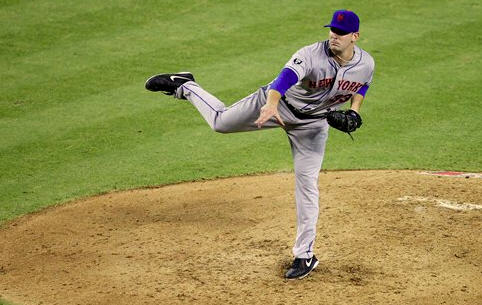
If you’re still watching these woeful Mets — and heaven help us, we’re still watching these woeful Mets — then yesterday you saw Matt Harvey finish his first season with a flourish, striking out Ryan Howard and Carlos Ruiz to end the seventh and close out a one-run, one-hit, seven-strikeout effort on the night the Mets determined would be his last outing of the year. Then, to add awesomeness to excellence, in an interview immediately afterward he said he felt great and not at all tired, and basically suggested he’d pitch tomorrow if the Mets asked him and that he would spend the offseason getting super jacked because he believes six-inning starts are unacceptable. So that was cool.

Despite some rather unfortunate pre-callup comps, Harvey’s first turn around the big leagues went about as well as anyone could have hoped. In 59 1/3 innings across 10 starts, he struck out 70 batters and yielded a strong 2.73 ERA. The only part of his stat line that’s at all troubling is his relatively high walk total for the year, but he mitigated that by limiting hits and in so doing maintained a strong 1.146 WHIP.

But you were watching, so you don’t need stats to tell you this: The guy is great. His fastball’s a bullet. His slider makes you chuckle and his curveball makes you weep. In a once-promising Mets season that fell apart so thoroughly and so triumphantly, he was the One Awesome Thing of the Second Half.

Still, pitchers are pitchers, and young pitchers even more so. Does Matt Harvey’s success over his first 10 starts tell us anything about what we can expect from him moving forward beyond the obvious, surface-level stuff we’ve all seen? Has he set the expectations unreasonably high for himself? I took to baseball-reference‘s awesome play index to find out.

What follows is a lot of lousy math. Since I’m starting at Harvey and working backward, I’m tailoring every search to what Harvey did this year. Every endpoint is pretty arbitrary. I just set out to find if there were good examples from history, based on statistics alone, to compare to Harvey. And Harvey’s 59 1/3-inning sample is tiny. If he threw 40 more innings and they weren’t as good, all the rate stats I used below would change. So he benefits here from how long he stayed in the Minors in 2012.

First, using park- and league-adjusted ERA+, I looked up every rookie starter under 25 years old who threw at least 50 innings and managed at least a 135 mark in that stat since 1951. Fifty pitchers have done that, and not surprisingly they represent a broad range of Major League success — from Wayne Simpson to Mike Mussina. They include great pitchers like Dennis Eckersley and Tim Hudson, the forever-linked Doc Gooden and Mel Stottlemyre, and sad stories like Herb Score and Mark Fidrych.

All told, by my count the 49 pitchers on the list besides Harvey averaged about 18.6 WAR over their careers — roughly as good as one of the group’s most durable innings-eaters, Aaron Sele. Of course, that average includes early flame-outs like Jason Jacome (remember Jason Jacome!) and a slew of guys who are still active, so it’s not really a good indicator of much at all.

Interestingly enough — or maybe not interestingly at all, I don’t know — the group seems to be trending upward, perhaps due to improved knowledge about how to keep pitchers healthier longer, the type we saw in action last night when Harvey was shut down. If you take the same qualifiers but look only at the players who have entered the Majors since 2000, the search returns a group that includes three of the best pitchers going today: Jered Weaver, Felix Hernandez and Stephen Strasburg.

There are crappy guys on there too, but if you exclude Harvey and fellow rookie A.J. Griffin, the ten under-25 rookie starters who have come up to the Majors since 2000 and thrown at least 50 innings with a 135 ERA+ have compiled 206 WAR over parts of 74 seasons, or 2.8 WAR a season — a hair better than Jon Niese has been this year, as a point of comparison. That’s good news. The list of ten includes six All-Stars (those three, Brandon Webb, Roy Oswalt and Barry Zito),  three Cy Young Award winners and one potential first-cousin of a Grammy-nominated pop trio. So that bodes well for Harvey, or at least his cousins’ pop outfit.

And just isolating ERA+ ignores the other aspect of Harvey’s dominance: His strikeouts. So I did the same thing, only searching instead for 25-and-under rookie pitchers who averaged at least a strikeout an inning over at least 50 innings. Most of the guys on this list are active or recent, as pitchers strike out more batters now than they did in the past. The group includes Tim Lincecum, Cole Hamels, Mark Prior and, terrifyingly, Oliver Perez. Because so many of them are active this number is meaningless but I’ll give it to you anyway: They’ve averaged 14.6 WAR for their careers.

Finally, what about rookies who strike out tons of batters and suppress runs at the rate Harvey did? There just haven’t been many of them. In fact, before Harvey there have been all of four rookie pitchers under 25 who threw at least 50 innings with an ERA+ over 135 while striking out a batter an inning: Gooden, Score, Oswalt and Strasburg.

Again, it’s bad math because the endpoints are tailored to Harvey. And all those guys pitched more innings than Harvey did in their rookie seasons, and all but Oswalt were younger. But it’s a pretty great group regardless. Gooden, for all his fortunes are rightfully lamented, still had several good years. Score, sadly, was off to a stunning start before he was hit in the face with a line drive that ultimately doomed his career. Oswalt was great. Things seem to be going pretty well for Strasburg so far, surgeries and ill-considered shutdowns notwithstanding.

I’ve been clicking around the play index for a while trying to find a good way to temper people’s expectations about Harvey. The best I can come up with is Jose DeLeon, whom some of you might remember. DeLeon busted into the league with an excellent part season that looks a hell of a lot like Harvey’s at age 22, then went on to an only OK 13-season Major League career. But an OK 13-season Major League career is nothing to sneeze at.

In shorthand, it looks like Harvey could very well be great. He could get hurt or go crazy, both of which sometimes happen to pitchers — the former way more likely than the latter. He could also be just OK. It seems exceptionally unlikely that he’ll flat-out suck. But then you knew that from watching last night, and Harvey’s his own unique snowflake, as we all are.