Various things about groundhogs

Apparently PETA, People for the Ethical Treatment of Animals, has called for Punxsutawney to replace Phil, the world’s most famous meteorologist groundhog, with an animatronic stand-in.

OK, I’m all for the ethical treatment of everything, and I happen to be a huge fan of animatronic rodents — it’s a big part of why I love Chuck E. Cheese so much — but this is ridiculous.

After all, as Bill Deeley, the president of the Inner Circle of the Punxsutawney Groundhog Club points out, Phil is “being treated better than the average child in Pennsylvania.”

After all, there’s a Punxsutawney Groundhog Club. And it has an Inner Circle. This rat is pampered all year long for ten minutes of stress from the “large, screaming crowds” PETA describes, because obviously Punxsatawney Phil gets mobbed by lunatics as soon as he leaves his burrow, like the Beatles in Hard Day’s Night.

I have to imagine Bill Deeley probably wanted to add, “also, he’s a f@#$ing groundhog.”

Seriously, has anyone thought to consult Phil about all this? Because look at that thing. Are groundhogs supposed to be that fat? He’s living in the lap of luxury, and I gotta figure if Phil could talk, and someone asked him if he’d rather move to a sanctuary somewhere, or be released back into the wild, Phil would politely decline and go back to eating his giant mound of delicious nuts and berries.

Actually, I’d bet if Phil could talk and someone asked him just about anything, he’d say, “nuts and berries, nuts and berries, nuts and berries, nuts and berries.”

And furthermore, the Wikipedia tells me that groundhogs and woodchucks are the same thing. Who knew? Apparently they’re also known as whistle-pigs and land-beavers, too.

Also, one time I saw a groundhog while driving in Westchester. Apparently there are groundhogs in Westchester. I nearly pulled off the road, all, “lordy me, I believe that was a whistle-pig.”

And lastly, Groundhog Day was a great movie. Everyone knows this, and nearly everyone who has seen it frequently ponders its various philosophical ramifications. Plus it’s one of the great vehicles for character actor Stephen Tobolowsky, who played Ned Ryerson in that film and also Werner Brandes in Sneakers. (“My name is my passport?”)

The Wikipedia confirms that Tobolowsky now plays a character also named Ryerson in the Fox series Glee. So that’s interesting. But it’s not about groundhogs, and so it strays from the point.

In conclusion, Groundhog’s Day is cool, as a concept and as a movie. And while I support animatronics in general, I don’t really think a robot groundhog would be able to accurately predict the weather. And that’s what’s important here.

Come at me, PETA.

Grizzled old-man baseball stories

Somehow I got myself on some list of people who might review sports books. I don’t know how that happened, since I’ve never reviewed a book, but it’s wonderful. Now people send me books all the time, for free.

Anyway, I’ve been meaning for a while to hold up my end of the bargain, since I usually do read the books and I often very much enjoy them.

One such book is Leo Durocher’s autobiography, Nice Guys Finish Last, written with Ed Linn and recently re-released by University of Chicago Press.

I’m about to liberally excerpt from this book and I have no idea if that’s legal, so here’s my attempt at making good with the ol’ University of Chicago Press: Buy this book.

Seriously, it’s awesome. I’m only halfway through, but it’s the best baseball book I’ve read in a long time. It’s an amazing collection of grizzled old-man baseball stories, including tales of Babe Ruth, Dizzy Dean and Jackie Robinson, plus long-forgotten but inarguably hilarious drunks like Van Lingle Mungo and Boots Poffenberger. Those are both real people. Baseball players in the 1930s had far more ridiculous names than they do now.

Take that, Milton Bradley. Come back when you’re Boots Poffenberger.

It’s also fascinating to read the book now and consider what such an old-timey baseball guy would say about the issues we wrestle with today. He says, for instance:

When you’re playing for money, winning is the only thing that matters. Show me a good loser in professional sports, and I’ll show you an idiot. Show me a sportsman, and I’ll show you a player I’m looking to trade to Oakland.

Later, he adds, “Win any way you can as long as you can get away with it.”

So I wonder where he’d stand on the whole steroids thing.

He also demonstrates a sharp take on several of the issues I frequently grapple with here. He says, pretty explicitly, that talent is the only thing that separates a guy labeled a fun-loving buffoon that loosens up the clubhouse and a guy labeled a drunk.

But the book’s best parts, easily, are when Durocher details aspects of the games themselves. The guy managed for parts of 26 seasons, so I guess that makes sense; he probably knows his way around a game. And he sort of wraps his life story around baseball lessons, which I guess also makes sense, since his life story is sort of a giant series of baseball lessons.

It’s well-written, too. I don’t know if that credit should go to Durocher or Linn, but it makes for an enjoyable read.

Anyway, here’s an excerpt I transcribed, from his chapter about second-guessing himself while managing the Dodgers in Game 4 of the 1941 World Series. His best relief pitcher, Hugh Casey, had recently endured a series of bizarre meltdowns — some his fault, some otherwise — but threw four innings of shutout ball after taking the mound in the top of the fifth.

With the Dodgers leading 4-3, Casey retired the first two batters in the ninth, but the third, Tommy Henrich, reached base when catcher Mickey Owen dropped the third strike. Next, Joe DiMaggio singled, bringing up lefty-hitting Charlie Keller, and prompting Durocher to consider pulling Casey:

Given everything that had been happening, the situation screamed for me to replace Casey with French. I did nothing. I froze. Casey slowed himself down, made two good pitches, and once again we were only one strike away. And now I had a thought of going out to remind him to brush Keller back with the next pitch. Maybe even the next two pitches. Not because I thought he needed to be reminded but only, again, to slow him down. Just as quickly as I thought about it I dismissed it. With Casey seeming to have settled down so nicely, I told myself, what was to be gained by going out and getting everybody jumpy? Defensive, timid thinking, it will kill you every time. Instead of going out, I did what I normally did. I whistled sharply to get his attention and drew my hand across my chest.

Hugh wound up and threw the ball right down the middle, the kind of pitch that Keller saw about once a year. His eyes opened wide as watermelons, his bat came jumping forward and the ball ended up high against the right-field wall. Suddenly, we were a run behind. Right there was where we lost the ball game.

I don’t know whether Casey had grown mentally weary from the long, pressure-packed season or whether there was a latent instability in him that had been brought to the fore. Or whether he simply made a couple of very bad pitches at a very bad time. Except for that one stretch, he always seemed at least as stable as the average player, and I know that he had all the guts in the world.

The only thing I can tell you about Hugh Casey is that a dozen years later he committed suicide. Stuck a gun in his mouth and pulled the trigger.

I love that even as Casey’s manager, Durocher couldn’t venture a guess as to whether it was some psychological meltdown or just a bad pitch.

The note about Casey’s suicide took the wind out of me, so I included it here. But looking at Casey’s baseball-reference page, I notice that he missed the 1943-1945 seasons. I’m no detective, but I’m going to guess what he was doing then provoked a whole lot more psychological trauma than anything that happened to him on the baseball field.

And I should point out that, while Durocher wonders if he should have brought in lefty Larry French in the spot, he didn’t actually have French to bring in. French pitched a third of an inning in the fourth. The memory is a funny thing.

Regardless, it’s an awesome book. Read it.

An ethical dilemma

James Kannengieser ponders an interesting ethical dilemma at Amazin Avenue today. He polls readers on if they could root against the Mets, assuming that another bad season would mean a house-cleaning in the front office. He writes:

The apparent disregard the current regime has for utilizing all information available for player evaluation is unacceptable for any franchise, much less one with the considerable resources of the Mets. A change is needed, and the long-term benefits to the team and its fanbase would probably outweigh the 2010 disappointment. No more lectures about “false hustle”. No more absurd vesting options. It’s not a given that ownership would seek a candidate in the mold of Theo Epstein or Andrew Friedman — they could hire Omar Part Deux. However, dismissing Omar would at least give the Wilpons a chance to start over and right the ship.

In theory, hoping the Mets lose makes sense — it’s for the greater good. In reality it’s tough to root against individual players, and therefore nearly impossible to root against the team (for me, at least).

I voted no. I can not, in good conscience, root against the team. But it’s something I’ve struggled with in the past and I think it’s an especially pertinent question now, as the evidence piles up that it would be in the Mets’ best longterm interest to move forward with a revamped front office.

And I’ll confess that once — just once — in a similar instance, I felt a pang of disappointment when, as a Mets fan, I should have felt otherwise. It was so jarring and weird that I remember exactly the circumstances.

It was June of 2008, before Willie Randolph got canned, right in the thick of my campaign to get Val Pascucci called up. I’ll maintain to this day that he should have been, but whatever, that’s not the point.

I was living in the Prospect Heights neighborhood of Brooklyn at the time. I had been visiting my parents on Long Island for Father’s Day and they were driving me back. We were on Eastern Parkway, right where it bends — by the then-new Dunkin’ Donuts — coming into Crown Heights, listening to the Mets on WFAN.

They were tied up with the Rangers, 2-2, with the bases loaded and two outs in the bottom of the sixth. Needing a pinch-hitter for Pedro Martinez, they called on Robinson Cancel, a 32-year-old third-string catcher with a Minor League OPS around .700 who, in my eyes, had no business being on the Major League roster.

I assumed Cancel would fail and I began writing in my head a scathing anti-Minaya, pro-Pascucci column for the following day. But Cancel, against all odds, drove a single up the middle that scored two runs and put the Mets ahead for good.

And for just one second, I was pissed.

Nothing made sense: Why was Robinson Cancel on the team? Who thought the Mets should be carrying three catchers? Why was Willie Randolph using Robinson Cancel as a pinch hitter? And by what freak happenstance should Robinson Cancel get a hit with the bases loaded in a big spot?

But then, the most confusing thing of all was that I was angry when I should have been happy. I grew up pulling for longshot heroism from underdogs — I’m a Mets fan, after all — and here, in the face of just that, I was disappointed. What the hell happened to me?

When I got back to my apartment, I sat down with a big glass of bourbon and spent some time examining my priorities.

Eventually, I resolved that Mets victories were far more important to me than justification for anything I might ever write or say, and that I should never again let what I believe about the way the team should be run interfere with the way I root for the team.

So, long story short, I voted no.

Items of note

Apparently the Mets are bringing back Fernando Tatis. I’m for it.

Toby Hyde investigates the surface-level similarities between Ike Davis and Ryan Braun. If Ike Davis hits anything like Ryan Braun has, the Mets are in luck.

The New York Times examines Taco Bell’s Drive-Thru Diet. I support the hilarity of the concept, but since I’m no fan of the items on the Fresco Menu, I can’t advocate it as a weight-loss plan. Call me when you figure out how I can lose weight via the Crunchwrap Supreme.

The Nets actually won a game. Look at how happy they are.

Finally, the Daily News ran this picture with a story about Toyota’s recent recall, and gave absolutely no explanation as to why this woman has a stuffed snowman buckled into the passenger seat of her car. I find that angle WAY more interesting than the safety recall, and this is from a guy who was strongly considering leasing a Corolla:

Jarrod Washburn: Meh

According to ESPN 1050, the Mets are thinking about Jarrod Washburn.

Now I’m not sure exactly what they’re thinking about Jarrod Washburn. Maybe they’re thinking, “hey, would you look at that, Jarrod Washburn has really put together a respectable, if unspectacular, Major League career.” Or maybe they’re thinking that he looks a little like Kiefer Sutherland.
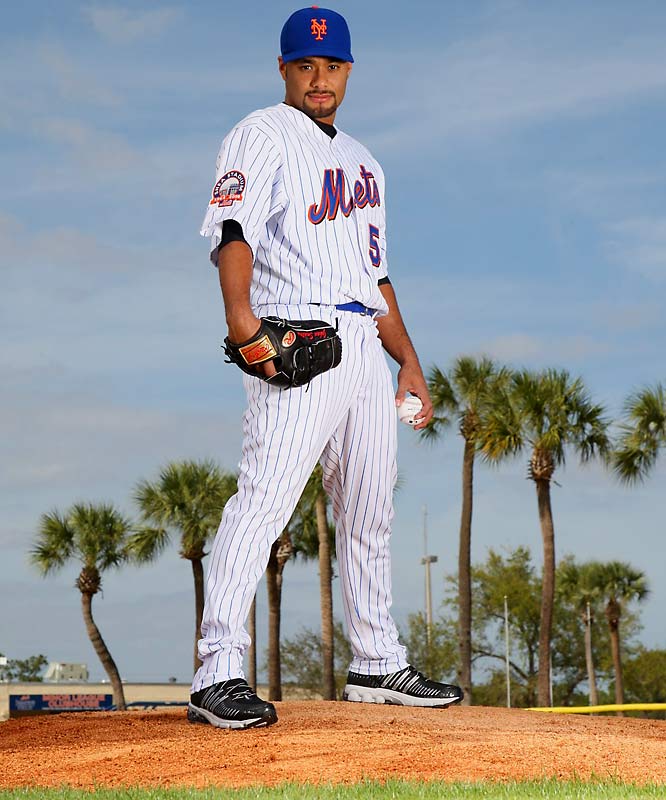
If they’re thinking he’d be a nice fit for their team in 2010, as the ESPN 1050 item suggests, color me unenthused.

Washburn has been, pretty consistently, among the most fly-ball heavy pitchers in the Majors. This worked out extremely well for him while he was with the Mariners last season, since they were fielding an outstanding outfield defense behind him.

This would, presumably, not work out as well for the Mets, assuming Jason Bay and Jeff Francoeur can’t cover the ground that Franklin Gutierrez and Ichiro Suzuki do. Spoiler alert: They can’t.

Is Washburn the worst pitcher in the world? Far from it. He’s a guy. He’s just not particularly good either, and he’s 35, and he’s coming off two straight seasons shortened by injury.

And I’m not certain he’s much of an upgrade over any number of guys they already have in house.

Johan Santana to pitch every fifth day

Sam Borden wrote a nice column for SNY.tv about what Johan Santana’s 25-pitch bullpen session means, and the optimism it brings to Mets and their fans. He writes:

There is still nothing more pleasing for the Mets fan than seeing Santana back healthy. Nothing more pleasing than seeing their star with a smile on his face.

At the absolute minimum, he’s something exquisite to watch every fifth day, a distraction from the frustrations of losing. At the absolute pinnacle, he’s the lynchpin of a miracle run.

Right now, he’s just possibility. Optimism. Hope. That might seem crazy to some people, and maybe it is. But at the end of a long, hard winter, six minutes can feel like so much more.

I’m with Sam. And there’s something about Santana that seems to bring out the liveliest language.

When I think about the Mets’ offseason and outlook for 2010, I am gloomy. When I think about Santana pitching, I am happy. He makes me excited to watch baseball again.

Items of note

Jon Garland signed a one-year, $5.3 million deal with the Padres. The Mets have Fernando Nieve penciled in for the back of the rotation.

Sam Page gives Nieve a thorough examination at Amazin’ Avenue.

NASA hopes to return astronauts to the moon by 2020. 2020? We’ve already been to the moon. In 1969. Boring. Call me when Mars is in play.

I don’t throw the term “bureaucracy-choked morass” around liberally, but that’s certainly what this seems to describe.

Obligatory Ben Sheets sour grapes post

Ben Sheets signed a one-year, $10 million contract with the A’s today.

Whatever. I didn’t want that chump on the Mets anyway. If he played for the Mets, he’d be hurt by May. You could mark that down. And he has no heart. Couldn’t handle the New York media. Wasn’t up to the pressure of the big city. Something something something.

Seriously, though, $10 million does seem like a lot for a guy who is such a huge injury risk. Of course, for the Mets, the danger in paying him so much is the chance he gets hurt, the team stinks, and you’ve flushed some payroll down the toilet.

And the Mets, without Sheets, seem pretty much destined to flush a whole lot of payroll down the toilet. It’s not my money, of course, but it was only a one-year deal — not the type of contract that would hamstring them down the road.

I advocated Sheets for the Mets because he was the type of gamble I hoped could yield a big enough return to launch the Mets into contention, even despite all the question marks in their lineup and the expected absence of Carlos Beltran.

And it doesn’t look like there’s a whole lot left out there that might make that difference.

Regardless, I wonder how much more on top of the $10 million it would have taken for the Mets to lure Sheets away from Oakland. After all, that club can also boast a park with a reputation for benefiting pitchers, something I thought could be a big selling point for the Mets.

And perhaps more importantly, the A’s lack that pesky notoriety — deserved or otherwise — for spectacularly mishandling their injured players.

Pure speculation, but I’d guess that factored into his decision. This is, after all, a guy who missed all of last season and parts of the previous four with injuries.

So maybe the Mets didn’t really have a shot at Sheets in the first place.

Whatever. What’s done is done. Ben Sheets is on the A’s and the Mets are still penciling Fernando Nieve into the back of their rotation. I’m still all for John Smoltz, and it seems like the Mets might be too, so, you know, good.

Johan Santana throws 25 pitches

Every one of them1 is beautiful and awesome:

1– Sadly, not every one of them is contained in this video. I’m just assuming they were all beautiful and awesome, because Johan Santana threw them all.

Also, Kevin Burkhardt references Santana throwing a changeup and then yelling, “whatup!” which, sadly, is not contained in this video. I’d pay anything to watch that happen, especially in the midst of this long offseason.