
Simply put: Oswalt is being paid like he can still be expected to be one of the game’s elite pitchers and that’s simply not a safe bet. Moving that contract for a good return on his talent is going to be a chore for Ed Wade, although the San Diego Padres proved such a move is possible. Of the recent high-priced starting pitchers to be traded, only Jake Peavy’s current contract had more annual money remaining than Oswalt’s. The Padres even had the unfortunate break of Peavy missing most of the season and holding a no-trade clause. Somehow, they got the White Sox and him to agree to a deal, and thus ridded themselves of his three-year, $52M deal.
Scott Kazmir was owed nearly $34M over three years and the Rays didn’t receive an elite prospect in return for him last August. Cliff Lee only had a season and $9M remaining when the Indians (and then Phillies) traded him. Even Roy Halladay was owed less money ($15.75M) than Oswalt will make next season when the Blue Jays traded him to the Phillies this past winter. Those contracts look cost efficient when stacked next to Oswalt’s, and those were for two of the game’s absolute best arms.
I’m happy Anderson wrote this, because he says basically all the things I planned to write this morning anyway. And it’s a beautiful Saturday and I’ve got lawn to mow.
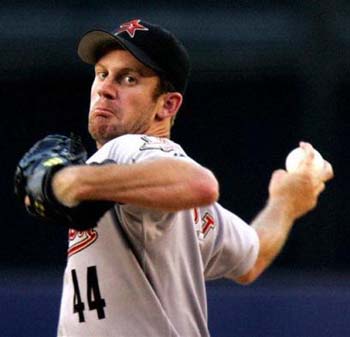 Roy Oswalt is still a good pitcher. But he showed signs of a decline in 2008 and 2009, and his early-season dominance in 2010 is more likely due to the whims of small samples than any real change.
And Oswalt is being paid like an elite pitcher. I know Mets fans are incredibly eager for the team to pick up Oswalt, who spent most of this decade as one of the best, steadiest pitchers in the National League. But trading premium prospects for the right to pay Oswalt $25 million over the next year and a half would be foolish. If the Mets were willing to trade Wilmer Flores and Jenrry Mejia, two top-100 prospects, they should look for a more efficient return — a pitcher under control for more years and signed to a more reasonable contract.
It’s not my money, of course, so if the Mets were able to acquire Oswalt on something closer to a salary dump, I’m all for it. Like I said, he’s a good pitcher, and the Mets don’t have many of those. But it’s bad business to mortgage the future for an expensive, aging pitcher in a year the team’s no safe bet to contend even with Roy Oswalt on the staff.
And for what it’s worth, there’s a reasonable chance Oswalt wouldn’t waive his no-trade clause to come to the Mets. Check out Oswalt’s “preferred” destinations, according to Jayson Stark. Now check out the Google Map for Oswalt’s hometown in Mississippi. Doesn’t seem to hard to decipher why he favors the Rangers, Cardinals and Braves, in the three Major League cities geographically nearest to where Oswalt grew up.


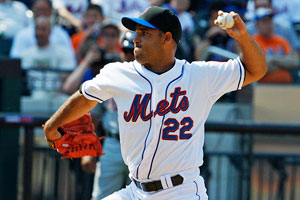 Valdes has struck out more than a batter an inning and more than three times as many guys as he’s walked. And he has induced enough weak contact that it’s reasonable to argue he’s unlucky to hold a 3.20 ERA. He has yielded a high .361 batting average on balls in play despite an 18.8% line-drive rate, and his FIP is nearly a run lower than his ERA. Plus, in small samples, Valdes has actually been much more successful against right-handed batters than lefties.
 Only they forgot to tell Maine. Maine lashed out at his manager and pitching coach for doubting him, then Dan Warthen capped the evening by calling Maine a “habitual liar, in a lot of ways, as far as his own health.”
 Tedquarters